
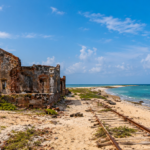



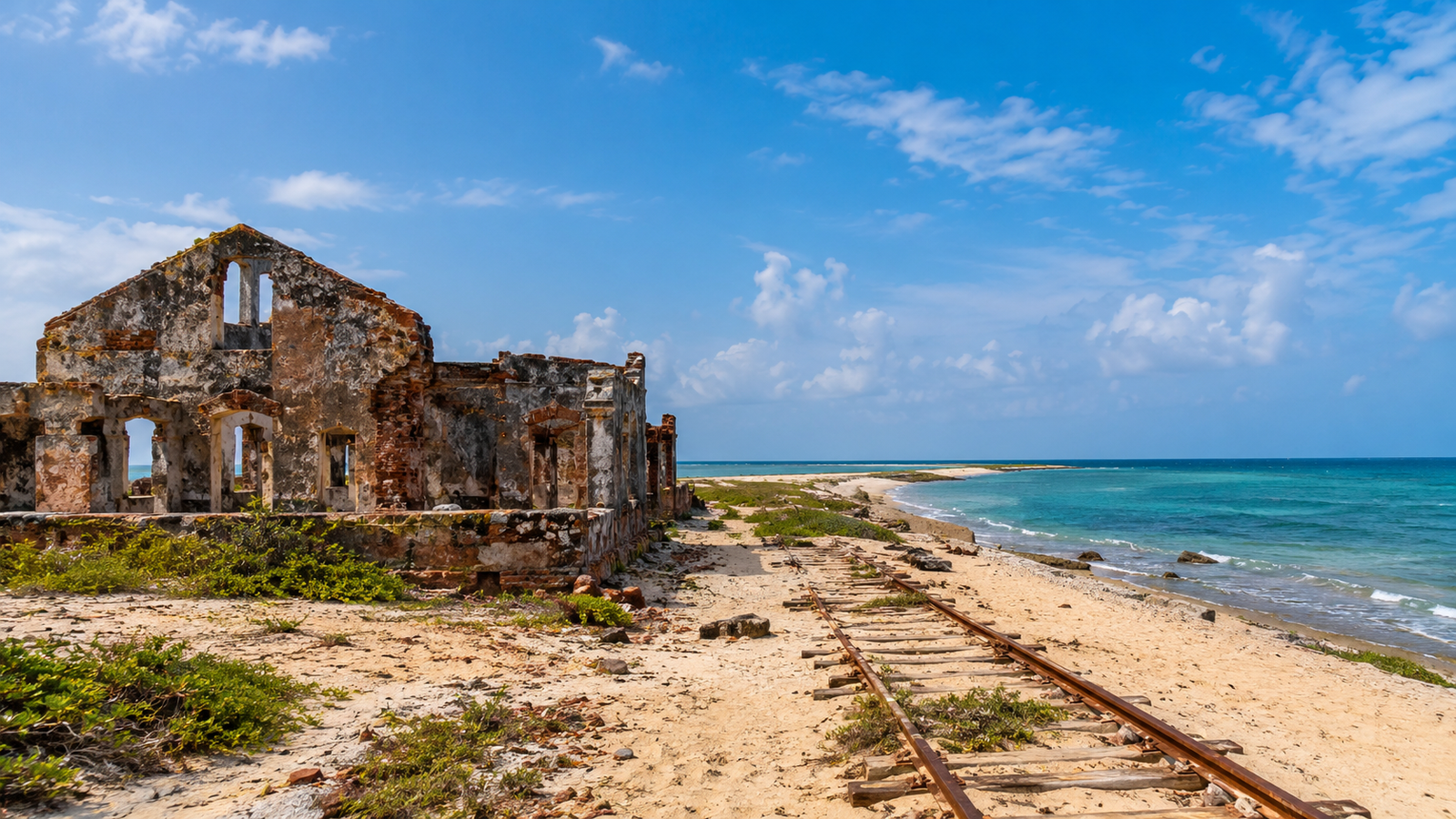
Dhanushkodi was abandoned because the cyclone of 22–23 December 1964 destroyed the town, killed an estimated 1,800 people and washed away its railway line. The Government of Madras then declared it unfit for living. Yes, you can visit today. A road from Rameswaram (about 18–20 km) now reaches Arichal Munai, and road access is generally allowed only between 6 a.m. and 5 p.m.
What Is Dhanushkodi?
Dhanushkodi is an abandoned town at the south-eastern tip of Pamban Island in Tamil Nadu, in Ramanathapuram district. The island is separated from the Indian mainland by the Palk Strait, and the name means “end of the bow”. Dhanushkodi lies about 24 km from Talaimannar in Sri Lanka, though other sources give slightly different figures depending on where the measurement starts. The land is a thin strip of sand with the Bay of Bengal on one side and the Gulf of Mannar on the other.
Before 1964 it was a working port town, sometimes nicknamed “mini Singapore” or “Kutti Singapore”. It had a railway station, a post office, a hospital, a church, temples, a school and shops. Pilgrims, traders and fishermen all passed through it.
A Short History of Dhanushkodi Before 1964
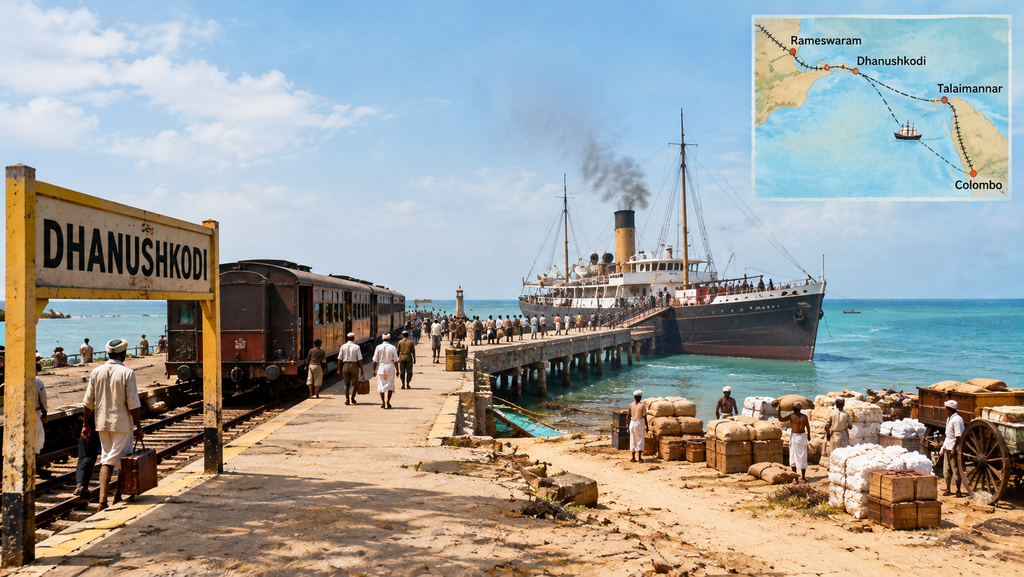
Dhanushkodi grew because it was the shortest link between India and what was then Ceylon. A rail line connected it to Rameswaram by 1908, and a British-built port followed in 1914. The Boat Mail ran from Chennai Egmore to Dhanushkodi, where passengers boarded a steamer to Talaimannar and carried on by train to Colombo. Salt, cotton, firewood, rice and other goods moved through the port as well.
Why Was Dhanushkodi Abandoned? The Facts
The 1964 Rameswaram Cyclone
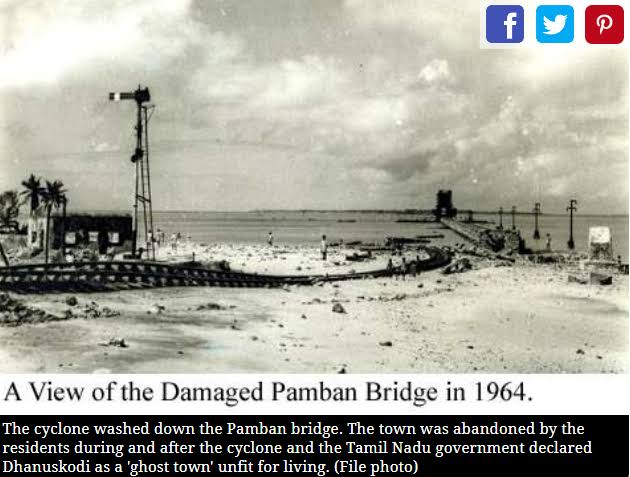
The storm began as a tropical depression in the South Andaman Sea on 17 December 1964. It strengthened into a cyclonic storm, moved west, crossed Sri Lanka near Vavuniya and hit Dhanushkodi on the night of 22–23 December. A satellite study published in the Journal of Applied Meteorology estimated wind speeds of about 280 km/h and tidal waves of roughly 7 metres.
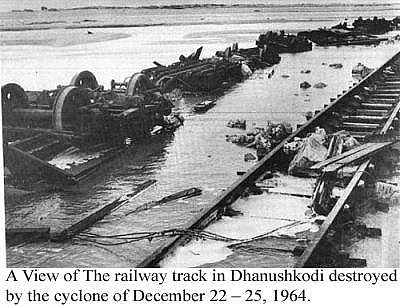
An estimated 1,800 people died, including about 115 passengers on the Pamban–Dhanushkodi passenger train. The train was swept off the track and into the sea, and the metre-gauge line from Pamban was destroyed. The Government of Madras declared the town a ghost town, unfit for living.
Why It Was Never Rebuilt
Several factors worked together, and sources agree on the broad picture while differing on details:
- Scale of destruction. The railway, port and homes were gone, and rebuilding was judged too costly and risky.
- Exposure. The town sits on a narrow strip between two seas, with constant wind, sand and salt. Journalists and residents describe the ongoing movement of sand and salt as a major obstacle to restoration.
- Land loss. A Geological Survey of India study found that the southern part of Dhanushkodi facing the Gulf of Mannar sank by almost 5 metres in 1948–49. A patch about 0.5 km wide and 7 km long went under the sea. This happened before the cyclone, so it is a separate event, but it helps explain why the area was considered unstable.
- No services. For decades there was no road, electricity or piped water, which made resettlement difficult.
A curious footnote: around the 40th anniversary of the cyclone, in December 2004, the sea receded about 500 metres and briefly exposed part of the submerged town. Massive tsunami waves hit the coast days later, on 26 December 2004.
What Is the Haunted Story of Dhanushkodi? (Myth vs Fact)
Please note: the following are popular beliefs and folklore, not verified facts.
People often say Dhanushkodi is haunted by the spirits of those who died in the 1964 cyclone, especially the train passengers. Some travel stories mention strange silence, shadows or voices near the ruins, and the idea that no one should stay after sunset. There is no official record, scientific evidence or documented investigation that supports any of this.
What is documented is more practical. Locals and travel writers warn visitors not to linger after dark because the land is remote, windy and unlit, with little shelter and no emergency services nearby. As one traveller writer put it, the place is not haunted, it is exposed. Vehicle access is also restricted after 5 p.m.
Two more myths worth correcting:
- “Nobody lives there.” Not true. Fishing families returned after the cyclone. Reports put the population at a few hundred people, with estimates ranging from about 350 to 500 depending on the source and year.
- “You can walk to Sri Lanka.” Not true. The shallow shoals of Ram Setu (Adam’s Bridge) do not form a road or footpath, and the sea here is an international boundary.
Ram Setu: Faith and Geography
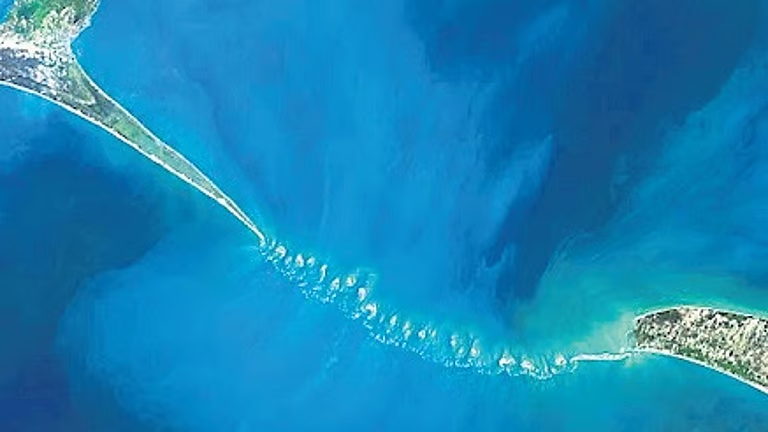
Hindu tradition says Lord Rama marked this spot with the end of his bow to build a bridge for his army to reach Lanka, and many believe the islets seen from Arichal Munai are remnants of that bridge. That is a matter of faith. Geologists describe the chain of limestone shoals as a natural feature, a narrow strip of land that once linked Pamban Island and Sri Lanka.
What Is the Current Situation of Dhanushkodi?
Dhanushkodi is still officially treated as a ghost town, but it is no longer empty or unreachable. Key points:
- Road access. The road to Dhanushkodi was completed around 2016 and inaugurated in 2017. Earlier, you could reach the town only on foot along the shore or by jeep. The road runs about 9.5 km from Mukundarayar Chathiram to Dhanushkodi and a further 4.5 km to Arichal Munai.
- Residents. A Times of India report cited by Islands magazine in 2026 says about 350 people live there without electricity or drinking water.
- Tourism. Tamil Nadu’s tourism board has promoted the site, and Condé Nast Traveller listed it among its 2026 “7 wonders of India”, according to Islands.
- Open questions. Plans to develop tourism have raised concerns among fishing families, some of whom have reported receiving notices to vacate without resettlement. Treat these as ongoing, locally reported issues and check recent news before travelling.
Can You Visit Dhanushkodi Today?
Yes. It is an easy day trip from Rameswaram and suits history lovers, photographers, birdwatchers and pilgrims.
How to Reach Dhanushkodi
- By air: Madurai Airport is the commonly used airport. Rameswaram is roughly three hours from Madurai by road.
- By train: Rameswaram railway station is the nearest rail point. Trains run to Rameswaram from Madurai (under four hours) and Chennai (about 10.5 hours).
- By road: Rameswaram is the base. Dhanushkodi is about 18–20 km away by road, and you cross the Pamban Bridge on the way into Rameswaram. Taxis, autos, buses, tempo travellers and local vehicles run along the route.
- Final stretch: For the last section to Arichal Munai, check on the day whether you can drive or need a local vehicle, as rules and sand conditions change.
Timings and Best Season
- Time of day: Road access is generally allowed only between 6 a.m. and 5 p.m. Start early, since there is little shade.
- Best months: November to February, when it is cooler.
- Avoid: Monsoon and cyclone-alert days, when winds and rough seas can restrict access.
- Time needed: Half a day to one day, usually combined with Rameswaram.
What to See
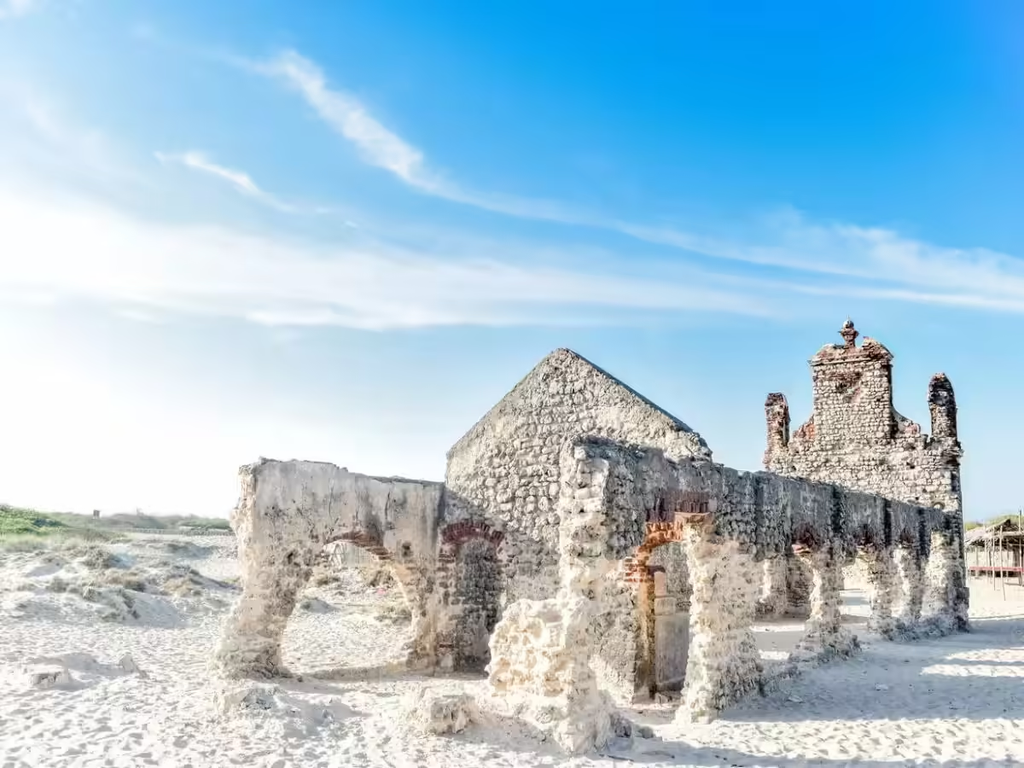
- Ruined church. A roofless shell from the pre-1964 town.
- Railway station ruins. Tracks and remains of the line that once reached the sea.
- Dhanushkodi Beach. Wide, windy and scenic. Swimming is not advised because of currents.
- Kothandaramaswamy Temple. Linked with the Ramayana tradition.
- Arichal Munai. The land’s end where the two seas meet, and the main photo stop.
- Birdlife. The Gulf of Mannar area hosts flamingos, curlews, gulls, terns, sandpipers, plovers, reef herons and egrets, especially in winter.
Sample One-Day Plan
Leave Rameswaram by 7 a.m. Stop at the Pamban Bridge viewpoint, visit Kothandaramaswamy Temple, explore the church and railway ruins, walk the beach, continue to Arichal Munai, and head back well before 5 p.m.
Practical Tips
- Carry water, snacks and cash. Facilities are basic, though roadside stalls sell snacks and seafood.
- Do not swim, and do not climb on weak ruins.
- Carry sunscreen, a cap and sunglasses.
- Keep plastic with you and take it back. This is a fragile coastal area.
- Check weather and local advisories before leaving.
What to Wear to Dhanushkodi
Wear light cotton clothes, comfortable sandals or sports shoes that can handle sand, a cap or scarf, and sunglasses. Pack sunscreen and a light layer for strong wind. Keep your clothing modest if you plan to visit the temple. Avoid anything you would be unhappy to get sandy or damp.
Your Next Adventure Starts Here!
Loved exploring Goa on a budget? Discover more beautiful destinations, practical travel tips, and unforgettable experiences across India.
Explore More Travel Guides →Discover India with BharatBhramanLife
Frequently Asked Questions
Why is Dhanushkodi abandoned?
The 1964 cyclone destroyed the town and its railway and killed an estimated 1,800 people. The Government of Madras declared it unfit for living, and it was never rebuilt.
What is the haunted story of Dhanushkodi?
Folklore says the ruins are haunted by cyclone victims, but there is no evidence for this. The real dangers are remoteness, wind and darkness, which is why visits are advised only in daylight.
What is the current situation of Dhanushkodi?
It is an open tourist site reached by a road from Rameswaram. A few hundred fishing residents live there, reportedly without electricity or drinking water, and road access is generally limited to 6 a.m.–5 p.m.
What is the ghost town in Rameshwaram?
It is Dhanushkodi, at the south-eastern tip of Pamban Island, about 18–20 km from Rameswaram town.
What is Dhanushkodi famous for?
It is famous for its ruins from the 1964 cyclone, Arichal Munai where two seas meet, Ram Setu legends, Kothandaramaswamy Temple, and its closeness to Sri Lanka.
Is Sri Lanka visible from Dhanushkodi?
Usually not clearly. Sri Lanka is roughly 18 nautical miles (about 29–33 km) away, depending on the measurement. You can see the open sea and the shoals of Ram Setu, but a view of the Sri Lankan coast should not be expected.
Why is Dhanushkodi called Ghost City?
The name comes from the official declaration after 1964 that the town was uninhabitable. It describes the empty ruins, not supernatural activity.
What to wear on Dhanushkodi?
Light cotton clothes, sand-friendly footwear, a cap, sunglasses and sunscreen. Dress modestly for the temple.
Final Thoughts
Dhanushkodi is not a haunted place. It is a place where history, geology and faith meet in an unusually raw setting. Go early, stay within daylight hours, respect the residents who still call it home, and you will see one of the most striking corners of Tamil Nadu.
Sources
- Wikipedia, “Dhanushkodi”: https://en.wikipedia.org/wiki/Dhanushkodi (cyclone details, deaths, subsidence study, road and rail history)
- Islands, “India’s Once-Thriving Island Vacation Haven…”: https://www.islands.com/2181281/dhanushkodi-india-once-thriving-island-vacation-haven-beaches-abandoned-ghost-town/ (history, 2026 residents, access timings, how to reach)
- SOTC Blog, “Dhanushkodi Ghost Town…”: https://www.sotc.in/blog/indian-holidays/dhanushkodi-ghost-town-indias-mysterious-abandoned-city-history-how-to-visit-travel-guide/ (season, tips, places to visit)
- Medium, “Dhanushkodi: The Indian Town That Disappeared in One Night”: https://medium.com/@our1truegod/dhanushkodi-the-indian-town-that-disappeared-in-one-night-261cc6b3fc3f (personal account; “not haunted, exposed” point)
- The News Minute, “A road to fragile promise”: https://www.thenewsminute.com/article/tamil-nadu-s-ghost-town-dhanushkodi-road-fragile-promise-56689 (sand and salt, population, road project)
- People’s Archive of Rural India, “Broken bow: Dhanushkodi’s forgotten people”: https://wagtail.ruralindiaonline.org/en/articles/broken-bow-dhanushkodis-forgotten-people/ (residents, meaning of the name, tourism plans)
- Scroll.in, “What will you see if you visit the precise point where India ends and Sri Lanka begins”: https://scroll.in/article/830499/what-will-you-see-if-you-visit-the-precise-point-where-india-ends-and-sri-lanka-begins (Arichal Munai, distance to Sri Lanka)
- Maps of India, “Dhanushkodi: the abandoned town at the edge of India”: https://www.mapsofindia.com/my-india/india/dhanushkodi-the-abandoned-town-at-the-edge-of-india (Sri Lanka proximity, Ram Setu not a walkable route)
- Madras Courier, “The Forgotten People of the Ghost Town, Dhanushkodi”: https://madrascourier.com/insight/the-forgotten-people-of-the-ghost-town-dhanushkodi/ (history, eviction concerns)
- Gulf News special report on Dhanushkodi: https://gulfnews.com/amp/story/world%2Fasia%2Findia%2Fdhanushkodi—the-ruined-attraction-on-the-pamban-island-in-india-1.96928246 (return of residents)
- Hurry Up Cabs, “Rameshwaram to Dhanushkodi Distance”: https://hurryupcabs.com/blogdetails/rameshwaram-to-dhanushkodi-distance (distance, monsoon advice)