



Everything you need to plan a Panna National Park safari – zones, timings, entry fees, wildlife, best time to visit, and how to reach this remarkable tiger reserve near Khajuraho.
In 2009, Panna lost every single tiger to poaching. Today, it has over 80. That comeback alone makes Panna National Park one of India’s most inspiring wildlife stories – and it’s barely an hour from the Khajuraho temples.
Planning to combine Panna with a Khajuraho trip? Read our complete Delhi to Khajuraho travel guide to plan your journey through the historic heart of Madhya Pradesh before heading to Panna National Park.
This guide covers it all: safari zones, timings, entry fees, wildlife, best time to visit, and how to reach Panna. Everything you need, in one place.
Panna National Park at a Glance (Quick Facts)
| Location | Panna & Chhatarpur districts, Madhya Pradesh, India |
| Core area | 542.67 sq. km (Panna Tiger Reserve, incl. buffer: ~1,645 sq. km) |
| Main river | Ken River (a tributary of the Yamuna) |
| Status | National Park (1981) → India’s 22nd Tiger Reserve (1994) |
| Recognition | Ministry of Tourism “Award of Excellence” (2007) for India’s best-maintained national park |
| Tiger population | 80+ tigers as of 2026 (recovered from zero in 2009) |
| Distance from Khajuraho | 25–27 km to Madla Gate (about 30–40 minutes by road) |
| Nearest airport | Khajuraho Airport (HJR) — approx. 26 km |
| Nearest railway station | Khajuraho Railway Station (~20–26 km); Satna Junction (~70–90 km) for wider connectivity |
| Park open season | 16 October – 30 June (closed during monsoon, July–September) |
Why Panna National Park Is Famous
Three things put Panna on the map: a record-breaking tiger comeback, dramatic river gorges, and its location right next to Khajuraho’s world-famous temples.
India’s 22nd Tiger Reserve & 5th in Madhya Pradesh
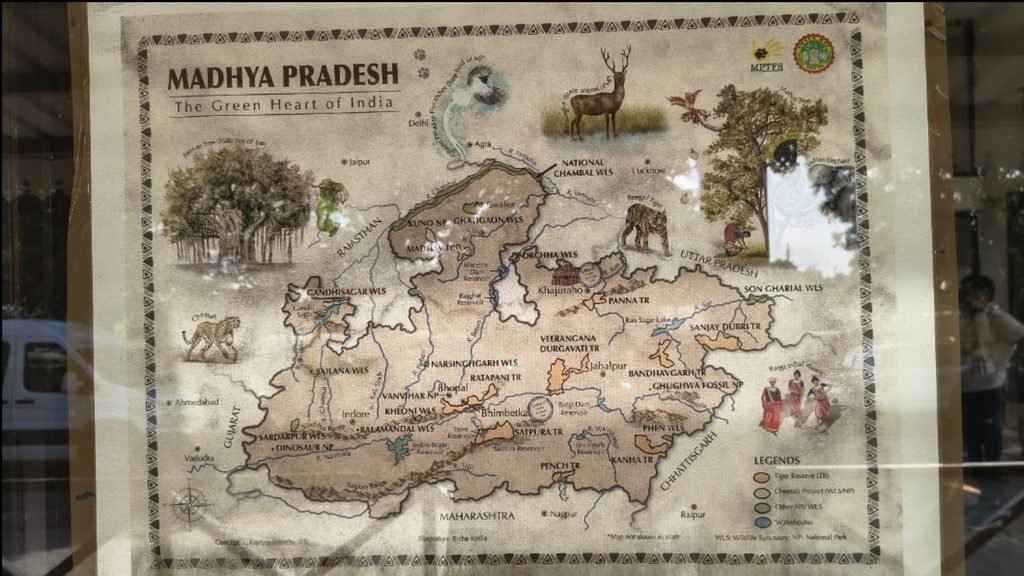
- 1975 – Notified as a wildlife sanctuary
- 1981 – Upgraded to a national park
- 1994 – Declared a Project Tiger reserve (22nd in India, 5th in Madhya Pradesh)
- 2007 – Won the Ministry of Tourism’s “Award of Excellence” for India’s best-maintained national park
The Tiger Reintroduction Story (2009 Local Extinction → Comeback)
This is Panna’s real claim to fame. By 2009, poaching had wiped out every tiger in the reserve. The population: zero. Only Sariska had suffered the same fate before it.
What happened next became a conservation legend:
- March 2009 – Two tigresses, T1 and T2, arrive from Bandhavgarh and Kanha
- November 2009 – A male, T3, is brought in from Pench… and walks 442 km back home before he’s recaptured
- April 2010 – T3 finally settles. T1 gives birth to Panna’s first litter: four cubs
- By 2024 – 18 female tigers had produced 120 cubs across 45 litters (Ecological Solutions and Evidence, 2024)
It’s one of the best-documented big-cat recoveries in Asia. And you can go see the result yourself.
Panna’s Unique Landscape – Plateaus, Gorges & the Ken River
Panna sits at a rare meeting point – where the forest belt from Kanyakumari finally ends and the Gangetic plains begin. The result is a landscape unlike most Indian tiger reserves:
- Open teak and mixed-deciduous plateaus
- Dramatic sandstone gorges cut by the Ken River
- The Ken itself – one of the cleanest tributaries of the Yamuna
- Waterfalls and canyons carved along its course
Wildlife You Can See in Panna National Park
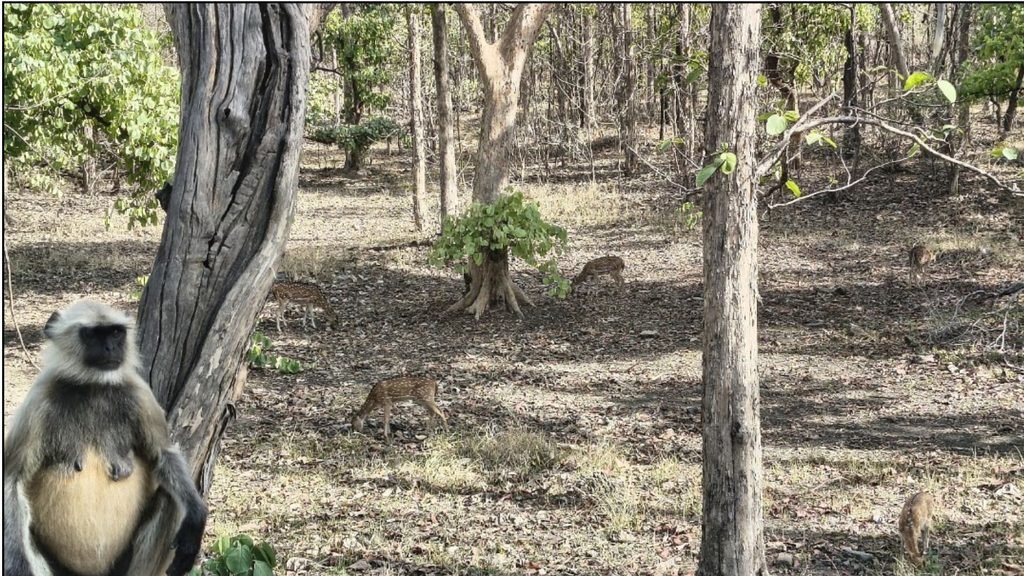
Tigers are the headline, but Panna is far from a one-species park. It’s home to 40+ mammal species, 300+ birds, and one of India’s most important gharial populations.
Tigers & Leopards
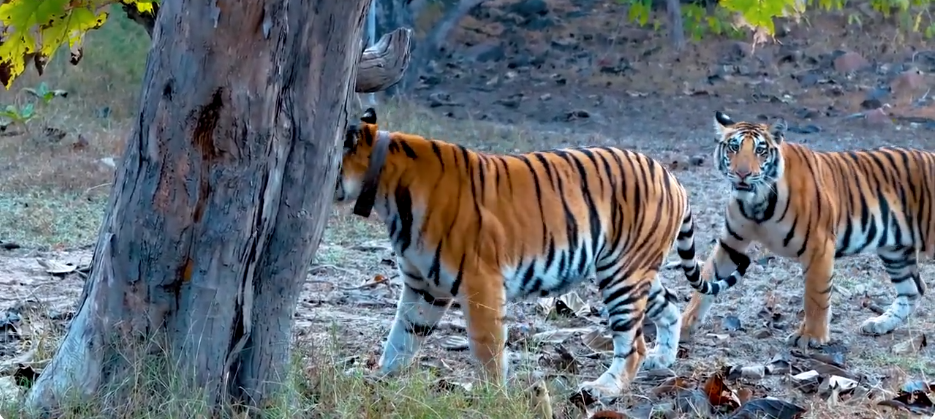
- Tigers – best odds in the Madla and Hinauta core zones
- Leopards – active in the rockier Hinauta and Akola zones, often on early morning safaris
- Both are most visible near cliff edges and dry riverbeds
Other Mammals
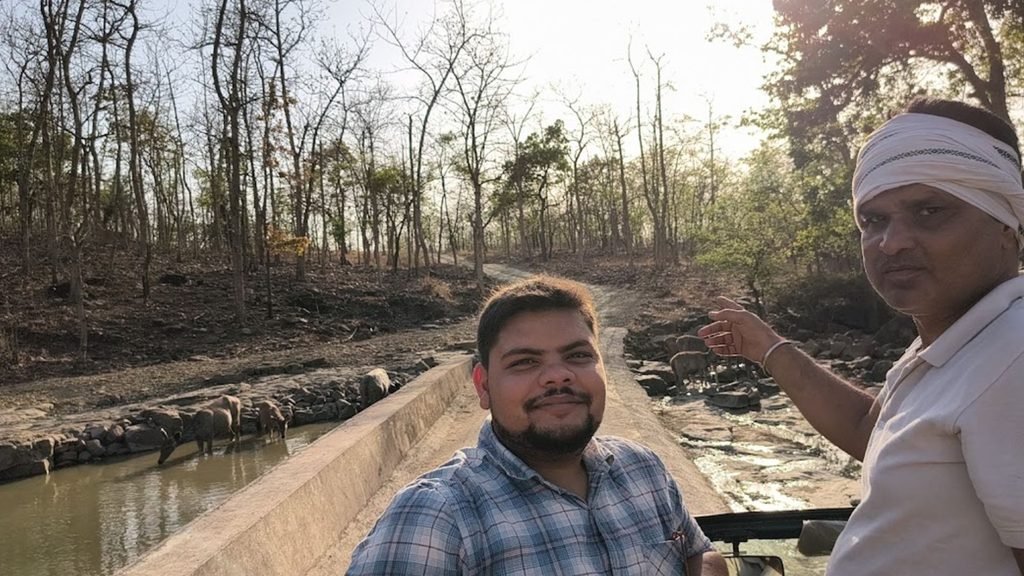
- Sloth bears – frequently seen around rocky outcrops, especially near Hinauta
- Chinkara, nilgai, chowsingha (four-horned antelope), and sambar deer
- Indian wolf and striped hyena – elusive but present in the drier buffer areas
- Large chital (spotted deer) herds along the grasslands and riverbanks
Birdlife (300+ Species)
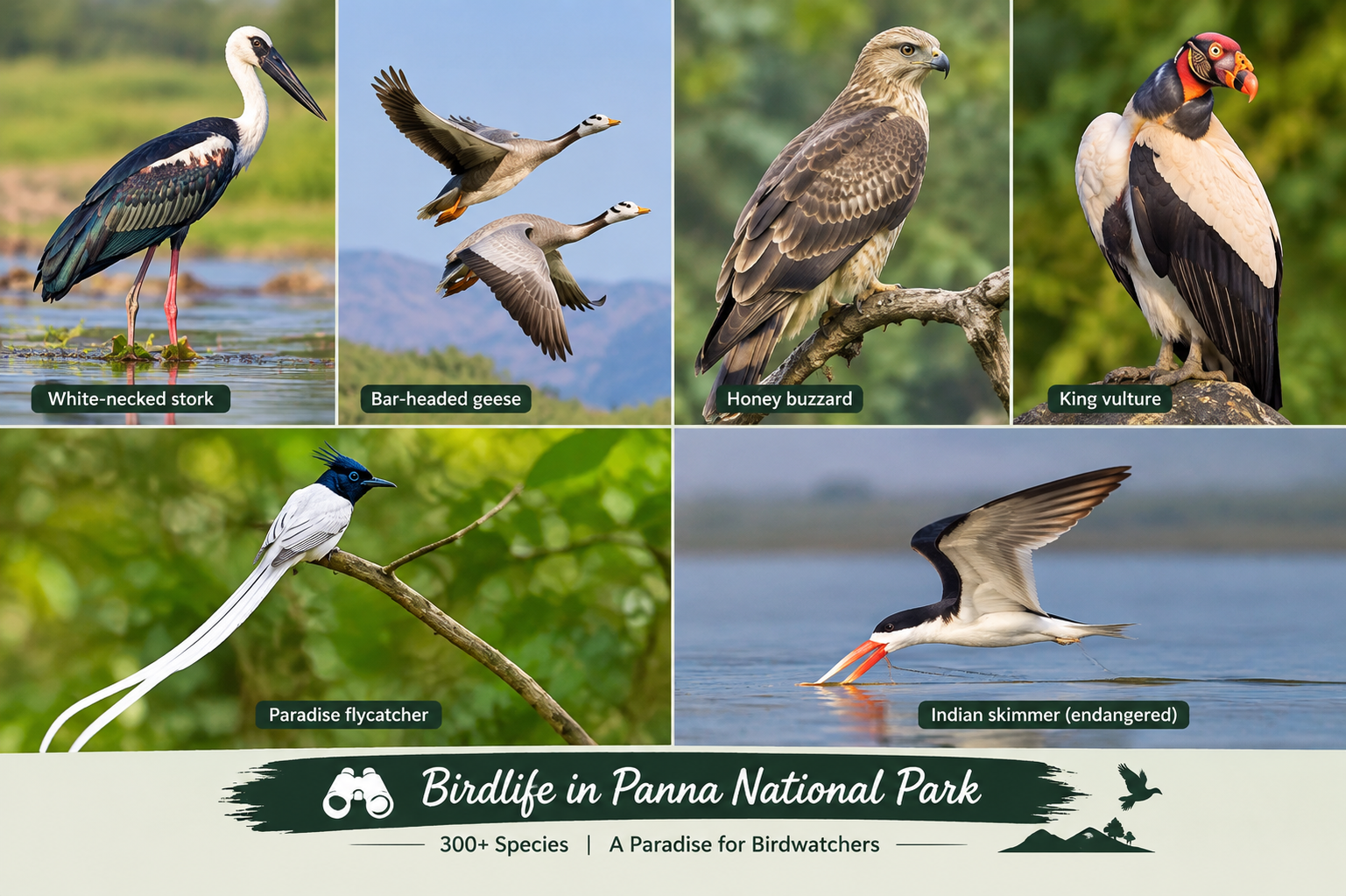
Panna is a serious birdwatching destination. Keep an eye out for:
- White-necked storks and bar-headed geese
- Honey buzzards and king vultures
- Paradise flycatchers
- The endangered Indian skimmer – best spotted in the Akola zone
Gharials & Crocodiles Along the Ken River
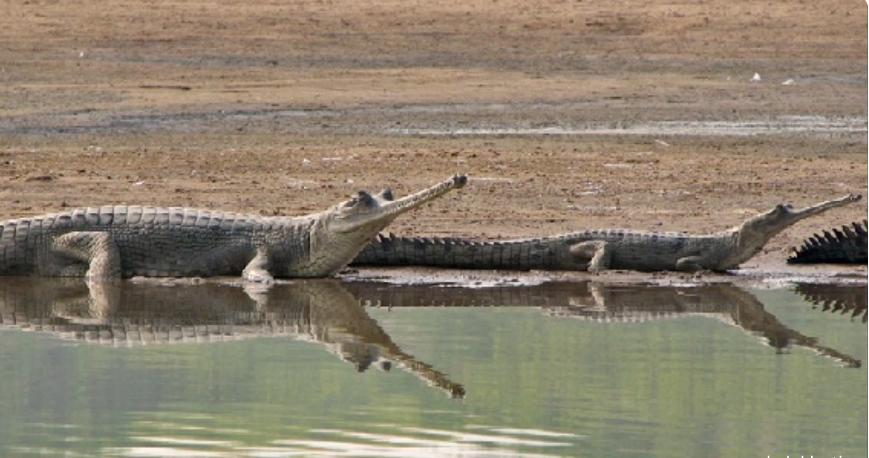
The Ken River is home to a genuinely important population of gharials – the critically endangered, long-snouted crocodilian – alongside mugger crocodiles. The nearby Ken Gharial Sanctuary protects their breeding ground at the Ken–Khudar confluence. Boat safaris inside Panna offer good gharial-spotting chances too.
Panna National Park Safari Zones
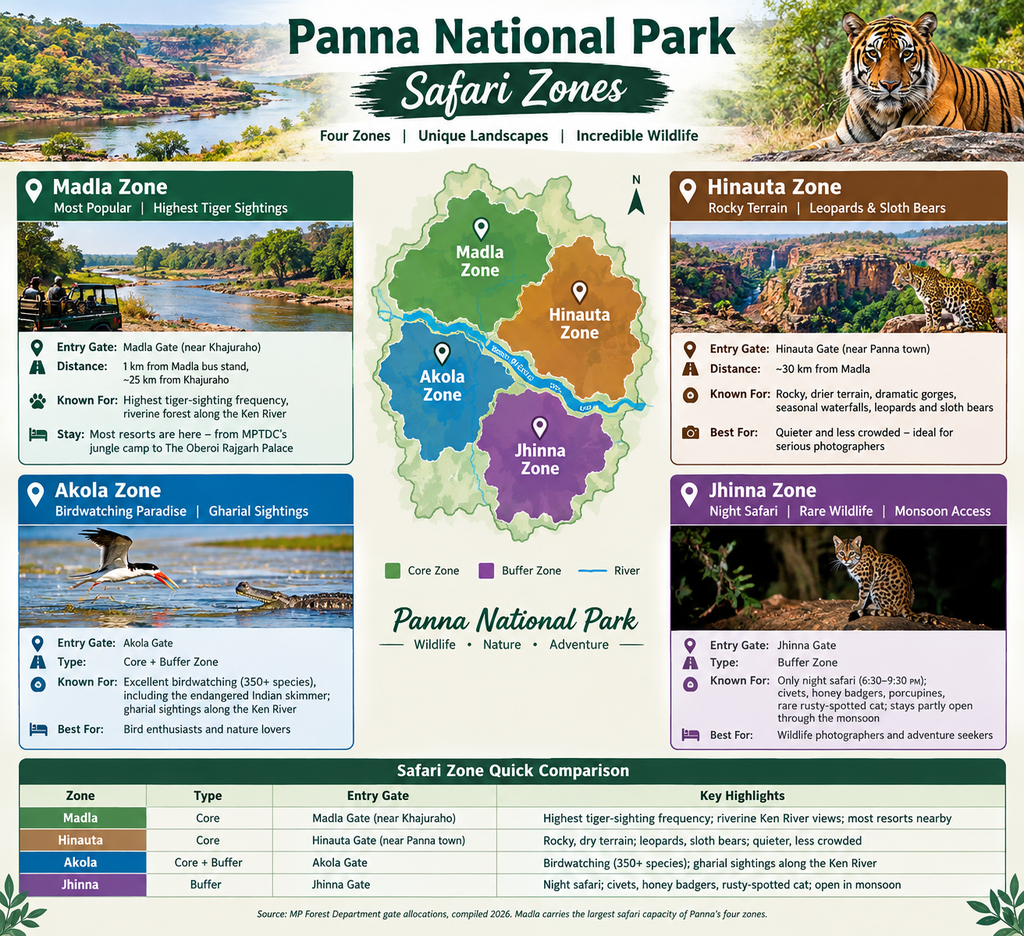
Panna has four safari zones – Madla, Hinauta, Akola, and Jhinna. Each has its own landscape, wildlife, and vibe.
Madla Zone
- Panna’s most popular, most productive zone
- Just 1 km from Madla bus stand, ~25 km from Khajuraho
- Highest tiger-sighting frequency in the park
- Dense riverine forest along the Ken River
- Most resorts are here – from MPTDC’s jungle camp to The Oberoi Rajgarh Palace
Hinauta Zone
- ~30 km from Madla
- Rocky, drier terrain – dramatic gorges, seasonal waterfalls
- Great for leopards and sloth bears
- Quieter and less crowded – better for serious photographers than families chasing a guaranteed sighting
Akola Zone
- Both a core and buffer zone
- Less visited – a calmer safari experience
- Excellent birdwatching, including the endangered Indian skimmer
- Good chances of spotting gharials along the river
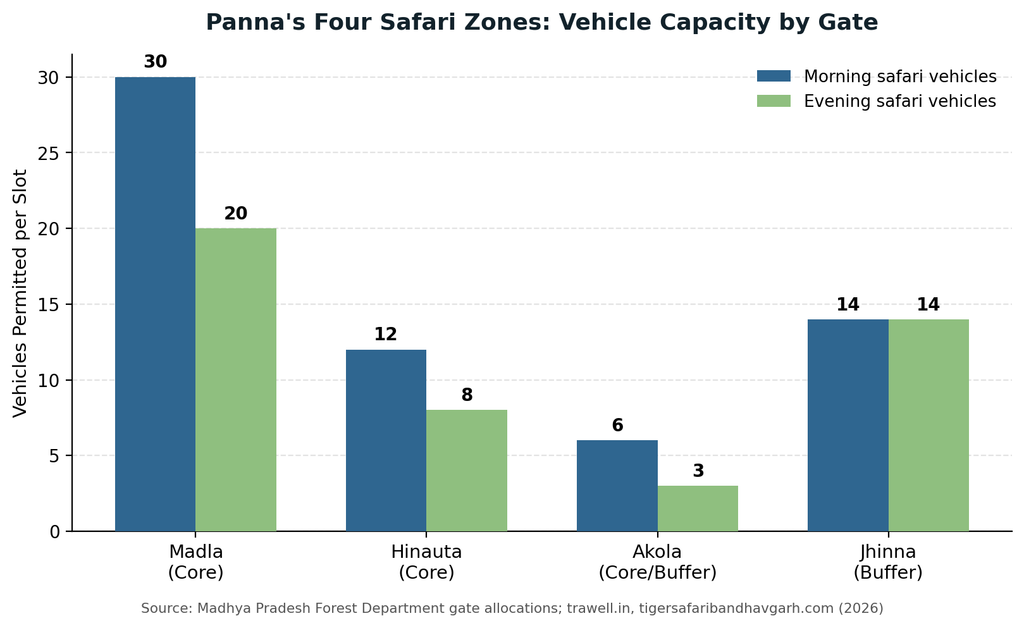
Madla carries the largest safari capacity of Panna’s four zones, reflecting its status as the most popular entry gate. Source: MP Forest Department gate allocations, compiled 2026.
One more worth knowing: Jhinna, the buffer zone. It’s the only place in Panna offering a night safari (6:30–9:30 PM) – your best shot at civets, honey badgers, porcupines, and the rare rusty-spotted cat. It also stays partly open through the monsoon, handy for last-minute trips.
| Zone | Type | Entry Gate | Known For |
| Madla | Core | Madla Gate (near Khajuraho) | Highest tiger-sighting frequency; riverine Ken River views; most resorts nearby |
| Hinauta | Core | Hinauta Gate (near Panna town) | Rocky, dry terrain; leopards, sloth bears; quieter, less crowded |
| Akola | Core + Buffer | Akola Gate | Birdwatching (350+ species); gharial sightings along the Ken River |
| Jhinna | Buffer | Jhinna Gate | Panna’s only night safari; civets, honey badgers, rusty-spotted cat; open in monsoon |
Panna National Park Safari Timings & Entry Fee (2026)
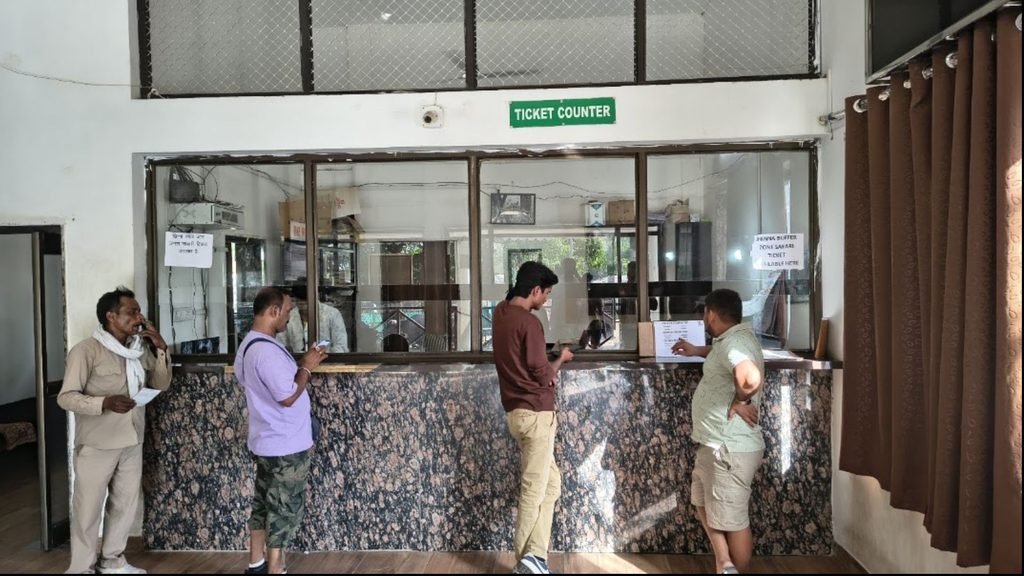
Safaris run twice a day, every day (barring Wednesday evenings). Costs vary by zone, vehicle, and nationality.
Morning & Evening Safari Slots
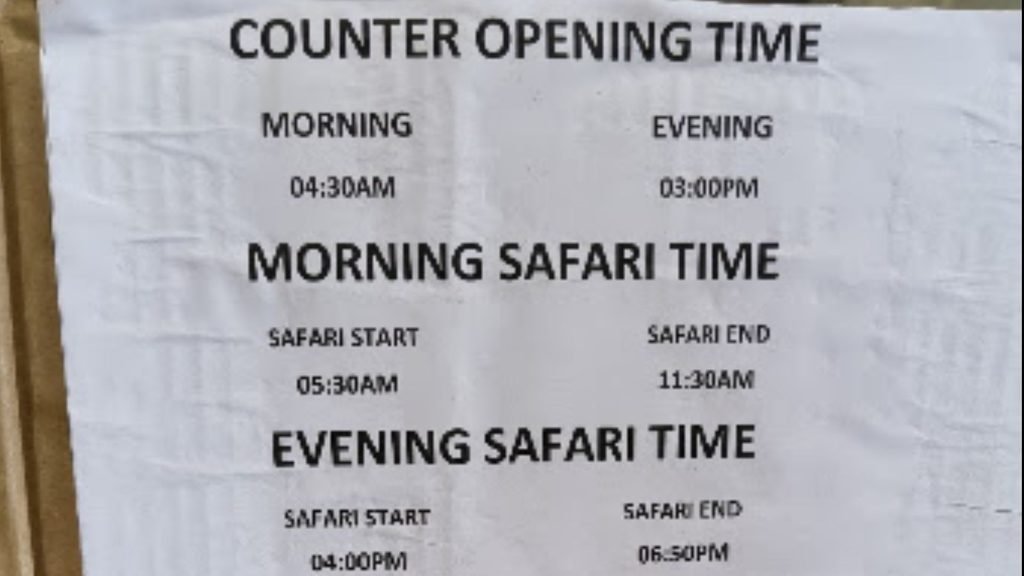
- Morning safari: approximately 6:30 AM – 10:30 AM (seasonally adjusted; can start as early as 5:30 AM in peak summer)
- Evening safari: approximately 2:30 PM – 5:30 PM (starts around 3:00–3:30 PM in winter)
- Evening safaris are closed every Wednesday across all Madhya Pradesh tiger reserves, Panna included
- Arrive at least 30 minutes before your slot – entry formalities and ID verification take about 20 minutes
Jeep Safari vs Canter Safari Cost
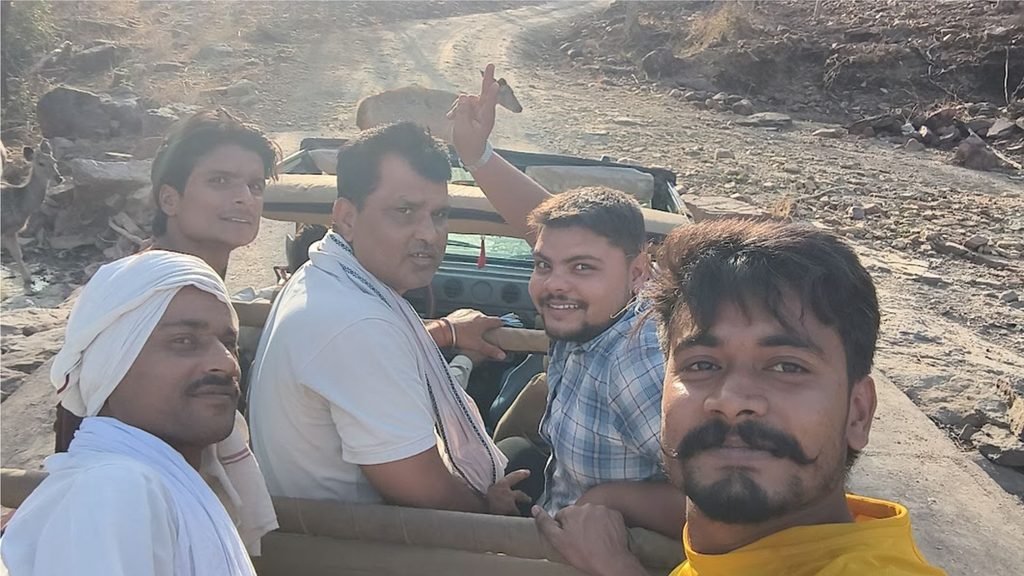
- Jeep safari (shared seat): around ₹250 per person, per zone permit, plus vehicle and guide charges
- Jeep safari (full vehicle, up to 6 people): around ₹1,500 per jeep, plus permit and guide fees
- Canter (open safari bus, up to 20 people): a budget-friendly shared option, mainly available at Madla Gate
- Additional charges apply for camera fees, guide fees, and vehicle entry – confirm current rates at the gate or booking portal, since forest department fees are revised periodically
Online Booking Process
Book online via the official MP Forest Department portal, or at the gate counter if slots are left. Panna has no last-minute “Tatkal” quota – so book early, especially for Madla.
- Book your zone and time slot a few weeks ahead
- Carry original photo ID for every visitor – it’s checked at the gate
- Permits are non-transferable
Best Time to Visit Panna National Park
October to June – that’s when the park is open. Want the best tiger odds? Go April to June. Prefer comfortable weather and birdwatching? October to March is your window.
October–June Safari Season
- Winter (Nov–Feb): cool, pleasant, 7°C–25°C – great for birdwatching and long game drives
- Summer (Apr–Jun): hot, 40°C+, but thinning vegetation pushes tigers to waterholes – best sighting odds
- Park opens 16 October, closes 30 June
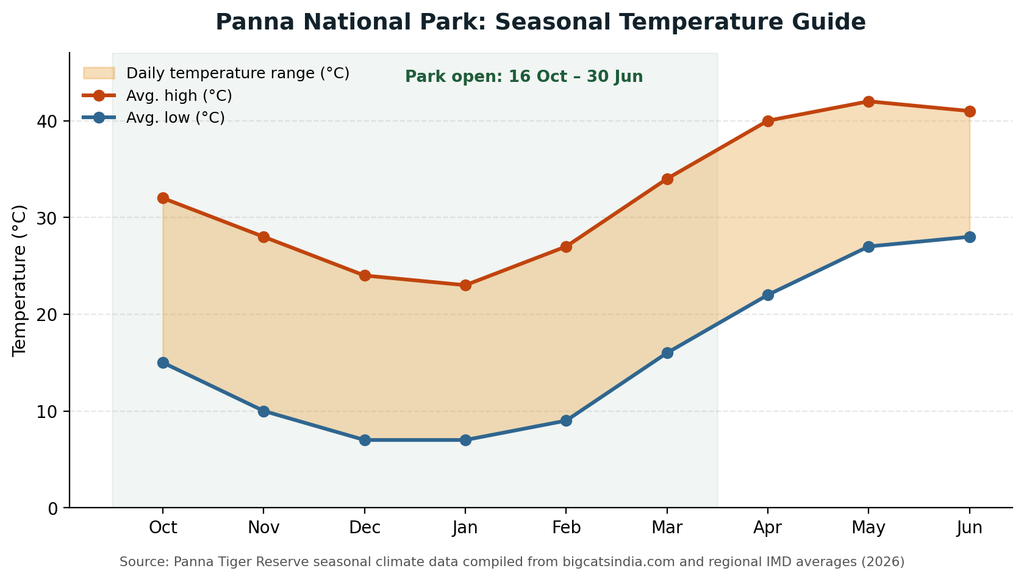
Panna’s dry, hot summers (April–June) push wildlife toward waterholes, improving tiger-sighting odds even as temperatures climb. Source: seasonal averages compiled for the region, 2026.
Monsoon Closure (July–September) & Waterfall Season Nearby
Panna’s core zones shut completely from July to September, giving the forest a break. Travelling through central India then? Head to Pandav Falls or Raneh Falls instead – both look their absolute best when the Ken River is running full.
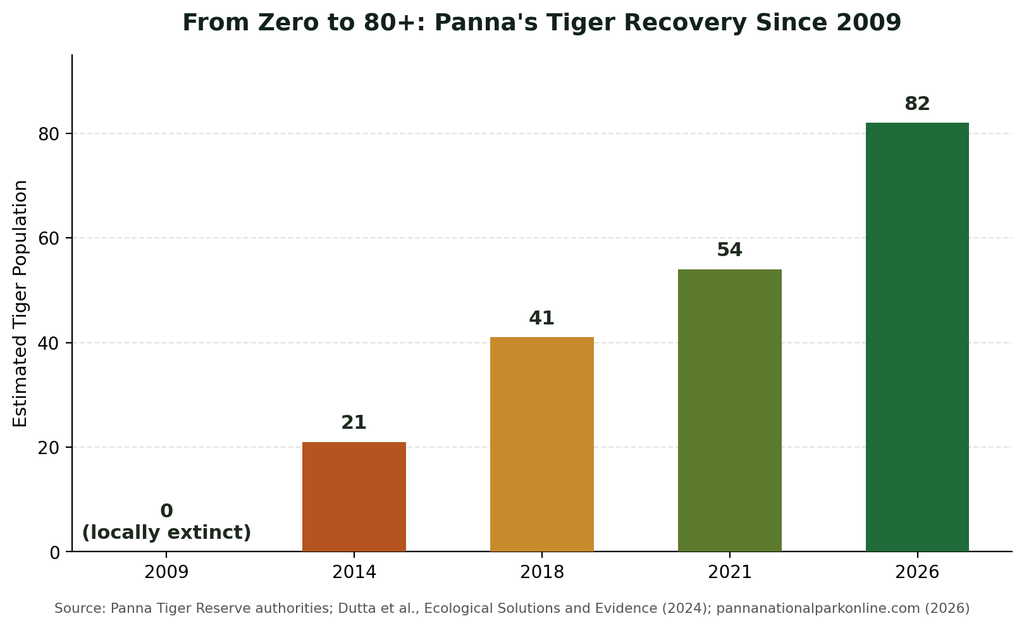
Panna’s tiger population has climbed from zero in 2009 to more than 80 tigers today – one of the best-documented large-carnivore recoveries in Asia. Source: Dutta et al. (2024), Ecological Solutions and Evidence; pannanationalparkonline.com (2026).
Places to See Inside & Around Panna National Park
Panna sits in a rich little cluster of attractions. Most visitors combine it with two or three of these rather than visiting it alone.
- Pandav Falls and Caves – a 30-metre waterfall linked to the Pandavas’ exile in the Mahabharata
- Raneh Falls – a 5-km granite canyon on the Ken River, often called the “Grand Canyon of India”
- Ken Gharial Sanctuary – protects the endangered gharial at the Ken–Khudar confluence
All three are close enough for a single well-planned day trip. Full guides for each are linked above.
How to Reach Panna National Park
The easiest route is via Khajuraho – it has its own airport and railway station, both just 25–27 km from Madla Gate.
By Air – Khajuraho Airport
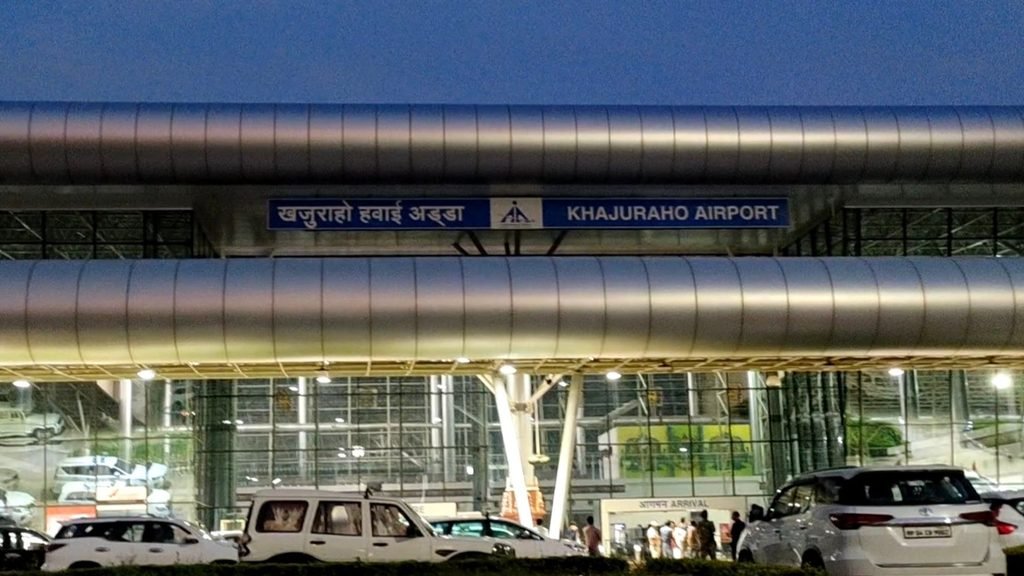
Khajuraho Airport (HJR) is ~26 km away, with daily direct flights from Delhi and Varanasi. A taxi to Madla Gate takes 30–40 minutes. Full flight schedules and fares: see our Khajuraho Airport guide.
By Rail – Satna & Khajuraho Railway Stations
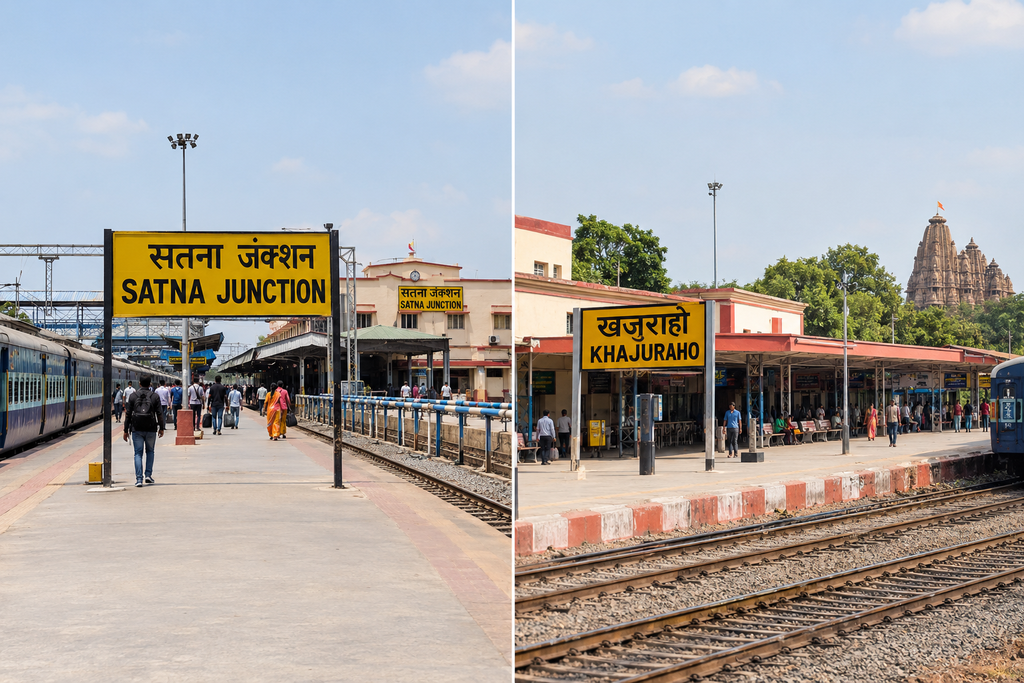
Khajuraho Railway Station is closest – ~20–26 km, with connections to Delhi, Bhopal, and Udaipur. For Mumbai, Kolkata, and other metros, Satna Junction (~70–90 km) is better connected. Details: see our Satna Railway Station guide.
By Road – Distance from Khajuraho, Chhatarpur, Jhansi, Bhopal
- From Khajuraho: ~25–27 km (30–40 min) via NH39
- From Chhatarpur: ~45 km (~1 hour)
- From Jhansi: ~176 km (~4 hours)
- From Bhopal: ~372–380 km (~7–8 hours) via NH86
- From Delhi: ~590–600 km (~9–11 hours) via NH44 and NH39
Where to Stay Near Panna National Park
Options range from budget forest camps to full luxury – most are clustered near Madla Gate for easy morning-safari access.
- Budget: MPTDC jungle camps and forest rest houses near Madla and Hinauta
- Mid-range: Ken River Lodge, Tendu Leaf Jungle Resort & Spa
- Luxury: Pashan Garh (Taj Safari, near Akola) and The Oberoi Rajgarh Palace (near Madla)
Bharat Bhraman Insider Tips for Panna Safari
Bharat Bhraman Insider Tip: Most first-timers default to Madla – it’s busy and well-connected. But for photography, ask your resort to book Hinauta or Akola instead. Fewer vehicles, longer sightings, and Hinauta’s golden-hour light on the gorges is spectacular. Visiting between October and March? Don’t skip the Jhinna night safari – it’s your best shot at the elusive rusty-spotted cat, one of the world’s smallest wild cats.
FAQs About Panna National Park
What is Panna National Park famous for?
Panna National Park is famous for one of India’s most successful tiger reintroduction stories – recovering from zero tigers in 2009 to more than 80 today – along with its dramatic Ken River gorges and proximity to the Khajuraho World Heritage temples.
What is the entry fee for Panna National Park safari?
A shared jeep seat typically costs around ₹250 per person, while a full jeep (up to 6 people) costs approximately ₹1,500, plus separate guide and camera fees. Exact rates vary by zone and are revised periodically by the Madhya Pradesh Forest Department, so it’s best to confirm current pricing at the time of booking.
Which is the best zone for tiger sighting in Panna?
Madla Zone consistently records the highest tiger-sighting frequency thanks to its dense riverine habitat and larger vehicle capacity, making it the most popular choice for first-time visitors.
How many days are enough for Panna National Park?
Two to three days, covering four safaris (two zones across morning and evening slots), gives a realistic chance of a tiger sighting while leaving time to see Pandav Falls, Raneh Falls, or the Khajuraho temples nearby.
Is Panna National Park better than Bandhavgarh?
They offer different experiences rather than one being strictly “better”: Bandhavgarh has a higher tiger density and near-guaranteed sightings, while Panna offers a quieter, less crowded safari, a richer bird and gharial population, and the unique appeal of visiting one of conservation’s great comeback stories firsthand.
References & Sources
Wikipedia. “Panna National Park.” en.wikipedia.org/wiki/Panna_National_Park
WWF India. “Panna Tiger Reserve.” wwfindia.org
Panna Tiger Reserve (Official). “The Park.” pannatigerreserve.in
Dutta, S. et al. (2024). “Successful conservation translocation: Population dynamics of tiger recovery in Panna Tiger Reserve, Central India.” Ecological Solutions and Evidence, Wiley Online Library.
The Better India. “0 to 54: The Untold Story of How Panna Got Her Tigers Back in Just 10 Years.”
Outlook India. “River Linking Project Threatens Decade-Long Success Story Of Panna Tiger Reserve.”
Trawell.in. “Madla / Hinauta Jeep & Canter Safari – Timings, Entry Fee, Safari Cost.”
Madhya Pradesh Forest Department. Official safari booking portal – forest.mponline.gov.in
Tour My India, Nature Safari India, Big Cats India, Ken River Lodge – Panna National Park visitor guides (2025–2026), cross-checked for zone, distance and wildlife details.
pannanationalparkonline.com. “Panna National Park & Tiger Reserve – Visitor Guide 2026.”