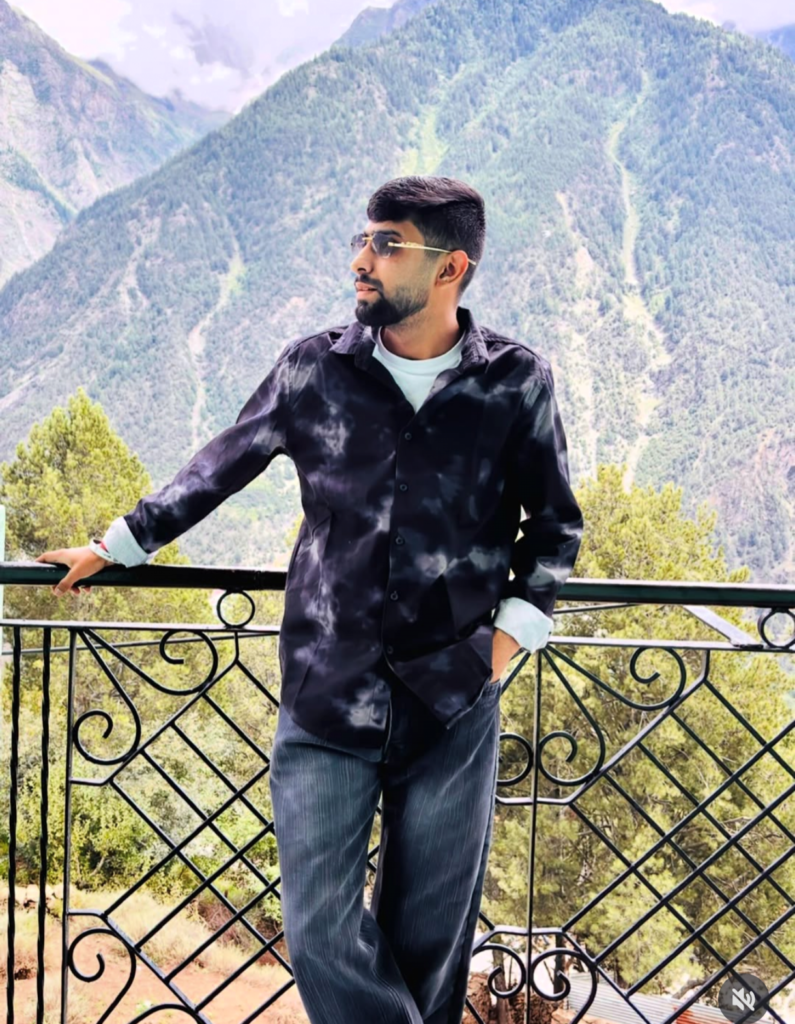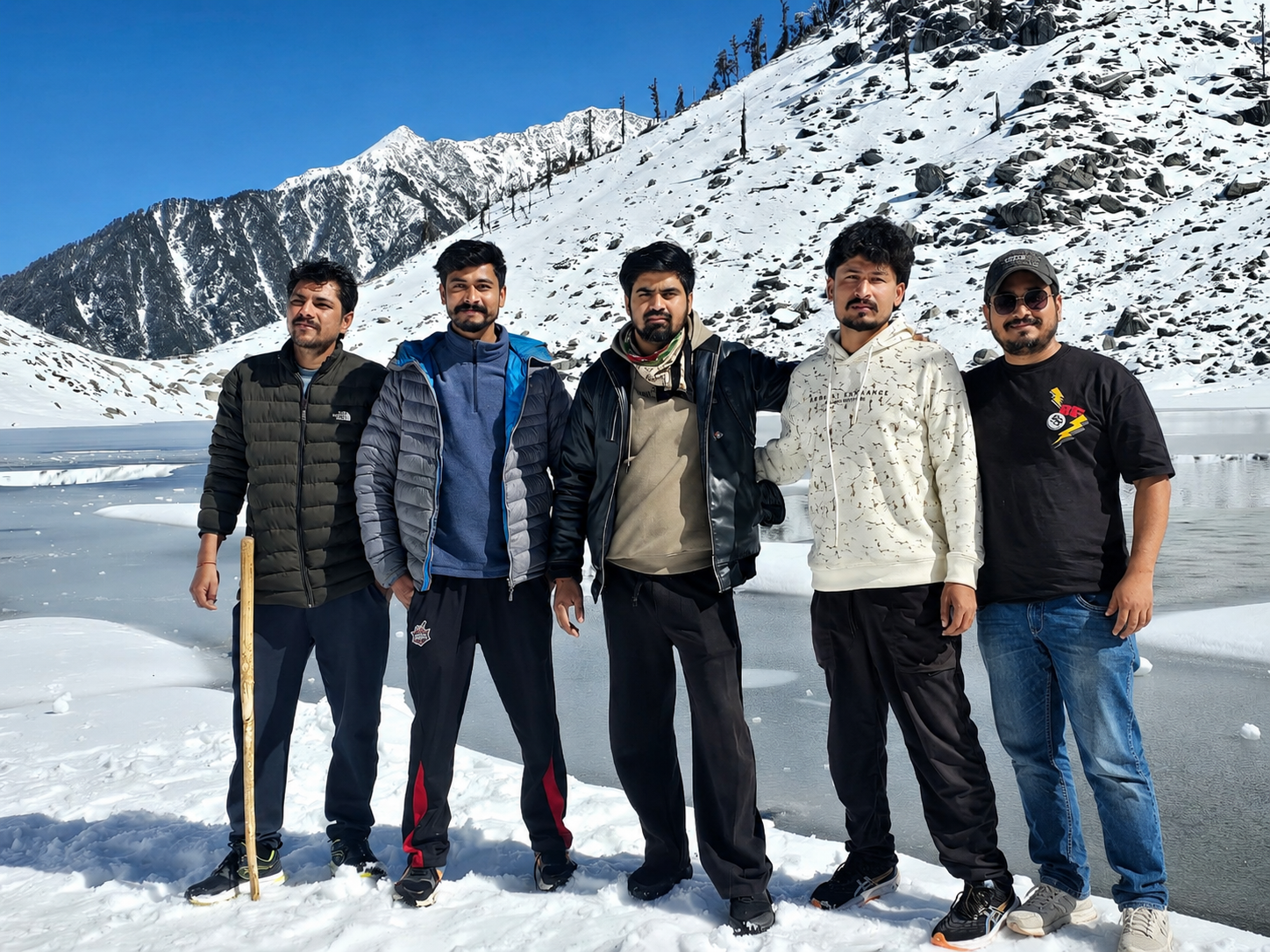

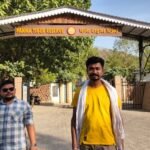

“We didn’t plan for perfection. We planned for the mountains – and the mountains gave us everything.” – Kunal Sharma
Some journeys are planned meticulously on spreadsheets. And then there are journeys like this one – four friends, one overnight bus, a few stolen apples from a Kinnaur orchard, and a sacred lake sitting quietly at nearly 3,900 metres above sea level. This is the real, unfiltered story of the Yulla Kanda trek from Chandigarh, as experienced by Kunal Sharma and his three friends during the rainy month of August 2025.
If you are searching for a Yulla Kanda trek package, the Yulla Kanda trek distance, or just wondering whether this offbeat Himalayan gem is worth the effort – read this story first. No brochure language, no stock photos. Just real roads, real rain, and real darshan.
What Is Yulla Kanda and Why Does It Matter?
Before diving into Kunal’s journey, let’s answer the most searched question: What is Yulla Kanda famous for?
Yulla Kanda (also written as Yulla Kanda) is a high-altitude sacred lake and temple complex located at approximately 3,895 metres (12,778 feet) in the Kinnaur district of Himachal Pradesh. It is home to what is widely regarded as the world’s highest temple dedicated to Lord Krishna – a distinction that draws spiritual seekers, adventure trekkers, and curious travellers alike every season.
The mythology is as dramatic as the landscape. According to local belief and Mahabharata lore, the Pandavas – during their years of exile – built this lake and consecrated a temple to Lord Krishna in the Rora Valley. It is said Lord Krishna himself visited and stayed in this very region. Every year on Janmashtami, thousands of devotees, Buddhist lamas, and villagers trek up to celebrate the occasion with collective prayers, chanting, and ancient rituals that feel untouched by the modern world.
There is also a unique ritual tied to the lake: pilgrims place their traditional Kinnauri woolen caps (topis) upside down on the water. If the cap floats to the other side, it is believed the devotee will be blessed with prosperity. If it sinks, challenges lie ahead. Standing at that edge – wet, exhausted, out of breath – and watching a cap drift across that still glacial water is something no tour package can bottle.
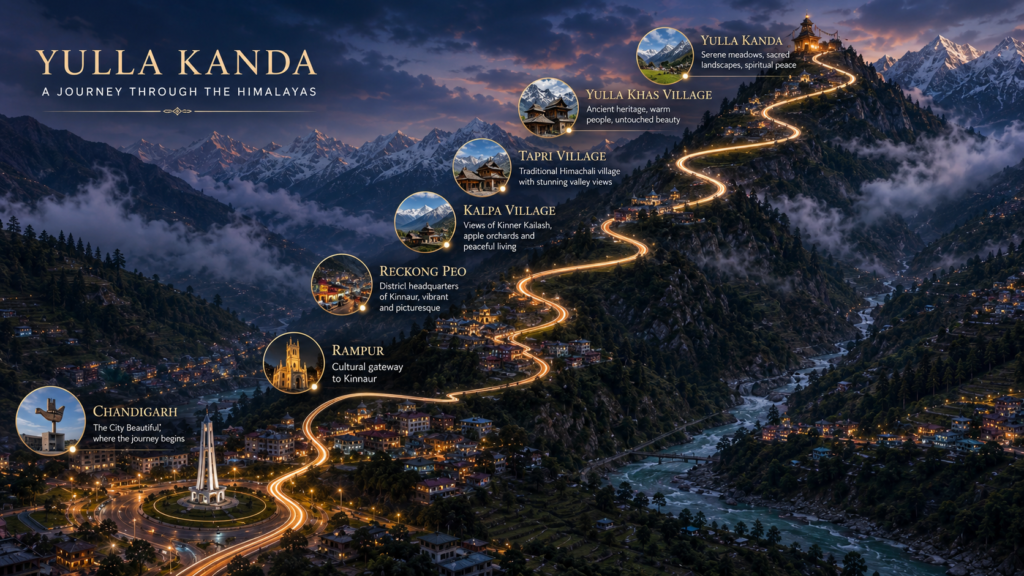
Yulla Kanda is in Kinnaur district, roughly 15–20 kilometres from the town of Reckong Peo (also spelled Recong Peo), which serves as the district headquarters and the most logical base for reaching the trek’s starting point.
The Journey Begins: Chandigarh to Reckong Peo by Night Bus
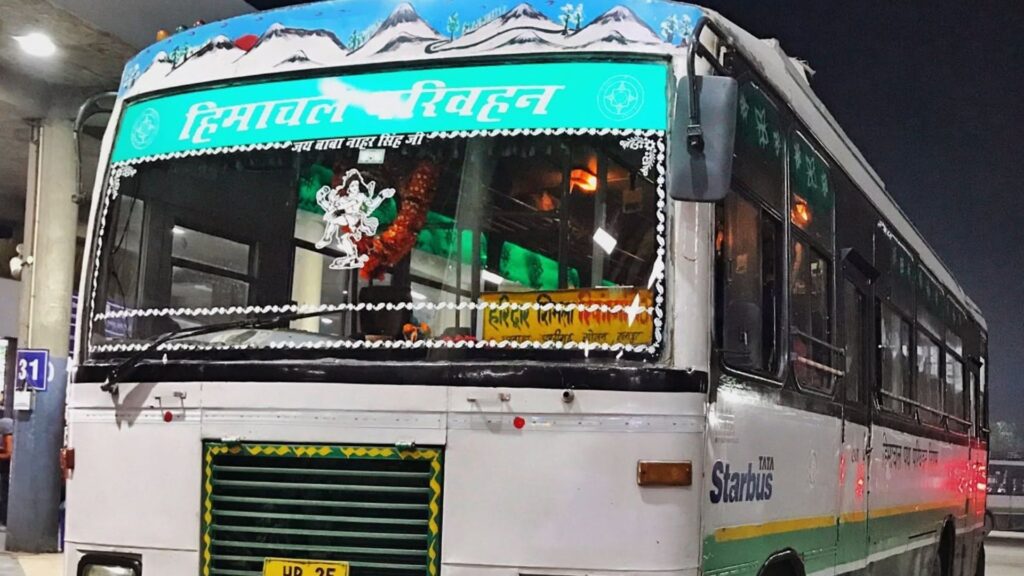
Kunal and his three friends left Chandigarh’s Housing Board Bus Stand on a Thursday at 8 PM, having wrapped up office work just hours earlier. They had booked their HRTC bus tickets online – a wise move, especially during August.
Bus fare: ₹1,800 per person (Chandigarh to Reckong Peo)
The bus rolled through the night into the heart of Himachal Pradesh, and that is when the mountains decided to test their resolve.
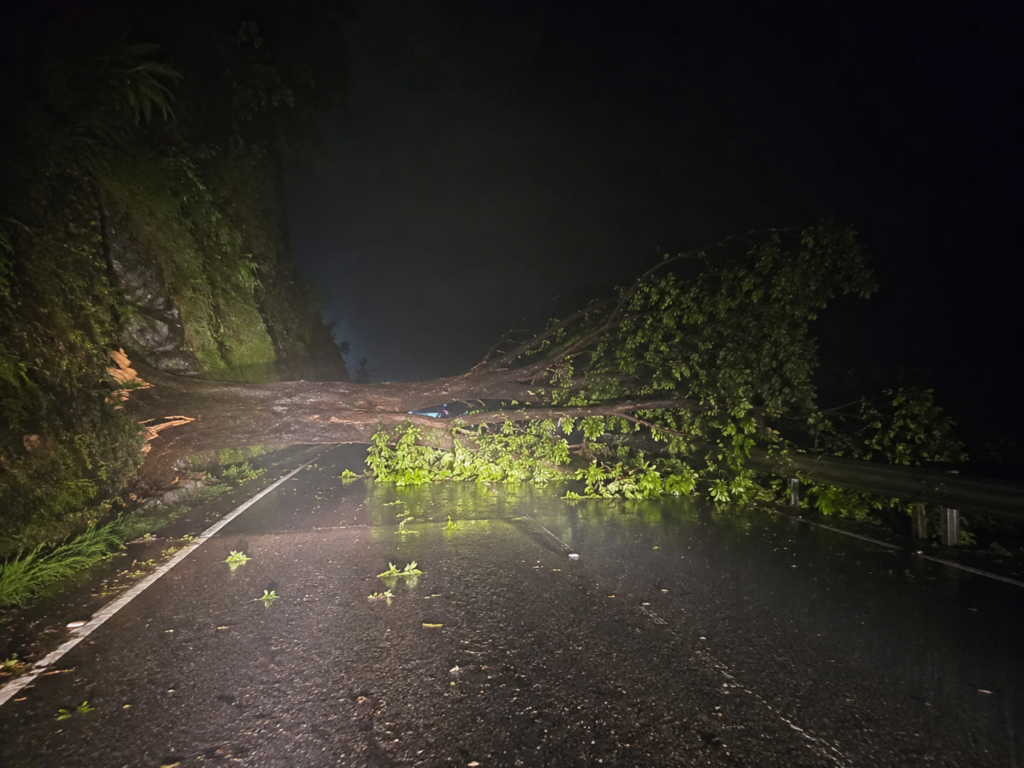
Around 3 to 3:30 AM, a massive tree had fallen across the road, blocking the entire route. This is a common reality on Himalayan highways during monsoon – locals even have a name for it in Punjabi: “patthar dig gye” (the rocks have fallen). The group waited. The road was eventually cleared, and the journey continued.
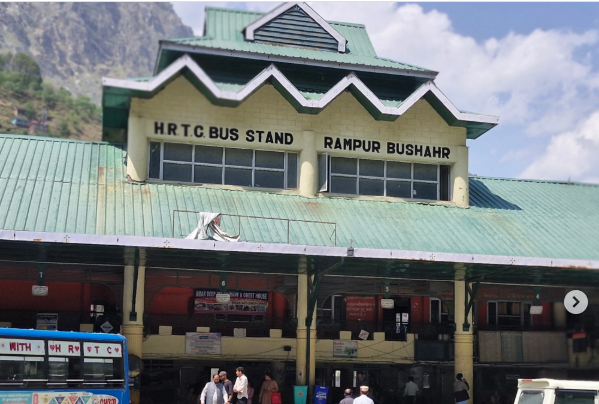
Just before dawn, the bus crossed Rampur, Himachal Pradesh, and what Kunal saw there changed the mood of the entire trip. The Rampur bus stand – surprisingly grand for a mountain town – sits against a backdrop of mist-wrapped hills and a swollen, churning river. The sunrise over Rampur, with golden light spilling across the valley as the Sutlej River rushed below, was something Kunal described as “very beautiful and peaceful”. It was a reminder that the mountains reward those willing to lose a little sleep.
The driver was changed at Rampur, and the bus continued deeper into Kinnaur Valley. Near the famous Kinnaur Gate, another landslide had partially blocked the road – heavy boulders had rolled down the slope. The convoy waited again, then moved through. These delays are not anomalies in August; they are part of the monsoon mountain experience, and honestly, they add to the story.
After roughly 15 hours on the road, the bus finally rolled into Reckong Peo Bus Stand.
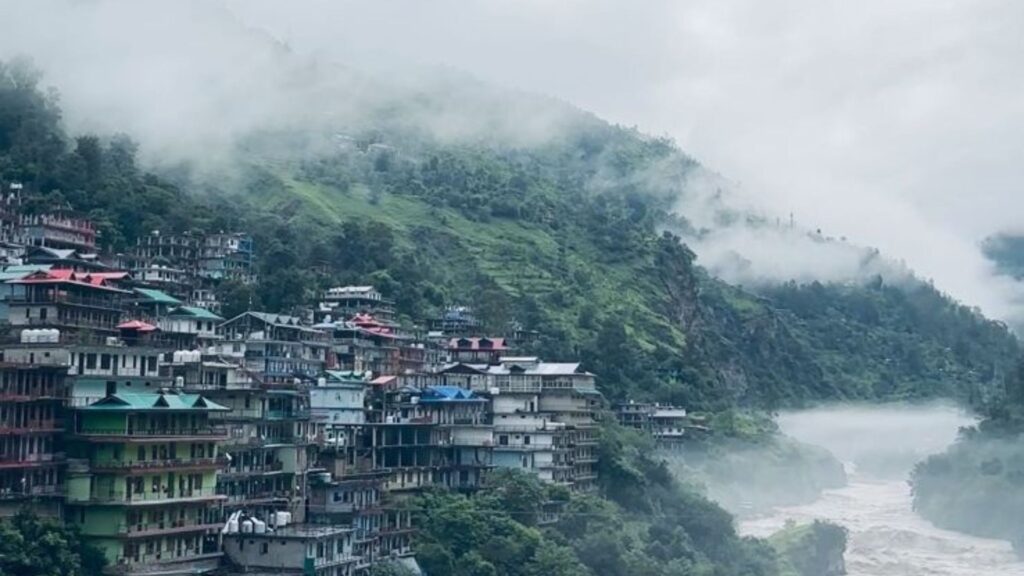
Arriving at Reckong Peo – The World’s Most Peaceful City
The group stepped off the bus at around 11 AM, exhausted from the overnight journey – landslides, tree falls, and all. But the moment they looked up, the tiredness melted.
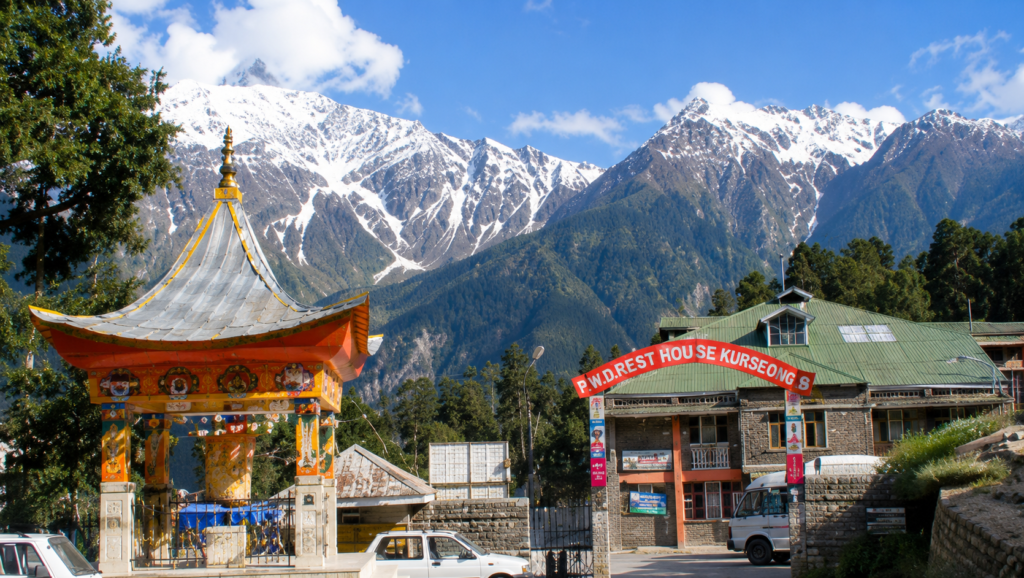
Reckong Peo is the district headquarters of Kinnaur, sitting at around 2,670 metres above sea level. What greets you immediately is the sight of the Kinnaur Kailash mountain range – a wall of snow-capped peaks so close, so dramatic, that first-time visitors often just stop walking and stare. Kunal called it “the world’s most peaceful city,” and after fifteen hours on a Himalayan bus, that feeling of stillness is genuinely striking.
Shimla to Yulla Kanda distance (via Reckong Peo) is approximately 235–250 kilometres by road, making Reckong Peo the natural staging post for all trekkers coming from Shimla, Delhi, or Chandigarh. Delhi to Yulla Kanda distance is approximately 580–600 kilometres by road.
The group spent about 20 minutes finding their hotel – a reasonable confusion for first-timers in an unfamiliar hill town. Their room was ₹6,000 per night for four people (no meals included), which works out to ₹1,500 per person – a fair rate for a clean, comfortable base in the mountains.
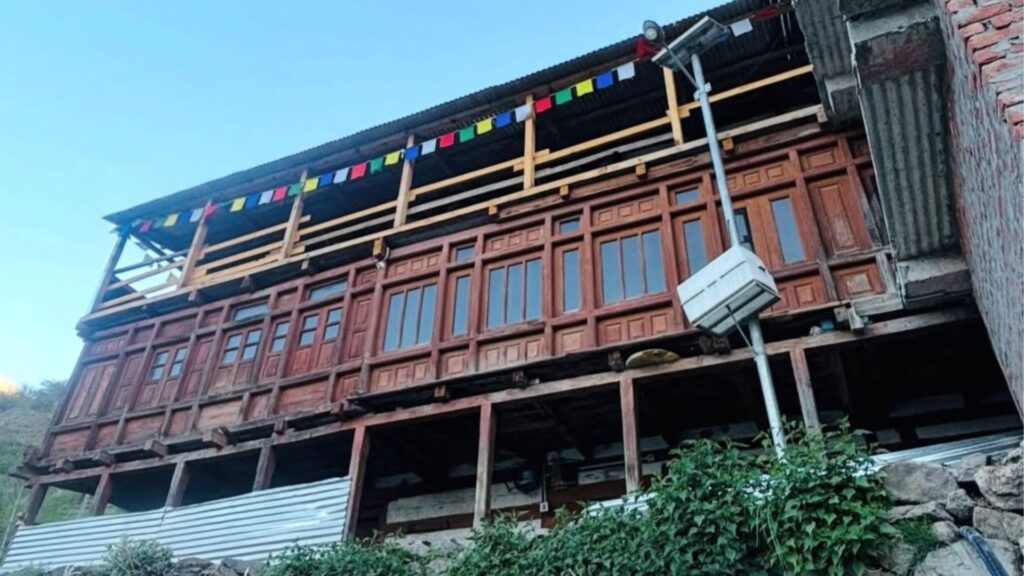
They rested, bathed, and got ready. Then someone spotted an apple orchard nearby.
Kinnaur is apple country. The trees here produce some of the finest apples in India, and in August, the branches are heavy with fruit – red, round, and irresistible. Kunal and his friends, like any honest travellers, helped themselves to a few apples from a tree near the orchard. First time seeing apples grow on a tree so without patient we stolen few apples (for other do not do this ask and then take) That detail says something beautiful about how a journey can hold its biggest surprises in the simplest moments.
Kalpa Village: The Land of Lord Shiva
Refreshed and apple-fed, the group headed to the Reckong Peo bus stand and took a local bus to Kalpa Village.
Bus fare: approximately ₹40 | Distance: 10–15 km
Kalpa is often called the Land of Lord Shiva, perched on a ridge directly facing the Kinnaur Kailash range. The views here are considered among the finest in all of Himachal Pradesh.
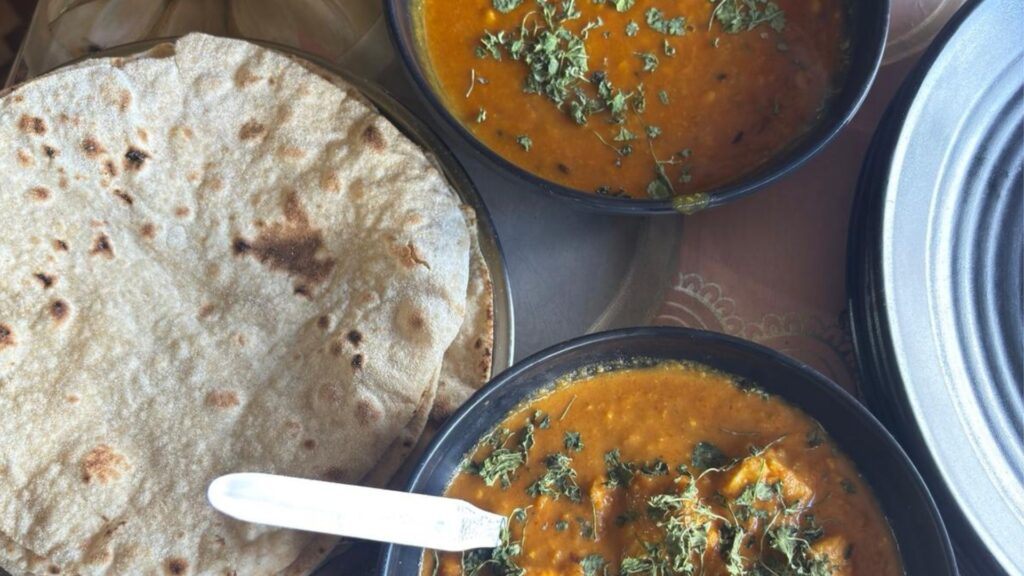
The group first sat down for lunch in Kalpa – simple, hot, and according to Kunal, very tasty. The photographs confirm it: two black bowls of richly spiced dal and paneer curry, topped with crushed dried herbs, alongside a generous stack of freshly made chapatis. Mountain food, honest food, the kind of meal that feels like it was made by someone who understood hunger.
After lunch, they visited the Kalpa Monastery – an ancient and serene Tibetan Buddhist monastery that carries the quiet dignity of centuries. Inside, a massive prayer wheel (dharma chakra) wrapped in brocade fabric stands at the entrance – the kind of artefact that makes you slow down, spin it once, and feel unexpectedly centred.
From Kalpa, the Kinnaur Kailash mountain appeared before them in its full, unobstructed glory. Kunal summed it up in one word: “Unexpected.” That is the best kind of travel experience – the one you couldn’t have imagined even if you had tried.
Between 4 and 6 PM, the group captured a timelapse of the mountain. This is the golden hour in Kinnaur – when sunlight hits the Kinnaur Kailash at a specific angle and the entire face of the mountain turns gold. Locals call it the Golden Mountain, and standing there watching it happen in real time is something that no photograph ever fully does justice to.
Before returning to Reckong Peo, the group walked through the local market and picked up essential trekking supplies: raincoats, energy bars, caps, and a few other things for the big day ahead. Their hotel owner prepared food and chai for them that evening – a small act of warmth that Kunal remembered specifically as the kindness of the hills.
3 AM Wake-Up Call: The Trek Begins
The next morning, the group was up at 3 AM. No alarm drama – the excitement of what lay ahead was alarm enough.
They took a bus from Reckong Peo to Tapri Village.
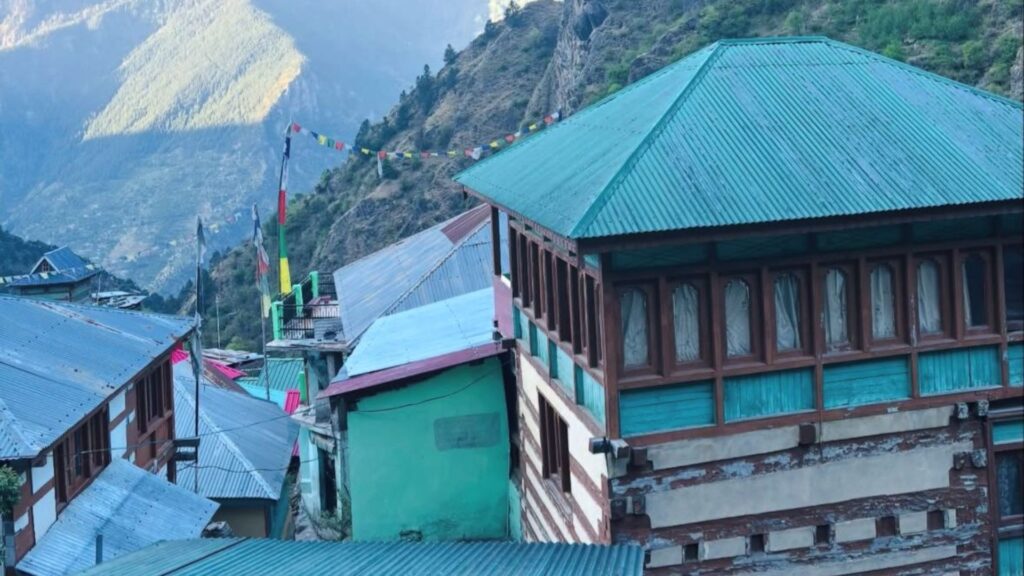
Bus fare: ₹60–70 per person
Tapri is a small town on the Sutlej River, and it serves as the jump-off point for hiring local transport toward the Yulla Khas base village.
From Tapri, they arranged a private taxi up to Yulla Khas Village.
Taxi fare: ₹2,400 (shared across 4 people)
They reached Yulla Khas by 5 AM, and with light rain already falling and the air growing thinner, the Yulla Kanda trek began.
The Trek: 5 AM to Summit
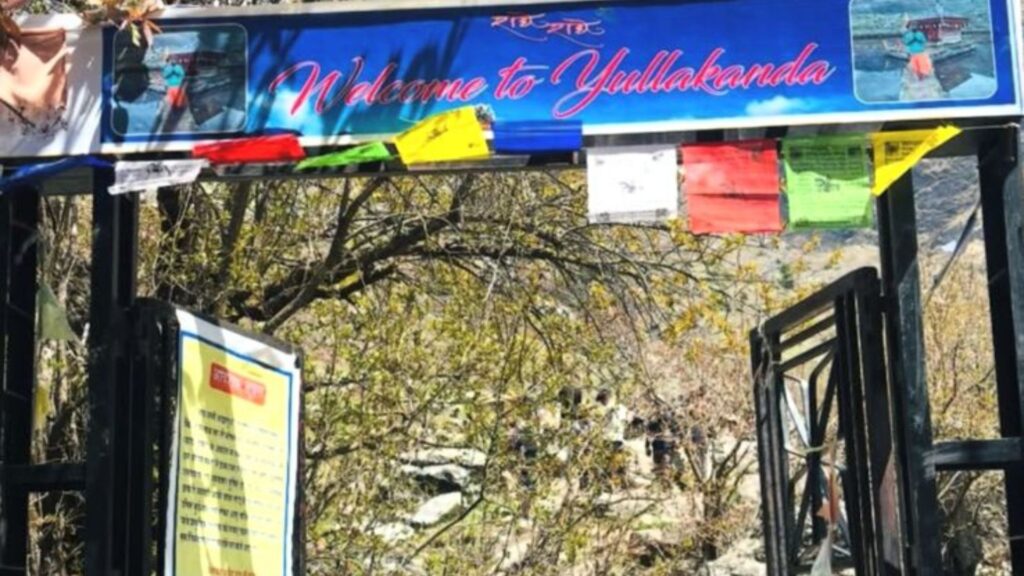
The Yulla Kanda trek distance from the base village is approximately 12 kilometres one-way (around 24 kilometres round trip). The trail climbs through dense forest, opens into alpine meadows, and eventually reaches the sacred lake and temple at 3,895 metres.
In the early stretch, the group followed a couple who seemed to know the route. After a while, they overtook them – and promptly took a wrong turn. They found themselves scrambling across an improvised bridge made from fallen trees across a mountain stream, which any experienced trekker will recognise as a classic detour moment. By around 10 AM, they had found the correct trail and were back on route.
The path was muddy from the light rain. Oxygen levels were dropping noticeably. Conversation became shorter. Steps became more deliberate. This is the moderate-to-difficult section of the trek that no description quite prepares you for – when your lungs are working harder than usual and the incline seems relentless.
And then, finally – Yulla Kanda.
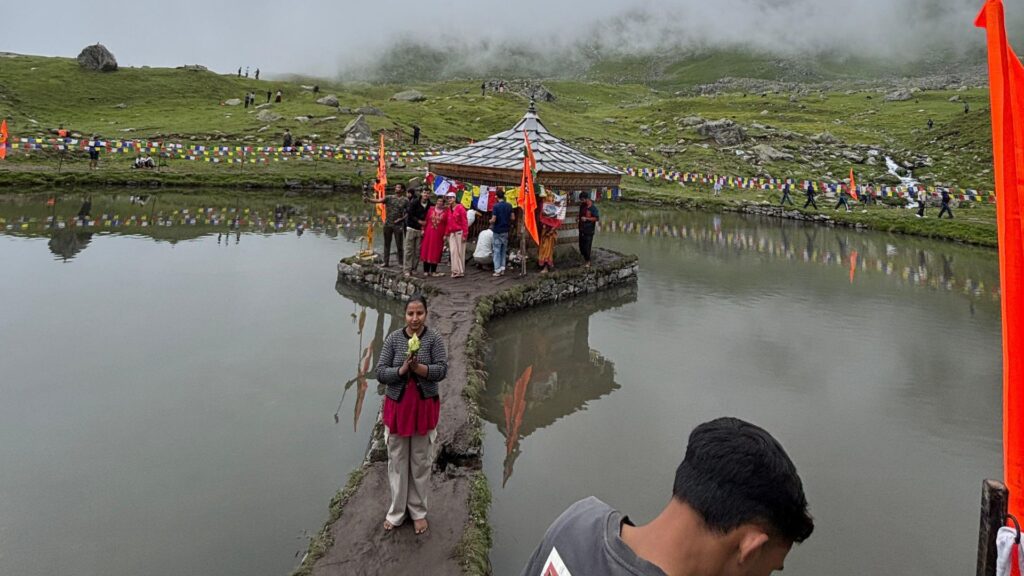
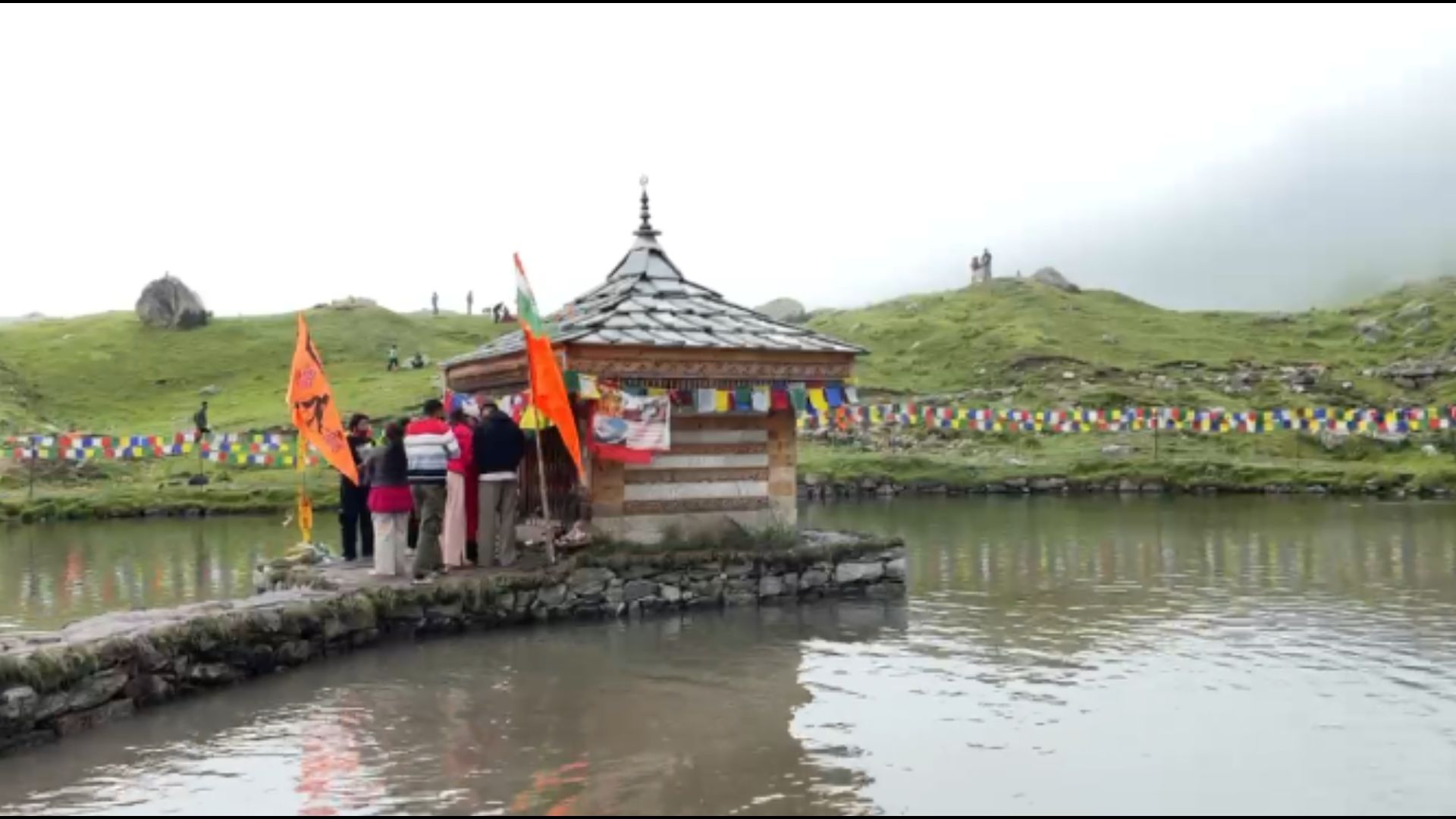
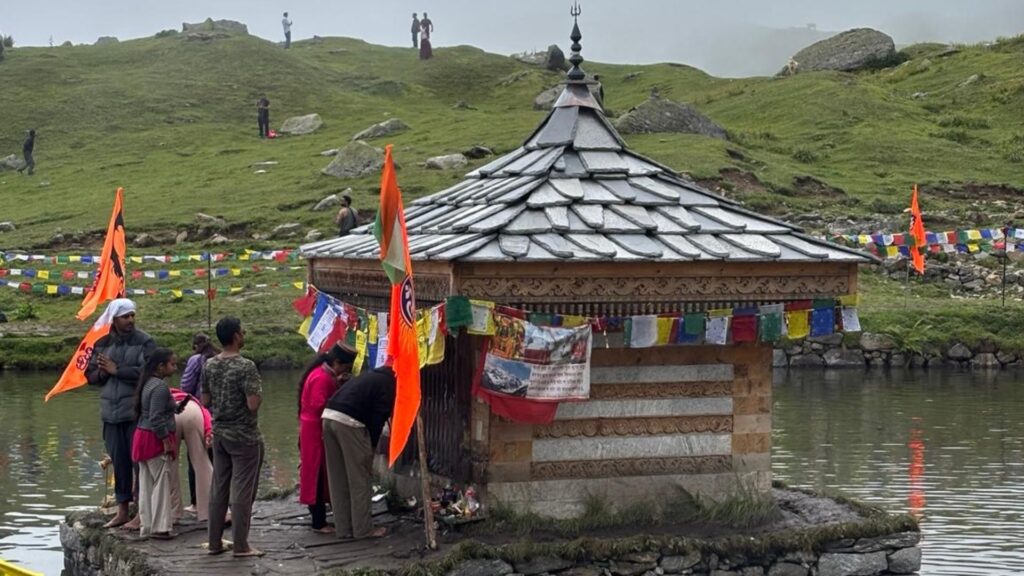
The sacred lake appeared before them, still and grey under a cloudy sky, with the small temple sitting on its own island accessed by a narrow stone causeway. Saffron flags fluttered. Colourful Tibetan prayer flags (lungta) ran in lines across the meadow. Fellow pilgrims stood in prayer. The energy was different here – quieter, heavier, more concentrated than anything down in the valley.
The group took their darshan (sacred viewing and prayer) at the world’s highest Krishna temple – an extraordinary moment that Kunal described as feeling like “different energy.” At nearly 4,000 metres above sea level, surrounded by glacial water and ancient faith, it is not hard to understand why.
The Return: Salt, Exhaustion, and the Long Road Home
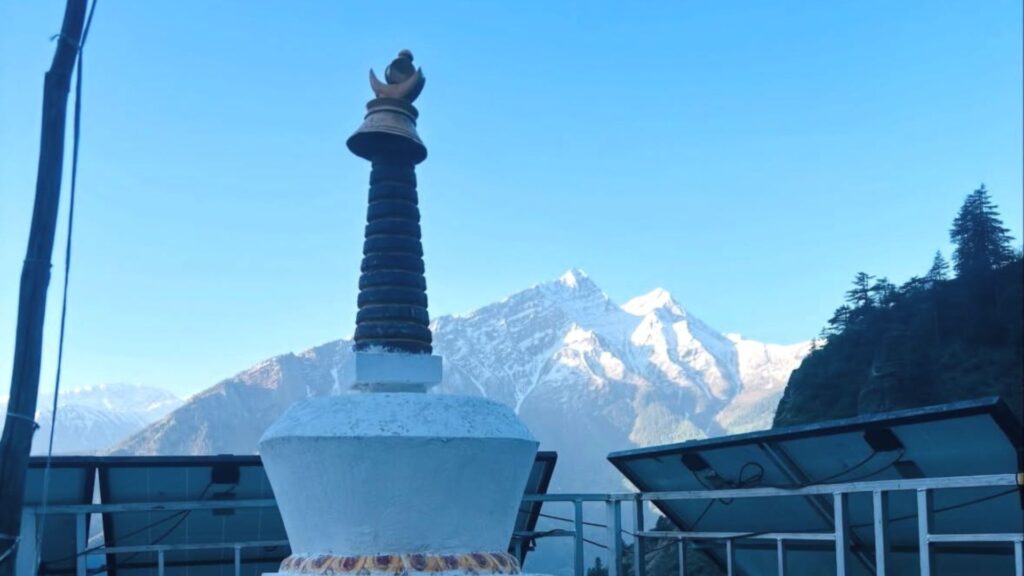
On the descent, reality set in. There was nothing left to eat. The group checked their bags and found exactly one item: a packet of salt. With oxygen levels depleted and legs burning from the descent, they did what mountaineers have done for centuries when resources run low – they licked salt from the packet to keep their electrolytes up and kept moving.
They reached Tapri village on empty reserves, found a flat surface, and collapsed into sleep.
The next day, they began the long return journey to Chandigarh.
Return taxi/cab fare: ₹5,000 for room
Trip Budget Summary: Yulla Kanda Trek from Chandigarh
| Expense | Cost (Per Person) |
|---|---|
| Chandigarh to Reckong Peo (bus) | ₹1,800 |
| Hotel in Reckong Peo (1 night, 4-share) | ₹1,500 |
| Kalpa bus and local expenses | ₹200–300 |
| Trekking gear (raincoat, energy bars, cap) | ₹500–800 |
| Tapri taxi and local transport | ₹600–700 |
| Food and miscellaneous | ₹400–600 |
| Return cab | ₹1,250 |
| Total per person | ₹6,000–₹7,000 |
This is genuinely one of the most affordable Himalayan treks in India – a Yulla Kanda trek package from Delhi via tour operators is typically priced at ₹7,999 per person (Delhi to Delhi, all inclusive), while the DIY route from Chandigarh, as Kunal’s group proved, can be done for around ₹6,000–₹7,000 including everything.
Other Affordable Treks – Tungnath Trek from Chandigarh full guide
Yulla Kanda Trek: Essential Travel Information
Yulla Kanda in which district: Kinnaur district, Himachal Pradesh.
Yulla Kanda temperature: During May to October (trekking season), temperatures at the summit range from 5°C to 15°C during the day and can drop below 0°C at night at base camp. August monsoon brings rain and fog, so waterproof gear is non-negotiable.
Yulla Kanda Temple opening date: The temple is generally accessible from late May to early October, weather permitting. The Janmashtami period (August) sees the highest footfall of devotees.
Best time to visit: May–June and September–October offer cleaner skies and drier trails. July–August (monsoon) is possible but demands higher caution due to landslides and slippery paths – as Kunal’s group experienced firsthand.
Frequently Asked Questions
How long is the Yulla Kanda trek?
The Yulla Kanda trek is approximately 12 kilometres one-way (around 24 kilometres round trip), starting from Yulla Khas village in Kinnaur. The summit portion takes 5–7 hours of trekking, with a maximum altitude of 3,895 metres (12,778 feet). The full trip including travel from a city like Chandigarh or Delhi typically takes 3–4 days.
Which district is Yulla Kanda in?
Yulla Kanda is located in the Kinnaur district of Himachal Pradesh, India, in the remote Rora Valley at an elevation of 3,895 metres.
Is the Yulla Kanda trek difficult?
The trek is rated Easy to Moderate overall. The first section through pine, oak, and deodar forests is gradual and manageable even for beginners. The final push to the summit lake is steep and demanding, especially with reduced oxygen at altitude. Starting cardio training 3–4 weeks before the trek is strongly recommended.
What is the story of the Yulla Kanda Temple?
The temple is believed to have been built by the Pandavas during their exile, as described in the Mahabharata. They dedicated it to Lord Krishna, who is said to have visited the Rora Valley. The unique Kinnauri cap ritual – placing your traditional woolen cap on the lake to see if it floats to the other side – is a beloved local tradition tied to blessings and fortune.
What is Yulla Kanda famous for?
Yulla Kanda is famous for housing the world’s highest temple dedicated to Lord Krishna, a high-altitude glacial lake, stunning Himalayan meadows, Pandava mythology, the annual Janmashtami pilgrimage, and the unique floating cap ritual.
Why is Mandi called Chhoti Kashi?
Mandi is called Chhoti Kashi (Small Varanasi) because it is home to over 81 ancient temples, many dedicated to Lord Shiva, much like the sacred city of Kashi (Varanasi). The density of temples in Mandi, along with its position at the confluence of the Beas River and Uhl River, gives it a deep spiritual resonance that echoes the ancient ghats of Varanasi.
Best affordable treks Near Mandi – Triund Trek Full Guide
Final Thoughts: Should You Do the Yulla Kanda Trek?
Kunal and his friends were four ordinary working people – they finished office on Thursday, took an overnight bus, navigated landslides, stole a few apples, got lost on a mountain trail, ran out of food on the descent, and made it back alive, changed, and already planning the next trip.
That is what the Yulla Kanda trek from Chandigarh will do to you.
It is not a luxury resort experience. The roads are rough, the weather is unpredictable in August, and the oxygen will humble you. But standing at that lake, watching saffron flags ripple against a grey mountain sky, holding darshan at a temple that has sat at 3,895 metres since the age of the Mahabharata – there is genuinely nothing else like it.
Pack your rain gear. Book your bus ticket online. Carry more food than you think you need (seriously, pack more than salt). And go.
All costs mentioned are based on August 2025 prices and are subject to change. Always check road conditions during the monsoon season before planning travel through Kinnaur.
All Images credited by Author Kunal Sharma