

Some treks are planned for months. Mine happened because of a birthday, a frustrating 9-to-6 job, and a WhatsApp group that finally said “let’s just go.” This is my honest, on-ground Kareri Lake trek story – not a copy-paste itinerary, but what actually happened over 3 days near the Dhauladhar range, including the cost, the rain, the wrong turns, and the moment the frozen lake finally showed up.
If you’re searching for a Kareri Lake trek full guide, real cost breakdown, or what the Kareri Lake trek distance actually feels like on foot, you’re in the right place.
Quick Facts About Kareri Lake Trek
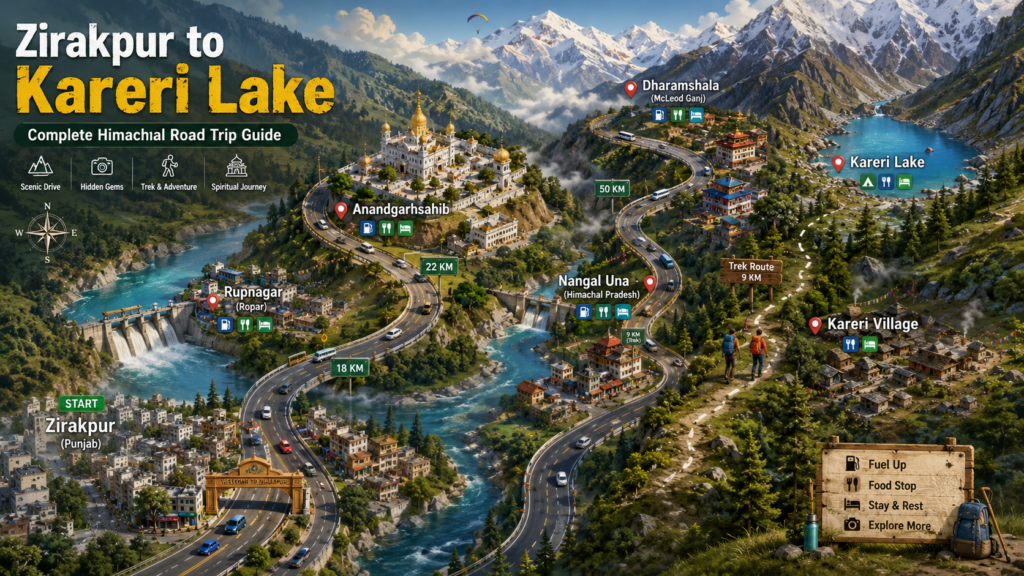
- Starting Point: Kareri Village (near Dharamshala/McLeodganj, Himachal Pradesh)
- Trek Distance: Roughly 24-26 km round trip from Kareri Village
- Altitude: Around 2,934 meters (9,600 ft)
- Difficulty: Easy to Moderate – beginner-friendly with decent fitness
- Ideal Duration: 2-3 Days
- Best Time: May–June and September – November (avoid heavy snow months unless prepared)
- Nearest City: Dharamshala / McLeodganj
- Cost Per Person (approx.): ₹4,000–5,000 including car rental, food, and camping
Why We Picked Kareri Lake Over Chansal Pass
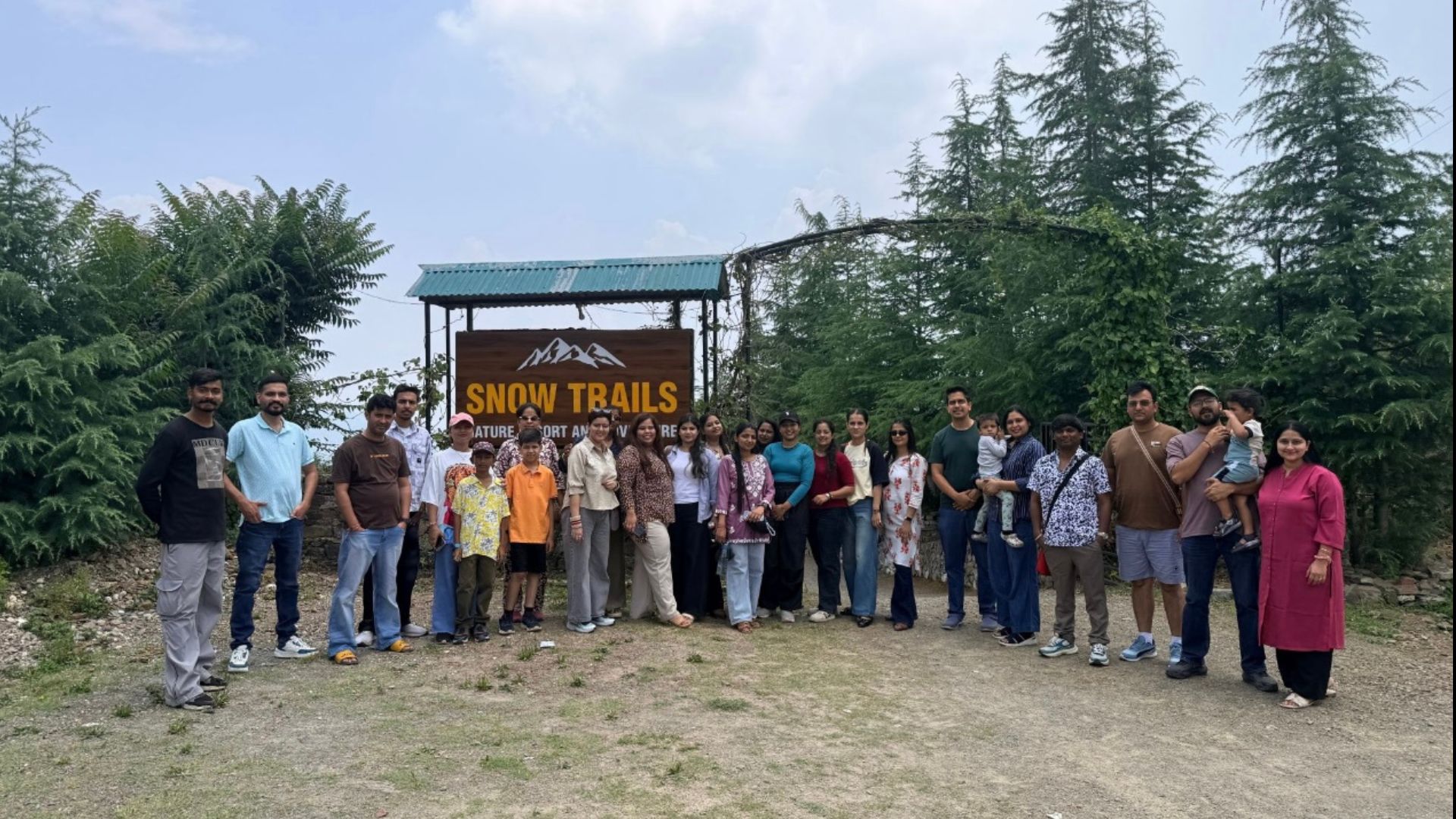
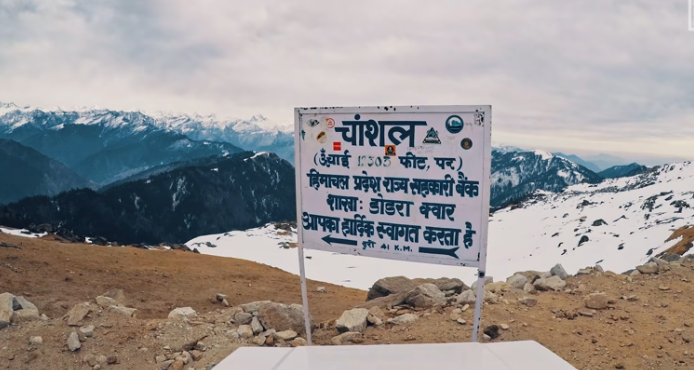
We almost didn’t end up here. My friend Akshay’s birthday was coming up, and a few of us – stuck in the same 9-to-6 loop – wanted to disappear somewhere offbeat for a few days. We shortlisted two treks: Chansal Pass and the Kareri Lake trek.
We tracked the weather daily, watched recent trekking reels, and asked other trekkers on Reddit how the trails were holding up. One traveler warned us that Chansal Pass roads were fully snowed and unsafe without a 4×4 unless we waited till after April 20. That settled it – we locked in the Kareri Lake trek for April 10–12, 2026.
Kareri Lake Trek Cost: What We Actually Paid
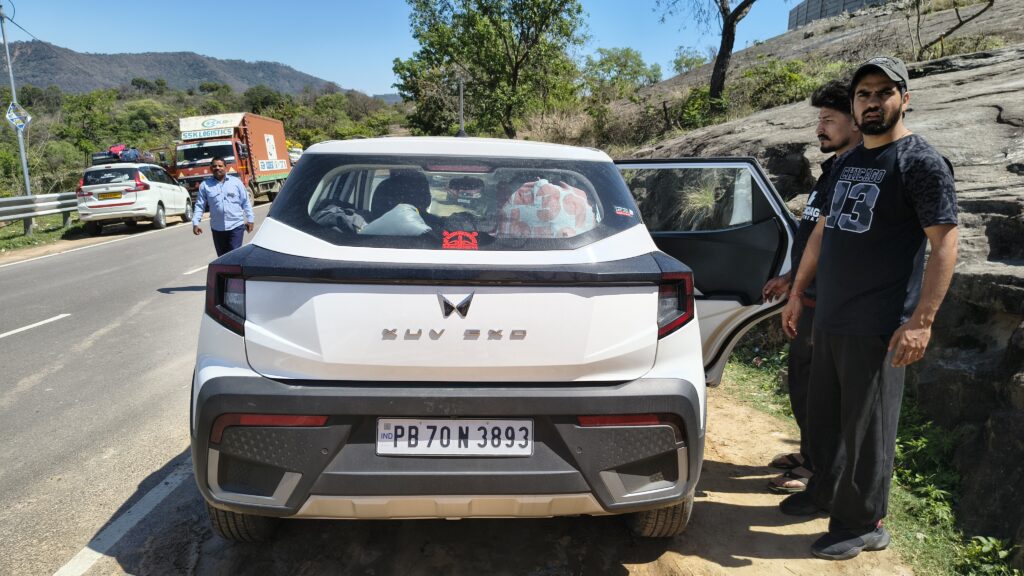
Budget is usually the first question every trekker asks, so here’s the real number. We booked a Mahindra XUV300 for 3 days at ₹7,500, plus a ₹5,000 security deposit. Since we had an old relationship with the travel agent, we negotiated the security down to ₹10,000 total instead of ₹12,500.
Add food, raincoat rentals (₹100 per person near the village gate), biscuits, tea, and camping basics, and our per-person cost came to roughly ₹4,000 – 5,000, including the fun part – bonfire nights and trail-side maggi.
Day 1: Chandigarh to Kareri Village
We packed sleeping bags, jackets, fire-lighting mats, 10 liters of water, and trekking shoes, and left from Zirakpur early morning with our driver-cum-friend Sandeep Katoch, who is originally from Kangra.
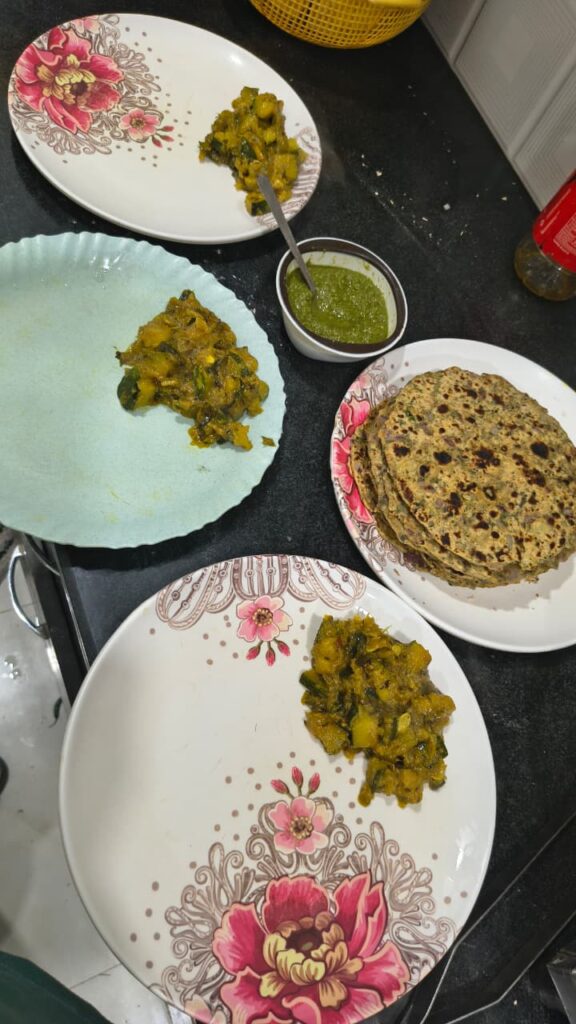
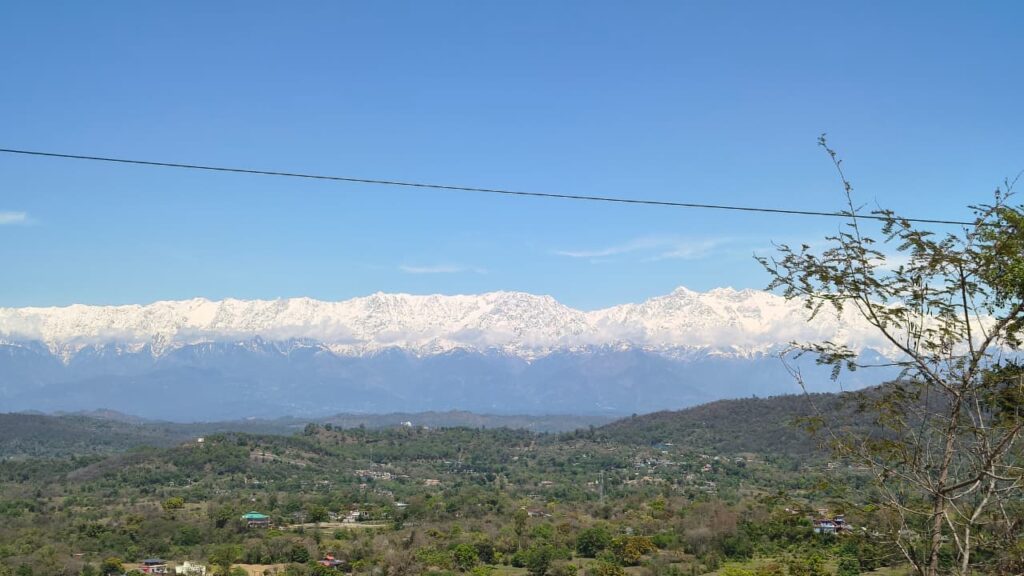
Three hours in, we stopped near Una for parathe with curd and mixed dal. An hour later, the Dhauladhar range appeared, snow-capped and glowing, and our resident chai-lover Santosh insisted on a tea break – fair enough, the mountains do that to you.
We reached Dharamshala by afternoon, picked up mutton, chicken, and vegetables through Sandeep’s relative, took a wrong turn briefly trying to find him, and finally hit the single hilly road into Kareri Village by 5:30 pm.
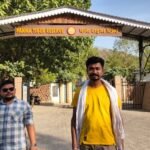
With no mobile network in the village, we filled bottles with natural hill water, pitched two tents, and realized – too late – that we had no food plates. A quick 3-4 km night walk to the market followed, with the Dhauladhar peaks glowing white under moonlight on one side and a pitch-dark road on the other. We came back, cooked, danced around the fire, and later walked down to the Nyund Nallah – locally also called the Kareri River – a shallow glacial stream that flows alongside the trekking route.
Day 2: Kareri Village to the Snowline Camp
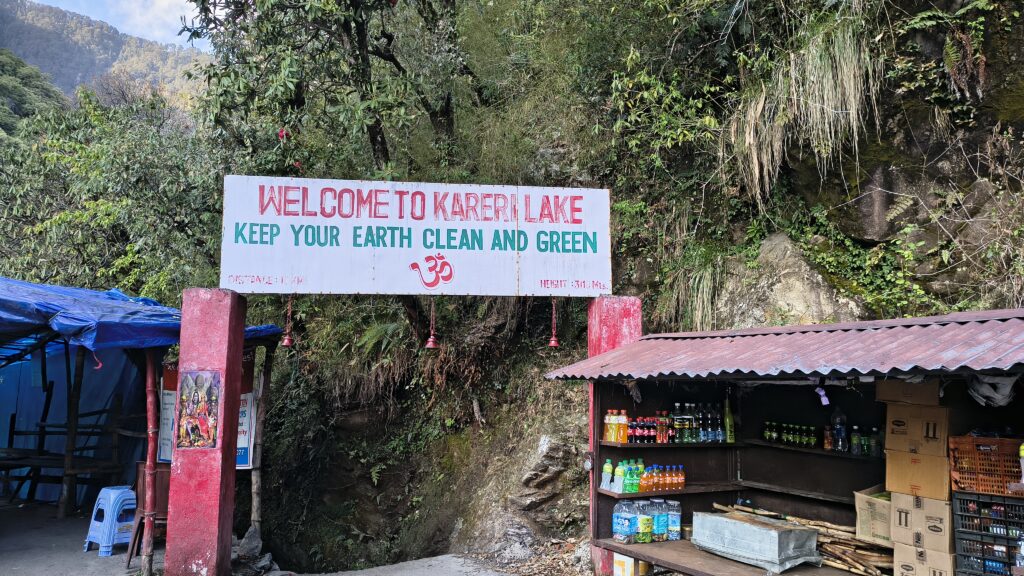
Morning started with birdsong, a flowing river, and the best tea of the trip around 9 am. Soon, light drizzle started, so we rented raincoats from the village gate (₹100 per person) and began the climb.
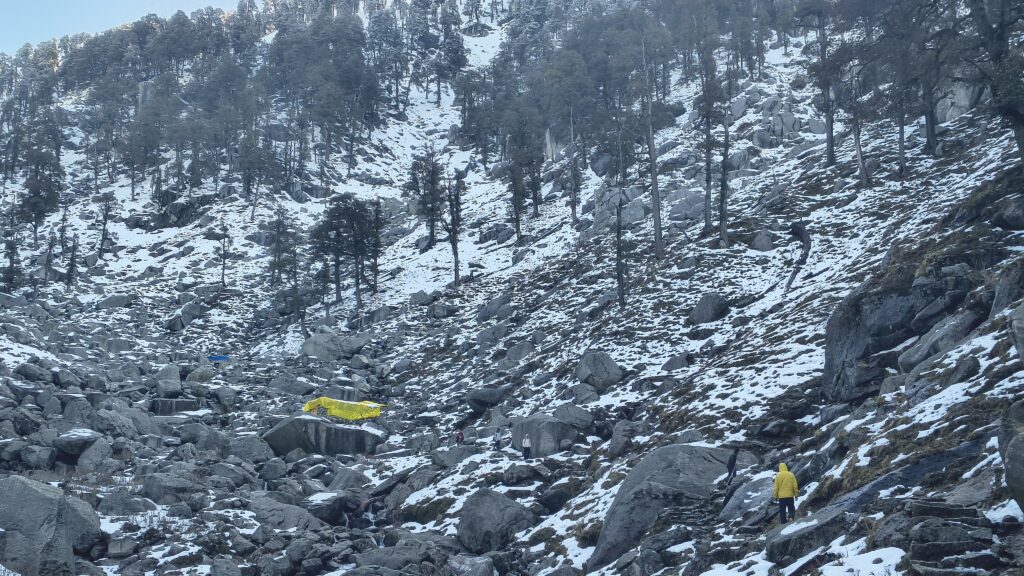
The trail wound through dense forest with the river running alongside, but the steep sections forced multiple breathers. Along the way, we met a group of English schoolkids on an actual school trip – half self-funded, half school-funded. It’s the kind of detail that stays with you: a school investing in real-world geography lessons instead of just textbooks.
By 5 pm, we hit snow-covered terrain and had to abandon our plan of camping right at the lake. Following Santosh’s lead, we backtracked about a kilometer to a dry, wood-rich spot for the night – a decision that mattered more than we realized once the rain returned after midnight.
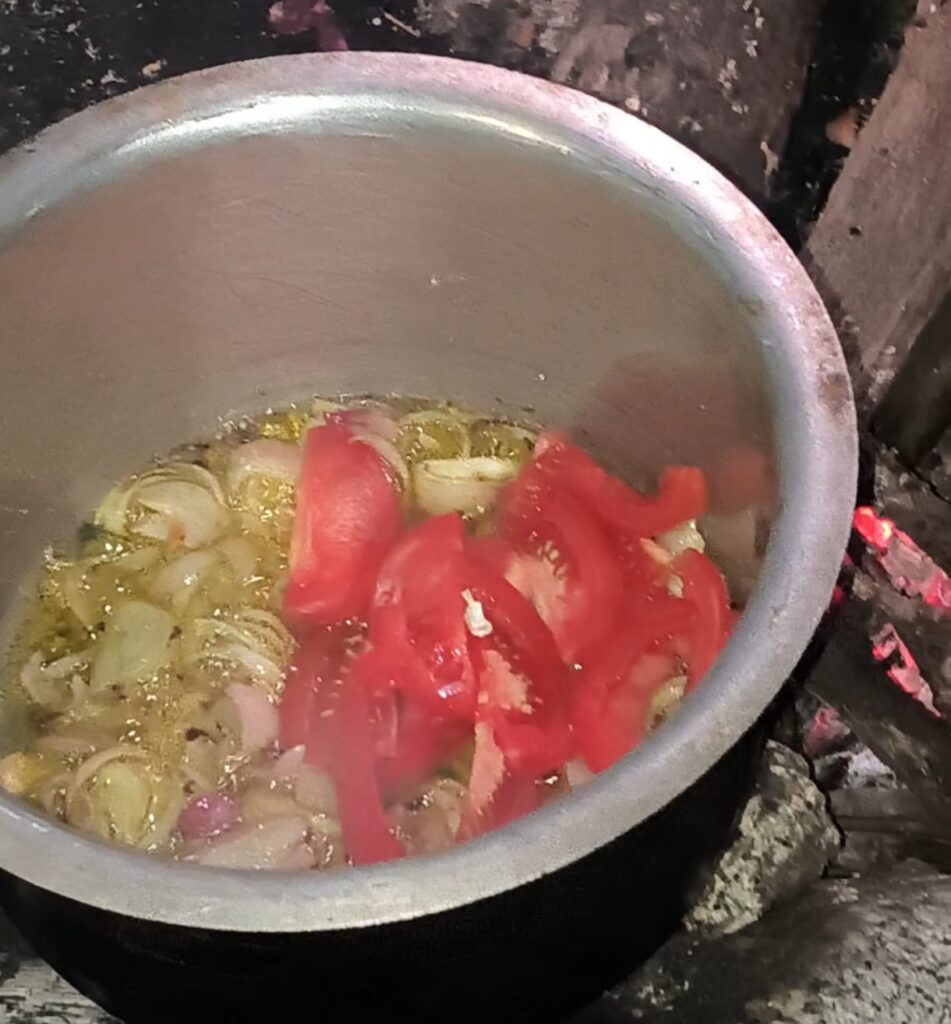
Dinner was mixed-vegetable rice, cooked with great difficulty in the wind, but devoured even faster once it was ready.
Day 3: Finally, Kareri Lake
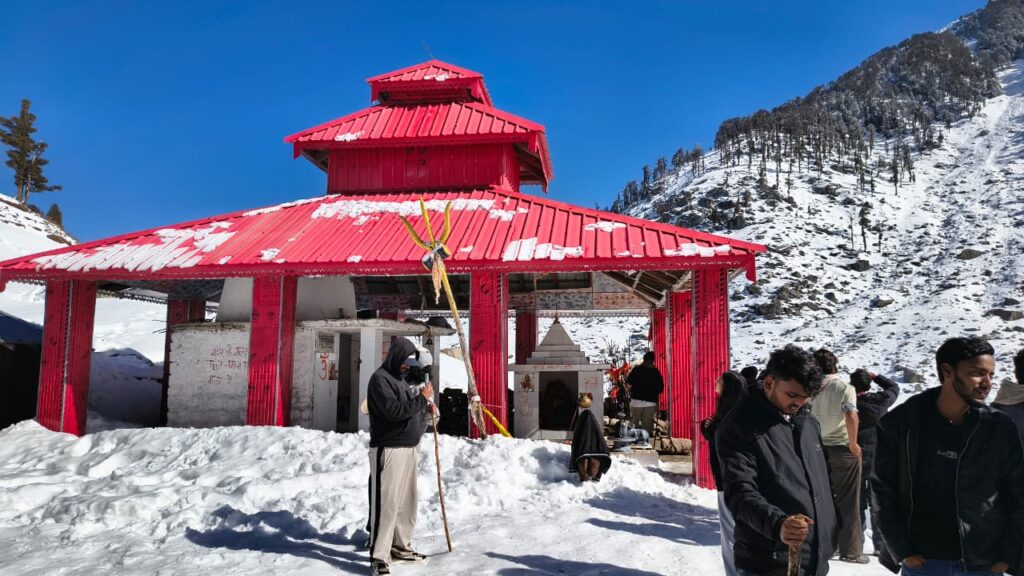
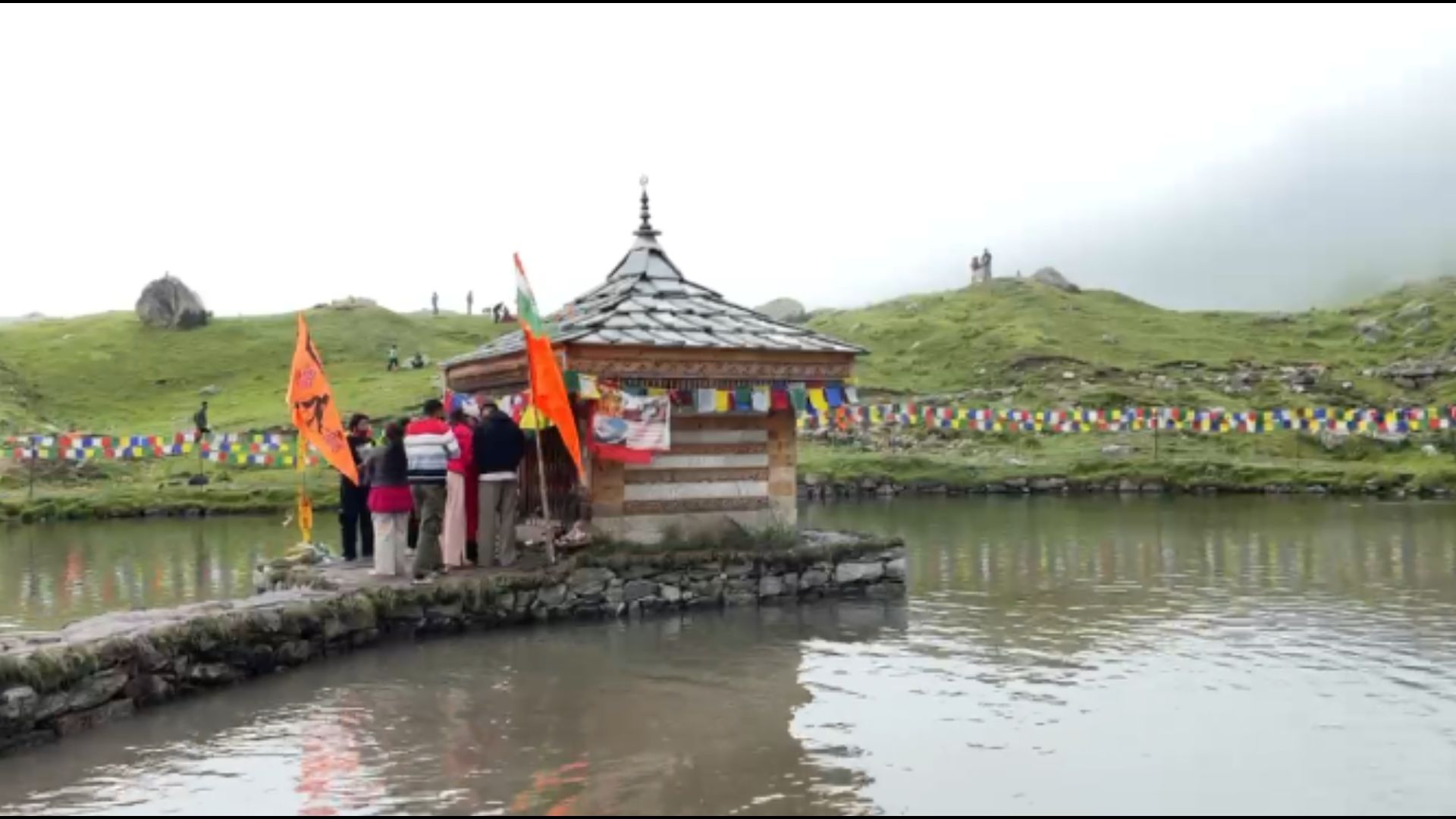
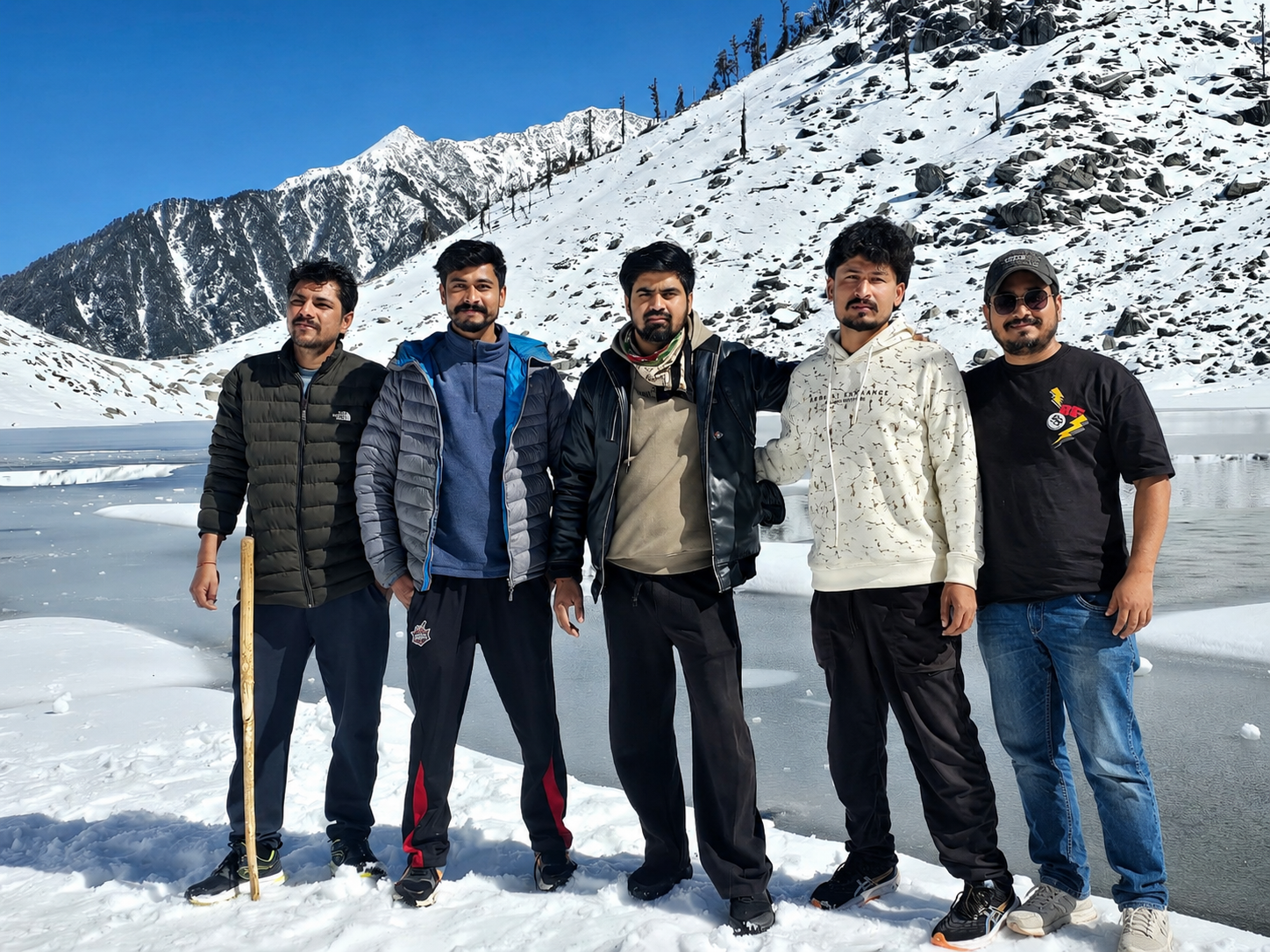
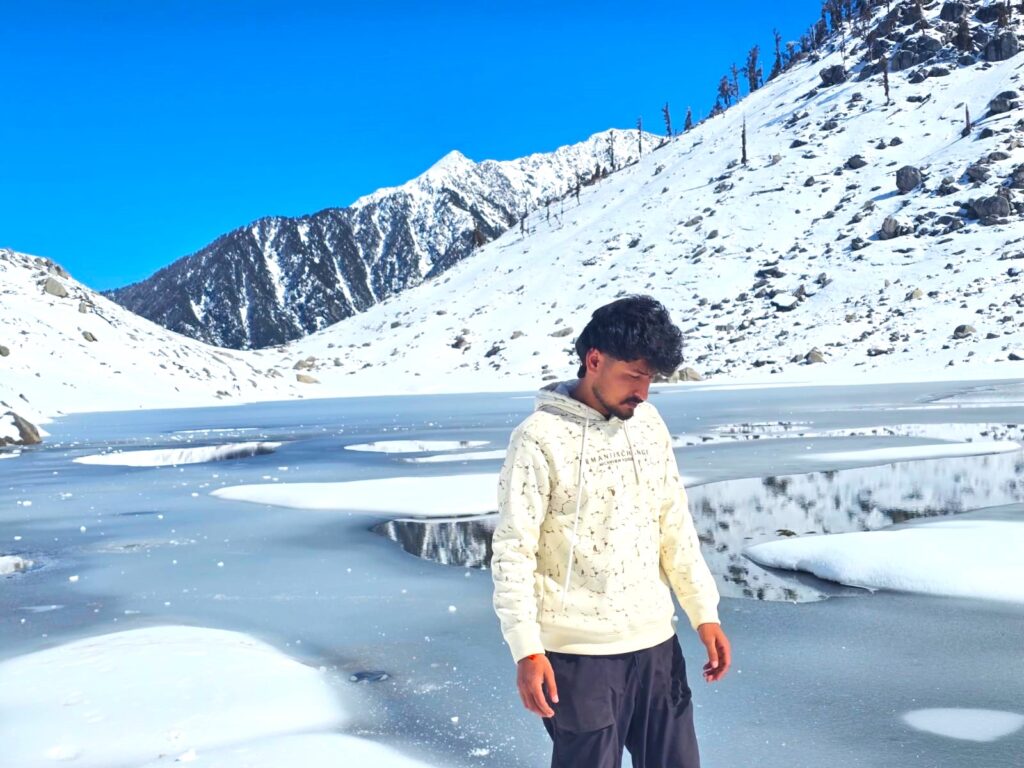
We woke up early, asked passing trekkers how far the lake still was – “hardly 2 km” – and pushed through hard snow on tired legs. Then it opened up: a frozen lake, a small Shiva temple on the ridge, and white mountains in every direction. We shared two Parle-G biscuits between us, took photos, slid around on the snow like kids, and just sat with the view for a while.
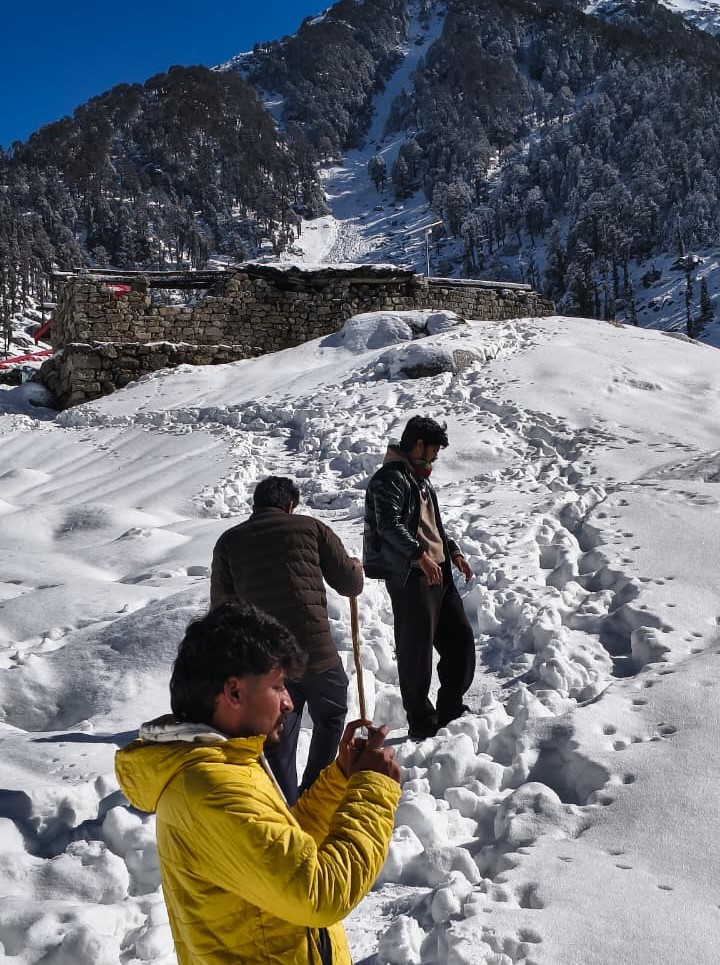
By 9-10 am we were back at camp, drying out wet shoes and gear in the sun before packing up for the descent. About 4-5 km down, we stopped for the most predictable but most satisfying ritual of any Himachal trek – hot Maggi and tea on the trail. Then it was back to the car, and the long drive home to Chandigarh.
Kareri Lake Trek Distance Breakdown
| Segment | Approx. Distance |
|---|---|
| Kareri Village to mid-camp | 10 – 13 km |
| Mid-camp to Kareri Lake | 10 – 13 km (with the last stretch under heavy snow) |
| Round trip total | 24 – 26 km |
What to Pack for the Kareri Lake Trek
- Waterproof/windproof jacket + thermal layers
- Sturdy trekking shoes (broken-in, not new)
- Raincoat (or rent one at ₹100 near the village gate)
- 40-50L backpack, headlamp, power bank
- Carry enough cash – there’s no internet or ATM access past Kareri Village
- Personal first-aid, sunscreen, and extra biscuits/snacks
How to Reach Kareri Lake Trek Starting Point
- By Air: Nearest airport is Kangra (Gaggal), about 13 km from Dharamshala.
- By Rail: Pathankot is the nearest major railhead.
- By Road: Reach Dharamshala/McLeodganj, then take a local cab roughly 25 km to Kareri Village, the actual trek starting point.
Nearby Treks Worth Knowing About
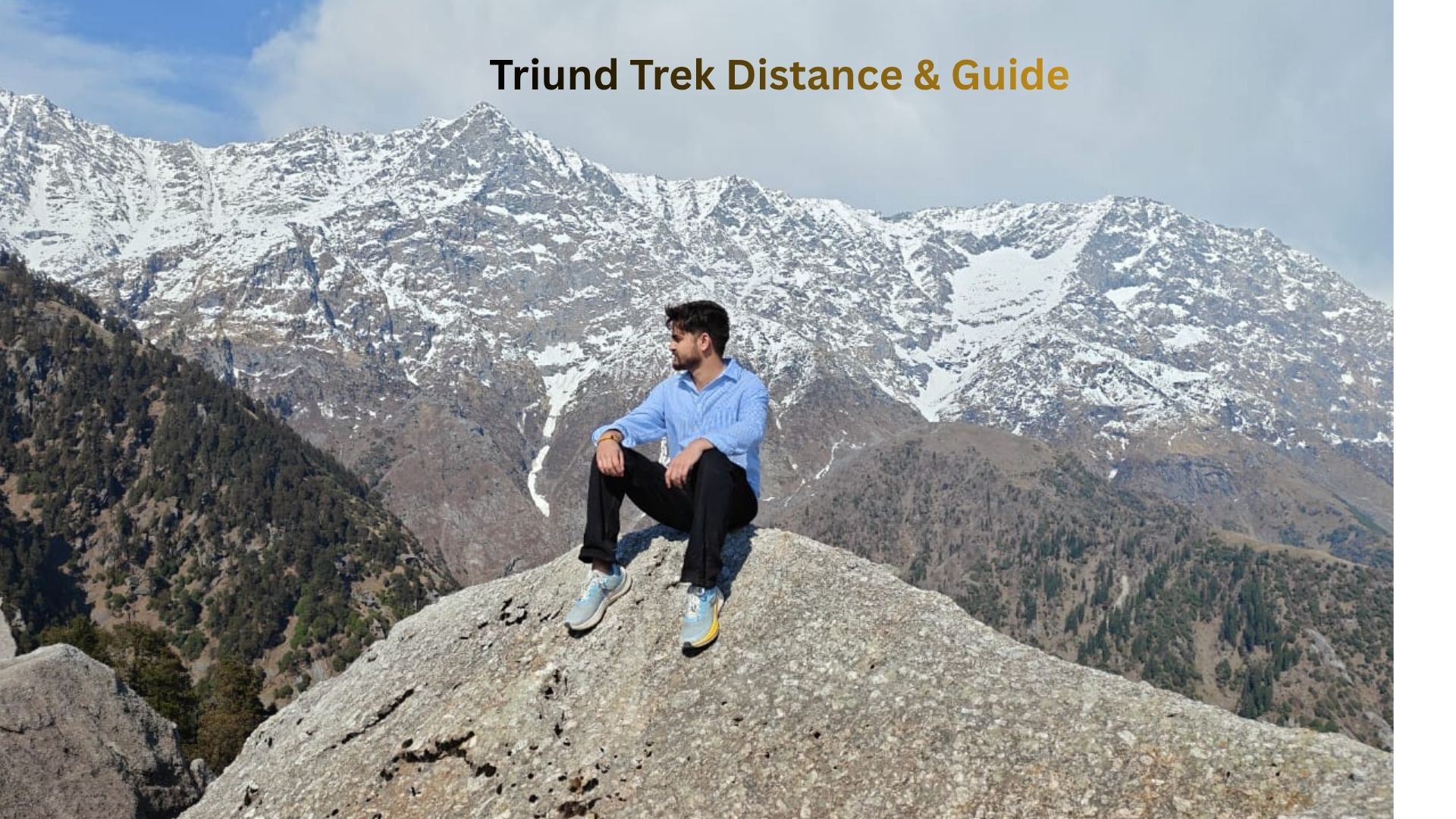
If Kareri Lake leaves you wanting more, the Dhauladhar range has options nearby – Triund Trek, Indrahar Pass, and Minkiani Pass are all accessible from the same McLeodganj/Dharamshala base, ranging from easy day hikes to serious multi-day passes.
Where to Watch the Video Guides
FAQs: Kareri Lake Trek
Q1. What is the Kareri Lake trek distance?
The round trip is approximately 24 – 26 km from Kareri Village to the lake and back.
Q2. What is the best time for the Kareri Lake trek?
May to June and September to November offer the safest, clearest conditions.
Q3. How much does the Kareri Lake trek cost?
Expect ₹4,000 – 5,000 per person for a self-organized 2-3 day trip including transport, food, and camping.
Q4. Where does the Kareri Lake trek start from?
The trek starts at Kareri Village, about 25 km from Dharamshala.
Q5. Is the Kareri Lake trek good for beginners?
Yes, it’s rated easy to moderate and is doable for fit beginners with proper gear.
Q6. Is there mobile network or ATM access during the trek?
No. Network and ATM access stop right after Kareri Village, so carry enough cash.
Q7. How many days are needed for the Kareri Lake trek?
2 days is the minimum; 3 days (like ours) gives a more relaxed pace with buffer for weather.
Q8. Is camping allowed near Kareri Lake?
Yes, but the area right at the lake can be snow-covered; most trekkers camp at a dry midpoint instead.
Have you done the Kareri Lake trek? Drop your experience in my social media- I’d love to know how your trail story compares to ours and also post your experiance.