
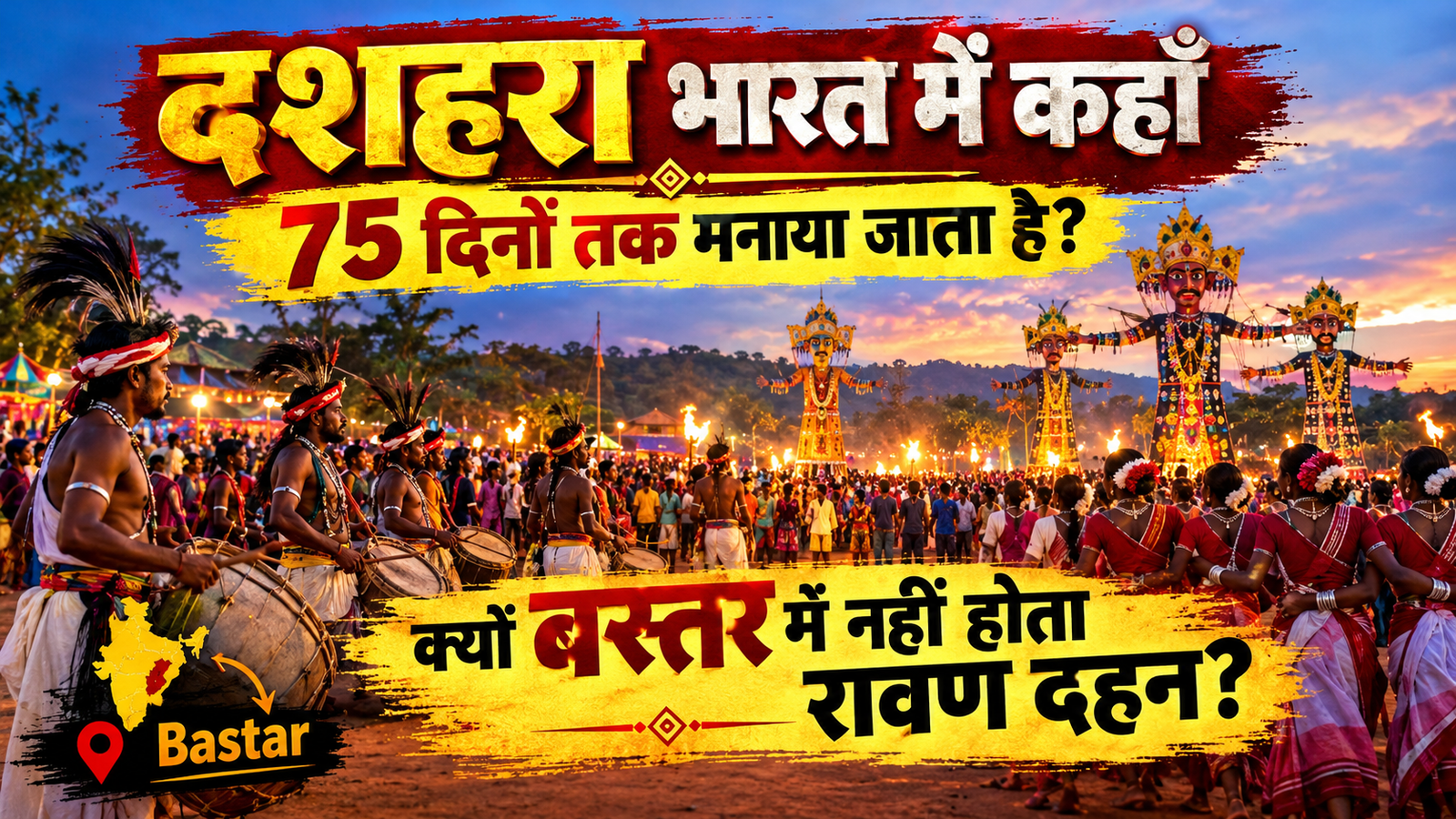
Bastar Dussehra is the festival that answers the question “where is Dussehra celebrated for 75 days in India?” Held in Jagdalpur, in the Bastar region of Chhattisgarh, it runs for roughly 75 days and has no Ravana effigy burning at all. Instead of the Ramayana’s final battle, the festival centres on Goddess Danteshwari, local village deities, a giant wooden chariot and a royal tradition that is about 600 years old. This guide covers the history, the 2026 schedule, every major ritual, how to reach Jagdalpur, and the story of Pravir Chandra Bhanj Deo, the last ruling king of Bastar, whose death in 1966 still shapes how the region remembers its past.
- Where: Jagdalpur, Bastar district, Chhattisgarh.
- Duration: About 75 days, from Pat Jatra on Hareli Amavasya to the farewell of Maa Danteshwari.
- 2026 dates: 12 August (Pat Jatra) to 27 October 2026 (final deity farewell), according to the published schedule.
- Why no Ravana burning: The festival is not tied to Ravana’s defeat. Bastar’s district administration says it is linked to Goddess Durga, local deities and regional religious practice.
- Who started it: Tradition credits King Purushottam Dev of Bastar, around 1408 CE.
- Biggest ritual: The eight-wheeled chariot (Bhitar Raini and Bahar Raini).
- Ends with: Muria Darbar, a community gathering with a long history of hearing local grievances.
Table of Contents
- What Is Bastar Dussehra?
- Why Is Ravana Not Burnt in Bastar?
- History: King Purushottam Dev and the Title “Rathpati”
- Bastar Dussehra 2026 Dates and Ritual Calendar
- The Chariot, Raini and the “Stolen” Rath
- Muria Darbar
- 10 Key Points About Dussehra in Bastar
- How to Reach Bastar Dussehra
- Pravir Chandra Bhanj Deo: The Last King of Bastar
- Pravir Chandra Bhanj Deo Family Tree
- FAQs
- Sources
What Is Bastar Dussehra?
Bastar Dussehra is a religious and cultural festival of Chhattisgarh’s Bastar region. The Ministry of Tourism’s Incredible India portal describes it as a festival of about 75 days whose centre is the worship of Maa Danteshwari, local deities, tribal tradition and community participation rather than the Rama–Ravana story.
Deities and their symbols, such as dolis (palanquins) and chhatras (umbrellas), travel from villages across Bastar to Jagdalpur. This is why locals and scholars often call it a festival of the whole region, not just one town.
Fact check: Many articles call it the “longest Dussehra in the world.” That claim is widely repeated but has no formal record behind it. The safer, verifiable statement is that Bastar Dussehra is one of India’s longest-running traditional festivals, at about 75 days.
Why Is Ravana Not Burnt in Bastar?
The documented reason
The Bastar district administration, as quoted by Outlook India, states that the festival is not connected with Ravana’s defeat in the Ramayana. Its rituals are tied to Goddess Durga, local deities and regional practice. On Vijayadashami, the main event is the chariot ritual called Raini, not an effigy burning, as ETV Bharat reported from Jagdalpur.
The folklore (people’s belief, not proven history)
According to local belief, Bastar was once the city of Ravana, and the effigy is therefore not burnt as a mark of peace and harmony. ETV Bharat reports this as a legend. Bastar is also traditionally identified with Dandakaranya, the forest region of the Ramayana, a connection the Government of India’s e-governance directory for Narayanpur district also mentions. Treat these as cultural memory and faith, not as historical evidence. They are useful for understanding how people in Bastar relate to the epic, but they are not why the festival began.
History: King Purushottam Dev and the Title “Rathpati”
The Incredible India portal traces the festival to King Purushottam Dev, the fourth ruler of the Bastar Kakatiya line, in the early 15th century (around 1408 CE). One of the pages we reviewed gives a 13th-century origin, which conflicts with this date. We follow the Ministry of Tourism, but if you publish a different date, state your source.
According to tradition, Purushottam Dev walked to Jagannath Puri, offered gold and jewels, and was honoured with the title Rathpati (lord of the chariot). On returning, he began the chariot festival in Bastar. This is why the Bastar chariot is central, and why the festival is often linked to the Puri Rath Yatra tradition in popular accounts.
The royal house itself is older. The princely state of Bastar is traditionally dated to about 1324 CE, when Annama Deva, a brother of the last Kakatiya king Pratapa Rudra Deva of Warangal, moved south and settled in Bastar under the protection of the goddess Danteshwari, according to the Government of India’s directory entry. Annama Deva is therefore generally described as the first king of Bastar. Halbi folk songs also preserve his memory as the “Chalki Raja”, as Forward Press notes.
Discover the Legacy of Raja Man Singh of Amber
Explore the history, military achievements and royal legacy of one of Amber’s most prominent Rajput rulers.
Explore His Story →Bastar Dussehra 2026 Dates and Ritual Calendar
Dates below follow the schedule published by Outlook India on 19 October 2026. The Incredible India page lists the main Dussehra phase as 18–22 October and gives 20 October for Bhitar Raini, a day earlier than Outlook. Always confirm the final day with the Bastar district administration or the Jagdalpur tourism office before travelling.
| Ritual | 2026 date | What happens |
|---|---|---|
| Pat Jatra | 12 August | Sal wood is brought from the forest and worshipped on Hareli Amavasya. It starts the festival and the chariot building. |
| Deri Gadai | 24 September | A key stage in the chariot-building tradition. |
| Kachhin Gadi (Kachhangudi Puja) | 10 October | Kachhin Devi is worshipped; a young girl of the Mirgan community symbolically represents the goddess and permission for the festival is sought. |
| Kalsa Sthapana | 11 October | Sacred pots are installed to begin Navratri worship. |
| Jogi Bithai | 12 October | A man sits in a yoga posture for nine days as a form of penance. |
| Navratri Puja and Rath Parikrama | 13–18 October | Daily worship and the chariot circling the city. |
| Maha Ashtami and Nisha Jatra | 19 October | A night-time ritual of worship and community participation. |
| Kumari Puja, Jogi Uthai, Mawli Parghav | 20 October | The Jogi rises; Maa Mawli, linked with Danteshwari, is welcomed to Jagdalpur. |
| Bhitar Raini | 21 October | The eight-wheeled chariot ritual on Vijayadashami night (Incredible India lists 20 October). |
| Bahar Raini | 22 October | The next stage of the chariot ritual. |
| Kachhan Jatra and Muria Darbar | 23 October | Thanksgiving to Kachhin Devi and the concluding community gathering. |
| Kutumbh Jatra and village deity farewell | 24 October | Visiting village deities are sent off. |
| Maawli Danteshwari Mata Vidai | 27 October | Formal farewell of the goddess, closing the 2026 festival. |
The Chariot, Raini and the “Stolen” Rath
Chariot building is the soul of Bastar Dussehra. Local artisans build the wooden chariot using sal wood, starting with the log worshipped at Pat Jatra. ETV Bharat’s report describes the Vijay Rath as having eight wheels, while an earlier flower chariot with four wheels ran for six days. Earlier, the Maharaja rode in the chariot; today the district administration arranges to carry the umbrella of the goddess.
The most unusual part comes at midnight. According to local tradition, members of the Madiya community “steal” the chariot after Bhitar Raini and take it to Kumhadakot, a village near the city. The story goes that in the royal era, people unhappy with the king hid the chariot and demanded that he share a feast (Nayakhani) with them. The king reached Kumhadakot the next day, appeased the villagers, ate with them and brought the chariot back in royal style. The ritual survives as a dramatised reminder that the king answered to the people.
Muria Darbar
The festival closes with Muria Darbar. Historically, representatives of the Muria tribe and village heads (Manjhi-Mukhiyas) met the Maharaja to present community problems. Incredible India calls it a platform for social dialogue, and Outlook notes that, under the Bastar district administration, officials now perform the role once held by the royal family. That detail is why many people see the festival as more than ritual: it was, and in part still is, a space for the people to be heard.
10 Key Points About Dussehra in Bastar
- It lasts about 75 days, beginning on Hareli Amavasya.
- It is held in Jagdalpur, the Bastar district headquarters.
- No Ravana effigy is burnt.
- The goddess at the centre is Maa Danteshwari, with Maa Mawli also welcomed.
- Tradition credits King Purushottam Dev (about 1408 CE).
- The ritual that opens the festival is Pat Jatra.
- Jogi Bithai involves nine days of seated penance.
- The eight-wheeled chariot is the festival’s signature.
- Muria Darbar closes the festival with community dialogue.
- Deities from across Bastar attend and are formally sent off at the end.
How to Reach Bastar Dussehra
All main events take place in and around Jagdalpur.
By air: The nearest airport is Maa Danteshwari Airport (Jagdalpur, code JGB), about 3 km from the city centre, as listed by Incredible India and ixigo. Flight routes change, so check current schedules for services from Raipur and Hyderabad.
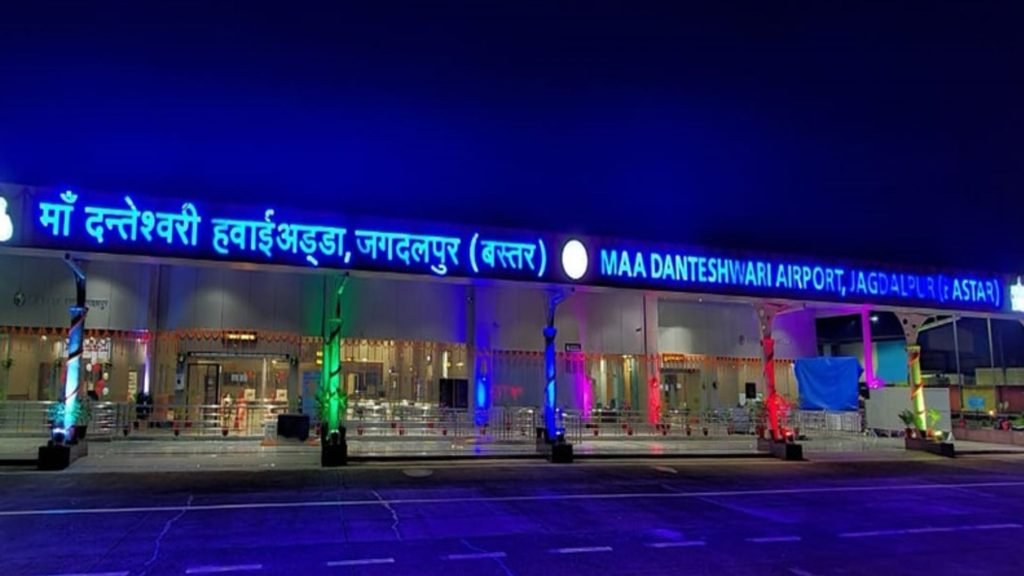
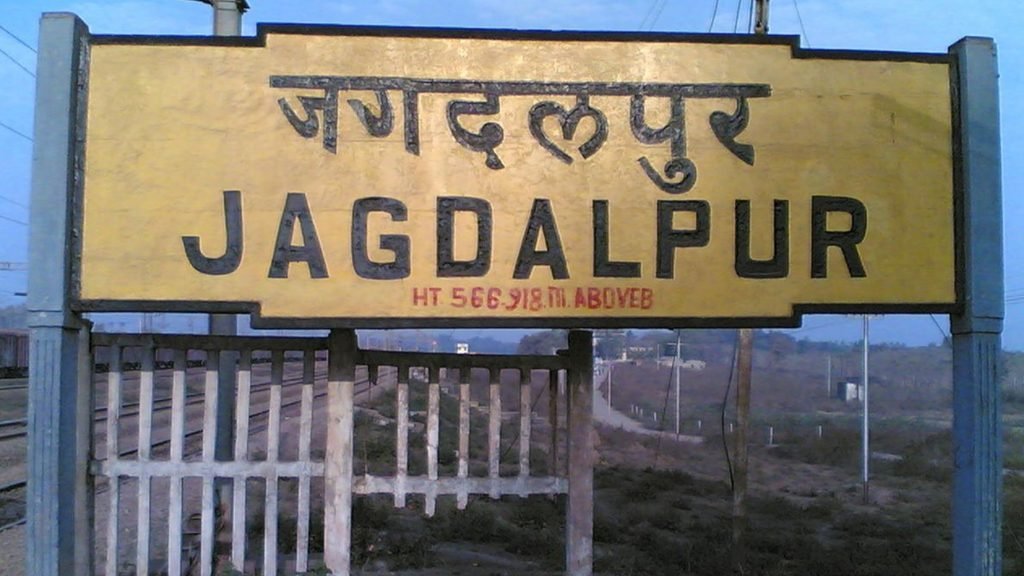
By train: Jagdalpur Railway Station (JDB) is the nearest railhead, about 3.5 km from the airport.
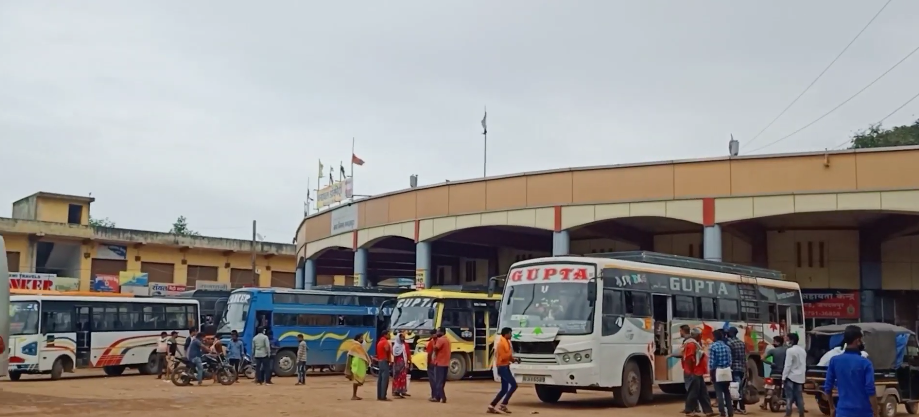
By road: Jagdalpur New Bus Stand has state-run and private buses to Raipur and Visakhapatnam. Local autos and taxis take you to the palace area and the chariot route.
Where to stay: Book early. Hotels in Jagdalpur fill up around Navratri and Vijayadashami.
Travel tips: Chariot rituals run late into the night. Carry water, keep valuables safe in crowds, follow local guidance on photography near sacred objects and ask before photographing individuals. Also look at nearby places such as the Danteshwari Temple in Dantewada, about 84 km south-west of Jagdalpur, and Chitrakote Falls, about 50 km from the city (distances from Magik India).
Safety note: Bastar’s security situation has changed. Union Home Minister Amit Shah declared Bastar free of Naxalism in Jagdalpur on 18 May 2026 (ANI), and PTI reported on 31 March that the region had been declared free of left-wing extremism on the Centre’s deadline. Still, check current travel advisories before you go.
Pravir Chandra Bhanj Deo: The Last King of Bastar
No article on Bastar Dussehra is complete without Pravir Chandra Bhanj Deo. In many tribal homes of Bastar, his portrait hangs on the wall, and Forward Press reports that sales of his photographs rise during Dussehra. He was the 20th and last ruling Maharaja of Bastar.
A note on sources: The 1966 events are disputed. We separate what is officially recorded from what community and journalistic accounts say. Where we cannot verify a claim, we say so.
Early life and accession
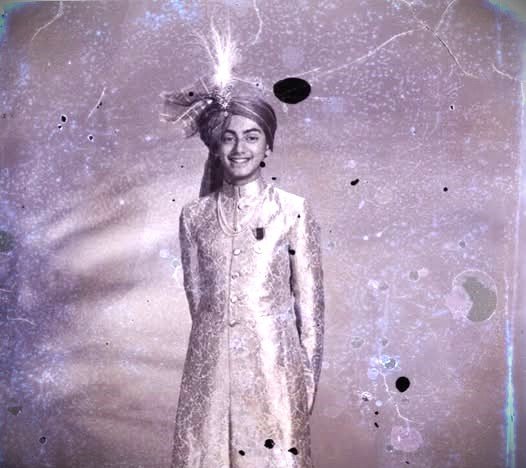
Pravir Chandra was born on 25 June 1929 (Wikipedia gives this date; Forward Press says he was born in Shillong, while Wikipedia says Jagdalpur, so the birthplace is uncertain). His mother, Rani Prafulla Kumari Devi, ruled Bastar from 1922 until her death in London on 28 February 1936. He succeeded to the throne on 28 October 1936, aged seven, according to Wikipedia. The British administered the state on his behalf during his minority, as the Imperial-era records show. He studied at Rajkumar College, Raipur.
Discover the Story of Rawal Jaisal
Explore the fascinating history of Jaisalmer’s founder, the Rajput legacy and the origins of the Golden City of Rajasthan.
Explore Jaisalmer’s History →Independence and joining India
Bastar acceded to India in 1948. Forward Press says he signed the accession on 1 January 1948 after the Nizam of Hyderabad tried to draw him away. The discovery of rich iron ore at Bailadila around that time made Bastar economically important to the new country, a point that recurs in later accounts of his conflict with the state.
Politics and conflict with the government (1957–1961)
- 1957: He won the Jagdalpur seat in the Madhya Pradesh Assembly as a Congress candidate.
- 1959: According to Forward Press, he resigned from the Assembly over the “Malik Makbuja” issue. The law that barred non-tribals from buying tribal land was diluted, and outsiders took land cheaply. He opposed it, along with forest felling and corruption.
- 1961: The state government accused him of fomenting trouble and inciting adivasis to support his efforts to recover the throne, as the Nehru Archive records. He was deposed in favour of his younger brother, Vijay Chandra. Forward Press says he was also jailed briefly and stripped of his privileges by a presidential order, and that police opened fire on a crowd of about 20,000 tribals in March that year. That figure comes from one source and should be treated with caution. (A New York Times archive headline from April 1961 also reports his release from prison)
- 1962: Forward Press says candidates he backed won nine assembly seats.
The government situation in 1966
In March 1966 the Indian National Congress governed both the Centre in Delhi and the state of Madhya Pradesh, of which Bastar was then a part. Chhattisgarh did not exist as a state until 2000. India was in a political transition, with a new Prime Minister in office after Lal Bahadur Shastri’s death in January 1966. The Swatantra Party’s resolution of 28 May 1966 later called for the examination of the responsibility of “the Governments at Bhopal and Delhi”, which shows how contested the question already was.
What happened on 25 March 1966
There are two broad versions.
The official version: The district magistrate said Pravir Chandra was leading armed adivasis against the police, who fired in self-defence. The official toll was 12 dead, including the king, and 20 wounded, with 61 rounds fired (Wikipedia, citing contemporary reports).
The community and journalistic version (Forward Press, based on the family’s account and an interview with his son): Many adivasis had gathered at the palace to present their problems. When police tried to take away an undertrial, a clash followed and one policeman was killed. Police then surrounded the palace. Women and children sent out to surrender were reportedly fired upon. After reinforcements arrived, police entered the palace and fired. Forward Press says the king died on his own stairs with 25 bullets in his body and that the death count was higher than the official figure.
The Rajya Sabha records of 30 March 1966 show the Government announcing a Commission of Inquiry under the Commissions of Inquiry Act, and Opposition members demanded stronger action. The Swatantra Party criticised the cremation of the victims and the appointment of a one-man commission, and demanded a stronger commission including Supreme Court judges and temporary presidential administration of Bastar. We could not find a freely available copy of the commission’s final findings, so we do not report them.
After the death: how people in Bastar reacted
The killing of the king and his followers led to widespread anger among local tribals against the government, according to Wikipedia. Vijay Chandra Bhanj Deo became titular king the same day. Pravir Chandra became a figure of devotion. His portrait is in homes, his death anniversary is observed locally (regional media report it as a day of sacrifice), and many people refer to him as a deity-like protector.
Did his death push people towards the Naxals? What the evidence says
This is the most debated part of the story, so it needs care.
- The claim: Wikipedia, regional documentaries and some commentators say the anger after 1966 became a significant reason Naxalism spread in Chhattisgarh.
- The timeline: Maoist squads of the People’s War Group first crossed the Godavari into Dandakaranya in 1980, 14 years later, when Andhra Pradesh police pressure pushed them to look for a hideout (PTI/ThePrint; Homegrown). The first recorded attack in Bastar was in 1981. The PWG merged with the Maoist Communist Centre in 2004 to form the CPI (Maoist).
- Other causes cited: Land alienation, loss of forest rights, weak state presence, and the pull of Bastar’s mineral wealth, which are the same grievances Pravir Chandra spoke about. After his death, the tribal community lost its best-known political voice and the grievances stayed unresolved.
- The reading we consider fair: His killing deepened mistrust of the state, and the Maoists later used existing grievances to win a foothold. But there is no documentary evidence that his followers formally allied with the Maoists, and sources also describe the Maoists controlling villages by isolation and force. Bastar’s people were caught between insurgents and the state for decades.
By 2026 the government says that chapter has ended. Amit Shah declared Bastar Naxal-free on 18 May 2026, and development work in the region is now being promoted. How lasting that change will be is something time will tell.
Pravir Chandra Bhanj Deo Family Tree
Sources agree on the main line of succession but differ on some names, so verify before relying on the table for formal use.
| Generation | Person | Notes |
|---|---|---|
| 1 | Raja Rudra Pratap Deo (d. 1921) | Ruler of Bastar; father of Prafulla Kumari Devi. |
| 2 | Rani Prafulla Kumari Devi (1910–1936) | Queen regnant 1922–1936. Married Prince Prafulla Chandra Bhanj Deo of Mayurbhanj. |
| 3 | Princess Kamla Devi, Pravir Chandra Bhanj Deo (1929–1966), Princess Geeta Kumari Devi, Vijay Chandra Bhanj Deo | Children of the Rani (per Wikipedia). |
| 3 (spouse) | Wife of Pravir Chandra, married 1961 | Wikipedia names her Shubhraj Kumari of Patan; Forward Press and The Hitavada call her Vedwati/Vedvati. |
| 4 | Mohit Chandra Bhanj Deo | Younger son of Pravir Chandra, interviewed by Forward Press. |
| 3 | Vijay Chandra Bhanj Deo (titular king 1966–1970) | Younger brother of Pravir; married Hitendra Kumari in 1954. |
| 4 | Bharat Chandra Bhanj Deo (titular king 1970–1996) | Married Krishna Kumari. |
| 5 | Kamal Chandra Bhanj Deo (born 13 March 1984; titular king since 1996) | Described as the grandson of Vijay Chandra. Wikipedia lists his father as Vijay Chandra; other sources imply Bharat Chandra. Married Bhuvaneshwari Kumari of Kila Nagod on 20 February 2025. |
FAQs
Where is Dussehra celebrated for 75 days in India?
In Bastar, Chhattisgarh. The festival is centred on Jagdalpur and runs for about 75 days, from Pat Jatra on Hareli Amavasya to the farewell of Maa Danteshwari.
What is the Bastar Dussehra festival?
It is a 75-day religious and cultural festival of Bastar’s deity traditions, tribal communities and royal heritage, built around Maa Danteshwari, the chariot and village deities.
Why is Ravana not burnt in Bastar?
Because the festival is not about Ravana’s defeat. The district administration links it to Goddess Durga and local deities. Locally, some people also believe Bastar was once Ravana’s city, which is folklore.
Why is Bastar Dussehra celebrated?
It honours Maa Danteshwari, village deities and the king–people relationship. Its chariot tradition is traced to King Purushottam Dev’s Puri pilgrimage.
Who started Bastar Dussehra?
Tradition credits King Purushottam Dev of Bastar, around 1408 CE. He is believed to have received the title Rathpati at Jagannath Puri.
Why is Ravana’s effigy burnt on Dussehra elsewhere?
In most of India, the burning symbolises the victory of good over evil in the Rama–Ravana story and is a part of Ramlila performances.
Was Ravana killed on Dussehra?
Popular tradition says yes, and Vijayadashami is widely linked with Rama’s victory. The festival also marks Durga’s victory over Mahishasura, and regional customs differ. It is a matter of faith, not historical record.
What is the real story behind Dussehra?
There is no single story. In North and West India it is linked to Rama defeating Ravana. In Bengal and the East it marks Durga’s victory over Mahishasura. In Bastar it is a festival of local deities and chariots.
Where is Ravana not burnt, and which community celebrates him?
Besides Bastar, ETV Bharat reports that the Shrimali Godha Brahmins of Jodhpur worship Ravana instead of burning him.
Where is the biggest Dussehra mela in India?
Bastar is the longest, at about 75 days. Mysuru Dasara is a ten-day royal spectacle, and Kullu Dussehra is a week-long gathering of deities in Himachal Pradesh (Incredible India).
Who was Pravir Chandra Bhanj Deo?
The 20th and last ruling Maharaja of Bastar (1929–1966), a Congress MLA for Jagdalpur from 1957, who championed tribal land rights and was killed in police firing at his palace on 25 March 1966.
Who was the first king of Bastar?
Tradition names Annama Deva, a Kakatiya prince from Warangal who founded the Bastar state around 1324 CE.
Who is the current king of Bastar?
Kamal Chandra Bhanj Deo, the ceremonial Maharaja since 1996. Bastar’s monarchy has no political power today.
Who was the king of Jagdalpur?
Jagdalpur was the Bastar capital, so its kings were the Bastar Maharajas. The last ruling one was Pravir Chandra Bhanj Deo.
Conclusion
Bastar Dussehra shows that Dussehra can mean many things. Without a single effigy burnt, it still brings together faith, forest, chariot craft and community voice over 75 days. And behind its Muria Darbar and royal rituals stands the memory of Pravir Chandra Bhanj Deo, a king who many in Bastar still see as their protector. If you plan a visit, confirm dates locally, respect the rituals and take the time to understand the history as well as the spectacle.
Sources
Used directly in this article:
- Incredible India (Ministry of Tourism): Bastar Dussehra – https://www.incredibleindia.gov.in/en/festivals-and-events/chhattisgarh/bastar-dussehra
- Outlook India: Bastar Dussehra 2026 – https://www.outlookindia.com/brand-studio/bastar-dussehra-2026-dates-history-significance-and-key-rituals
- ETV Bharat: Bastar Dussehra, where Ravana burning doesn’t take place – https://www.etvbharat.com/english/state/chhattisgarh/bastar-dussehra-where-ravana-burning-doesnt-take-place-local-raini-ritual-steals-the-limelight/na20231025104122599599288
- Forward Press: Pravir Chandra Bhanj Deo, the Adivasi king who was sprayed with bullets – https://www.forwardpress.in/2018/07/pravir-chandra-bhanj-deo-the-adivasi-king-who-was-sprayed-with-bullets/
- Wikipedia: Pravir Chandra Bhanj Deo – https://en.wikipedia.org/wiki/Pravir_Chandra_Bhanj_Deo
- Wikipedia: Bastar State – https://en.wikipedia.org/wiki/Bastar_State
- Wikipedia: Prafulla Kumari Devi – https://en.wikipedia.org/wiki/Prafulla_Kumari_Devi
- Wikipedia: Kamal Chandra Bhanj Deo Kakatiya – https://en.wikipedia.org/wiki/Kamal_Chandra_Bhanj_Deo_Kakatiya
- Nehru Archive: Pravin Chandra Bhanjdeo – https://nehruarchive.in/people/pravin-chandra-bhanjdeo
- Rajya Sabha Debates, 30 March 1966 – https://rsdebate.nic.in/bitstream/123456789/523961/1/PD_55_30031966_31_p5090_p5130_11.pdf
- Swatantra Party resolution, 28 May 1966 (Indian Liberals archive) – https://indianliberals.in/primary-works/3808-resolution-adopted-by-the-general-council-28-05-1966/
- NeGD directory, Narayanpur district (Bastar background) – https://negd.gov.in/isl/Directory/statedata/679
- The Hitavada: Bastar palace to witness royal wedding after 107 years – https://www.thehitavada.com/Encyc/2025/2/19/Bastar-palace-to-witness-royal-wedding-after-107-years-.html
- Magik India: Bastar and Jagdalpur – https://magikindia.com/en/bastar-chhattisgarh/
- ThePrint/PTI: Rise, reign and fall of Naxalism in Chhattisgarh – https://theprint.in/india/rise-reign-and-fall-of-naxalism-chhattisgarhs-red-corridor-hits-dead-end/2893259/
- Homegrown: The History of Maoism in Bastar – https://homegrown.co.in/homegrown-creators/the-history-of-maoism-in-bastar-how-an-insurgency-took-root-in-indias-heartland
- ANI: Amit Shah on Bastar being Naxal-free (18 May 2026) – https://aninews.in/news/national/general-news/bastar-is-now-naxal-free-developed-india-by-2047-remains-incomplete-without-a-developed-bastar-amit-shah20260518210410/
- ixigo: Jagdalpur Airport – https://www.ixigo.com/flights/airport/jagdalpur-raipur-jgb
Further reading (not opened during research; verify before citing):
- News18: https://www.news18.com/lifestyle/spirituality/bastar-dussehra-indias-most-unique-75-day-festival-celebration-has-no-ravana-dahan-no-effigies-ws-l-10381607.html
- Times of India: https://timesofindia.indiatimes.com/travel/destinations/bastar-dussehra-the-longest-75-day-dussehra-celebration-in-india/articleshow/104472049.cms
- Times Now: https://www.timesnownews.com/spiritual/bastar-dussehra-2025-how-a-75-day-long-festival-with-no-ravan-no-effigies-became-indias-most-unique-dussehra-celebration-article-152925028
- ABP Live: https://www.abplive.com/states/chhattisgarh/bastar-maharaja-pravir-chandra-bhanj-deo-death-anniversary-celebrated-as-sacrifice-day-ann-2088694
- The New York Times archive, 25 April 1961: https://www.nytimes.com/1961/04/25/archives/india-frees-exprince-bastar-leader-out-of-prison-after-ruling-by.html
Last updated: 20 October 2026. Festival dates can change; confirm with the Bastar district administration.