


The Country That Stopped Time
There are countries you visit. And then there are countries that visit you back – that stay inside you long after you’ve come home and unpacked your bag.
Myanmar is the second kind.
Sitting quietly beside India, barely a flight away, Myanmar – also called Burma – is one of those rare places the modern world hasn’t fully reached yet. No Instagram-polished cafes every corner. No backpacker bubble pretending to be “authentic.” Just real life, unfiltered, lived slowly.
မြန်မာနိုင်ငံへようこそ – Mranma nuing ngan – बर्मा में आपका स्वागत है – Burma mein aapka swagat hai“Welcome to Myanmar” – words you’ll feel before you hear them
Amar Patel, a civil engineer from Surat who quietly carries a camera instead of a business card, has travelled 25 countries across the world. But when asked which one stopped him cold, he doesn’t hesitate.
“It feels like India in the 1970s. Like the stories our parents used to tell. Myanmar just held on to that time – while we rushed forward.”- Amar Patel, Surat · @Amar.wander.lens
This is not a hotel review or a packaged itinerary. This is 12 days on local buses, in hostels, eating whatever vegetarian thing he could find (and sometimes not finding anything at all). A story of places in Myanmar that guidebooks mention but can never truly describe.
Important – Read Before Planning
Amar visited Myanmar in September 2021, shortly after the military coup of February 2021. The country has changed since. Before planning any trip, check the latest Myanmar Burma travel restrictions from your government’s official travel advisory portal. We’ll address safety questions honestly in a dedicated section below.
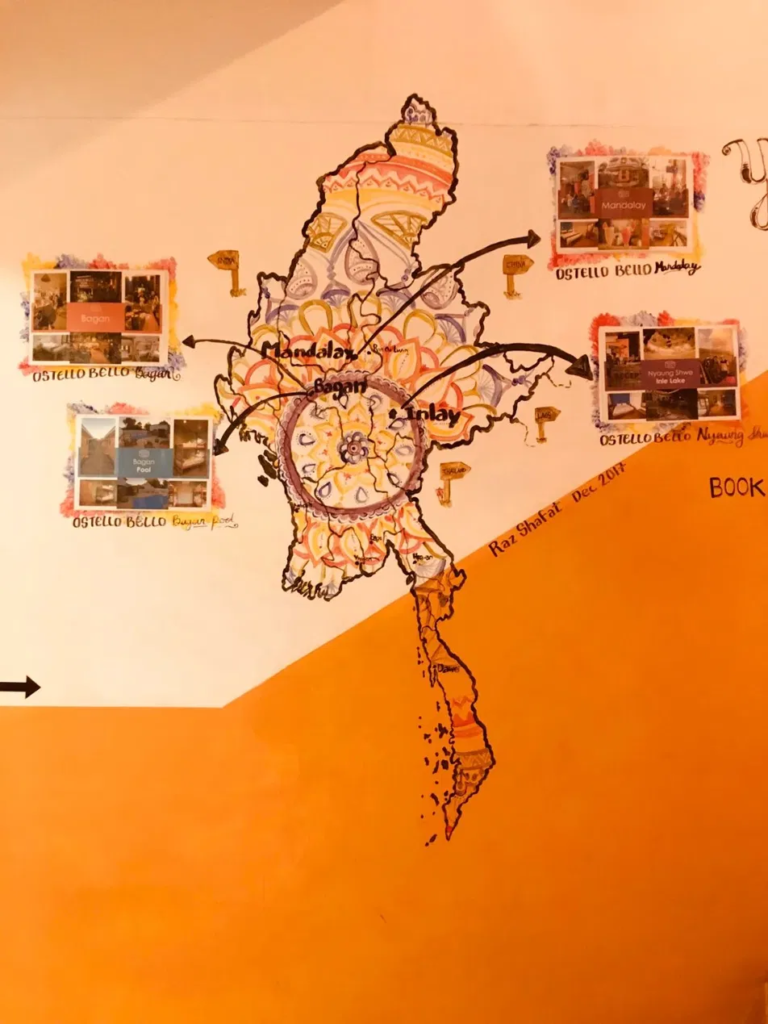
The first question every Indian traveler asks – and it’s the right one – is about Myanmar Burma travel requirements.
Can Indians go to Myanmar visa free? Myanmar has periodically offered visa-on-arrival and e-visa options for Indian passport holders. The status has shifted multiple times due to the post-coup political situation. As of 2025–26, it is strongly advised to check the official Myanmar e-visa portal and your nearest Myanmar consulate for the latest rules. Do not rely on outdated blog posts (including this one) for visa information.
Entry Point
Yangon is the primary entry and exit city for most Indian travelers flying in. Amar confirms: “Yangon is the only real entry and exit if you travel by flight.” Most international flights from Mumbai, Delhi or Kolkata land at Yangon International Airport.
The Myanmar trip cost from India can be surprisingly low. Amar booked a return flight from Mumbai for approximately ₹16,000 – which, if you compare it to flights to Europe or Southeast Asia, makes Myanmar one of the most accessible “foreign” destinations from India. Budget airlines occasionally drop this further.
How to Reach Myanmar from India
The main options for reaching Myanmar from India are by air or through a land border crossing in Northeast India (Moreh, Manipur). For most travelers, flying into Yangon is the most practical and safest route.
Flight Cost Reference (Amar’s Trip)
Mumbai → Yangon return: approximately ₹16,000. Airlines vary – check options via Kolkata or Bangkok if direct flights are unavailable or expensive. Book early; prices spike significantly in peak season (November–February).
The overland route through Moreh-Tamu border crossing has historically been possible but comes with its own set of Myanmar Burma travel restrictions that have tightened considerably post-2021. Check current status before attempting this route.
The 12-Day Route Across Myanmar
There is a well-worn traveler circuit in Myanmar that connects the country’s most extraordinary places to visit in Myanmar. Amar followed a version of this route, entirely on local buses:
Yangon→Mandalay→Bagan→Inle Lake→Yangon
Each leg by local bus costs approximately ₹1,000–1,500. Journeys are long – often overnight – but that is part of the experience. You watch Myanmar scroll past the window: rice fields, pagoda spires, monks on bicycles, a world quietly living its own life.
“My biggest mistake was giving Myanmar fixed, limited days. You simply cannot do this country in a rush. It was my biggest regret.”- Amar Patel
He originally planned to ride a motorcycle across the country – one of those romantic travel fantasies. Reality intervened. Road conditions, language barriers, and limited days made it impossible. The motorcycle dream became a lesson: Myanmar needs more time than you think it does.
Getting Around – Local Buses, Mopeds & Shared Rides
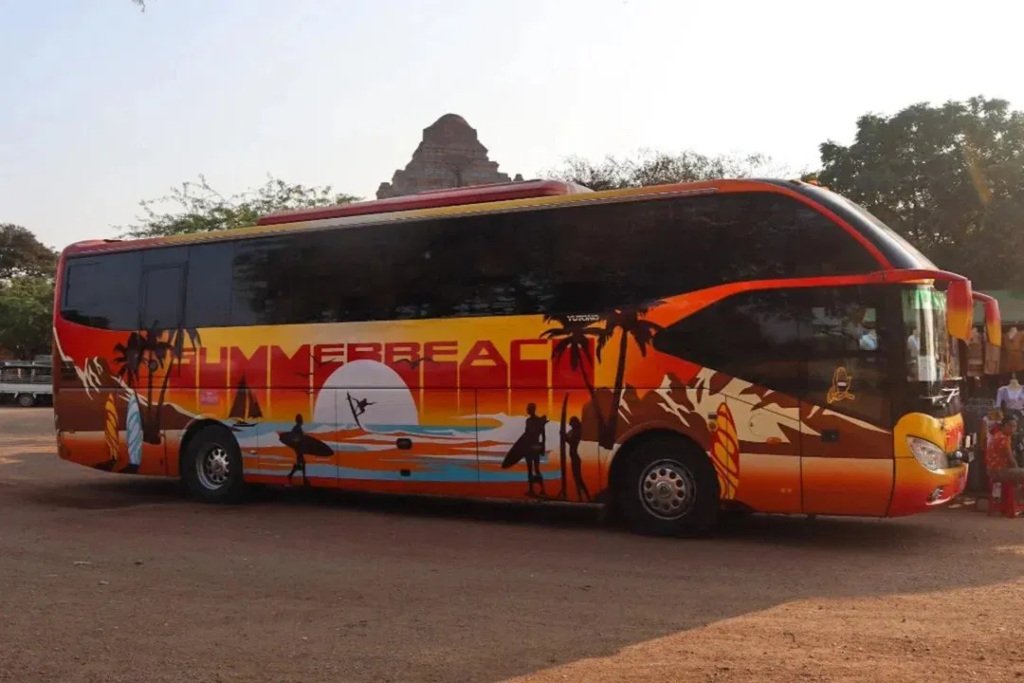
Transport in Myanmar is its own adventure. Between cities, you’ll board coaches like this one – boldly painted, comfortable enough, and punctual in that relaxed local way. Tickets are cheap. Fellow passengers are curious and kind.
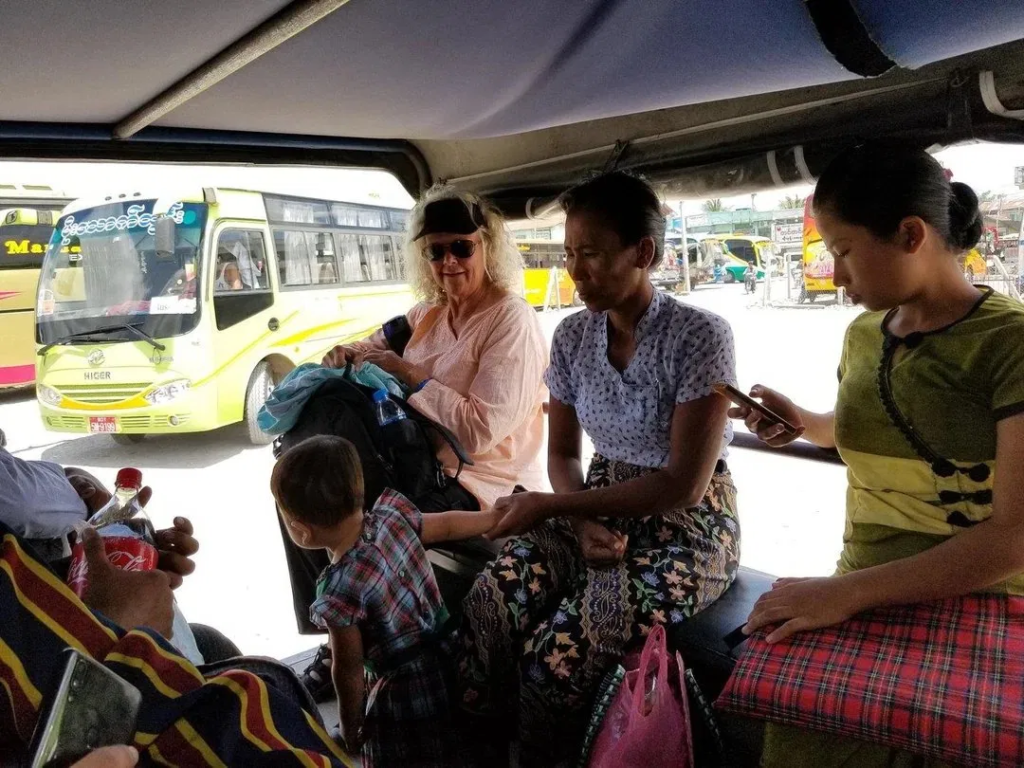
For shorter distances – within cities or between nearby towns – the shared pickup truck is king. You pile in with locals, bags on laps, children between knees, and somehow it all works. This is where conversations happen despite zero common language.
ဘယ်ကိုသွားမလဲ – Beh go thwa ma lè? – कहाँ जा रहे हो? – Kahan ja rahe ho?“Where are you going?” – the universal opener on every shared ride
Within cities and around temple zones, mopeds are available for rent at roughly ₹500 per day. This is the best way to explore Bagan – your own pace, your own direction, no guide needed.
Bagan – 2,000 Temples and One Plain
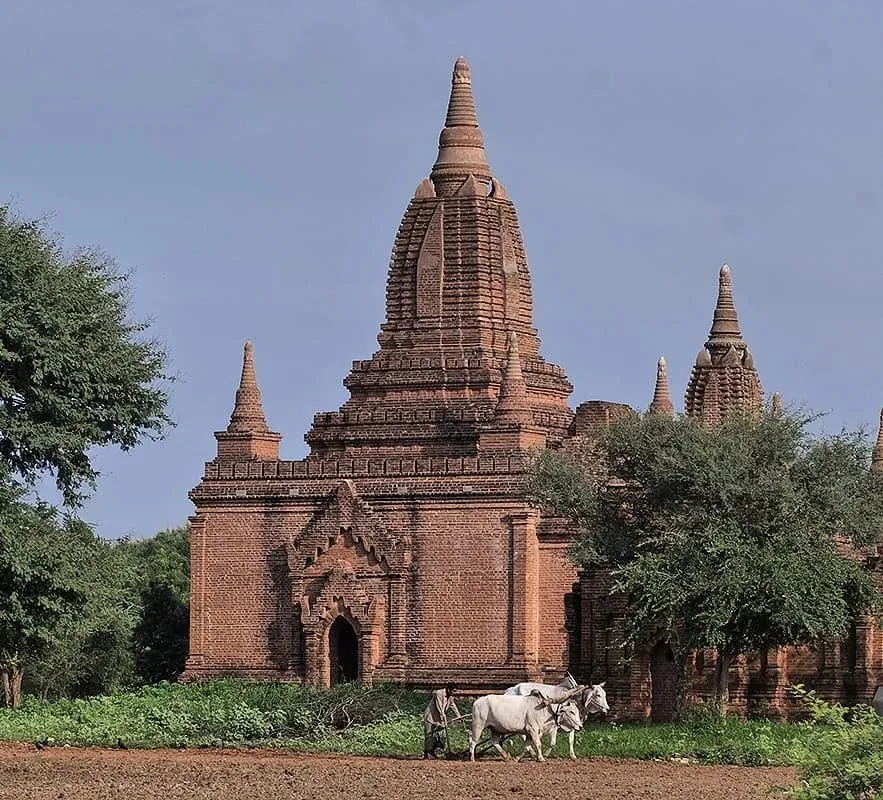
Nothing truly prepares you for Bagan. Not photos. Not travel blogs. Not even the flight into Yangon when you mentally steel yourself for something impressive.
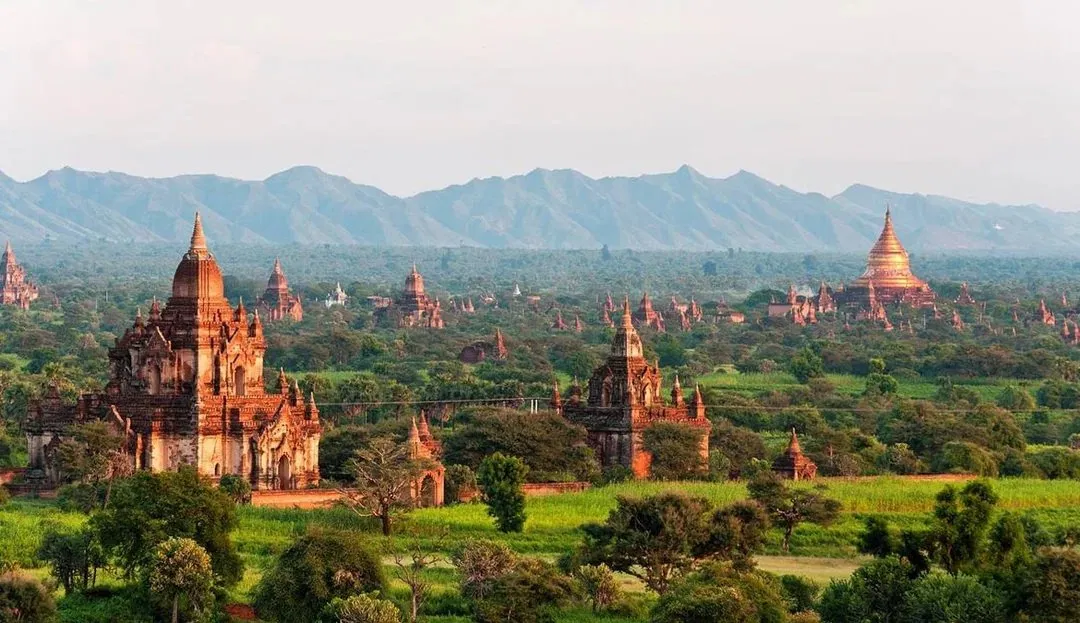
You arrive. You step outside. And then there they are – ancient red-brick temples stretching in every direction to the horizon, more than two thousand of them, built between the 9th and 13th centuries, standing quietly in a plain that time seems to have left alone.
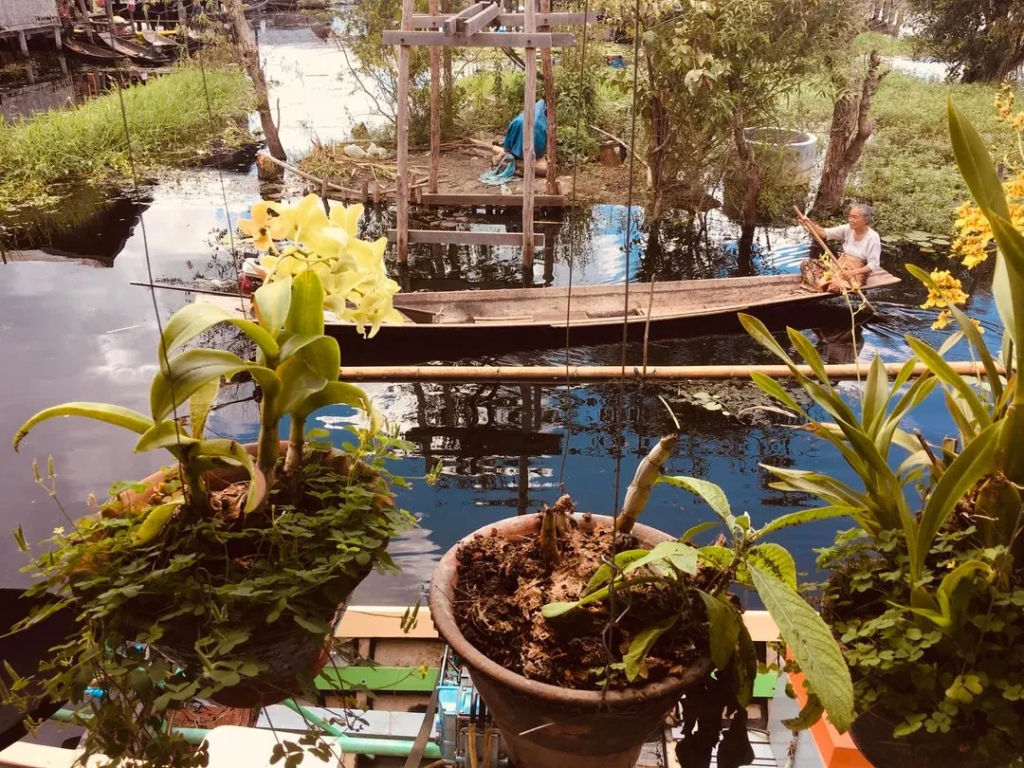
Ox carts still work the land between temples. Monks walk barefoot past ruins that are twice as old as the Mughal Empire. If you are looking for places in Myanmar that genuinely alter your sense of scale and time – Bagan is the one.
Bagan Tip
Rent a moped or e-bike and explore without a guide. The joy of Bagan is in the unexpected discovery – temples with no name, no sign, no other tourists. Just you and 1,000 years of silence.
This is what Amar’s lens catches best: the unnamed, the unsignposted, the overgrown. A Buddha inside a brick archway almost eaten by trees. A moment that no Myanmar Burma travel package will ever include on the itinerary.
Inle Lake – Where Life Floats
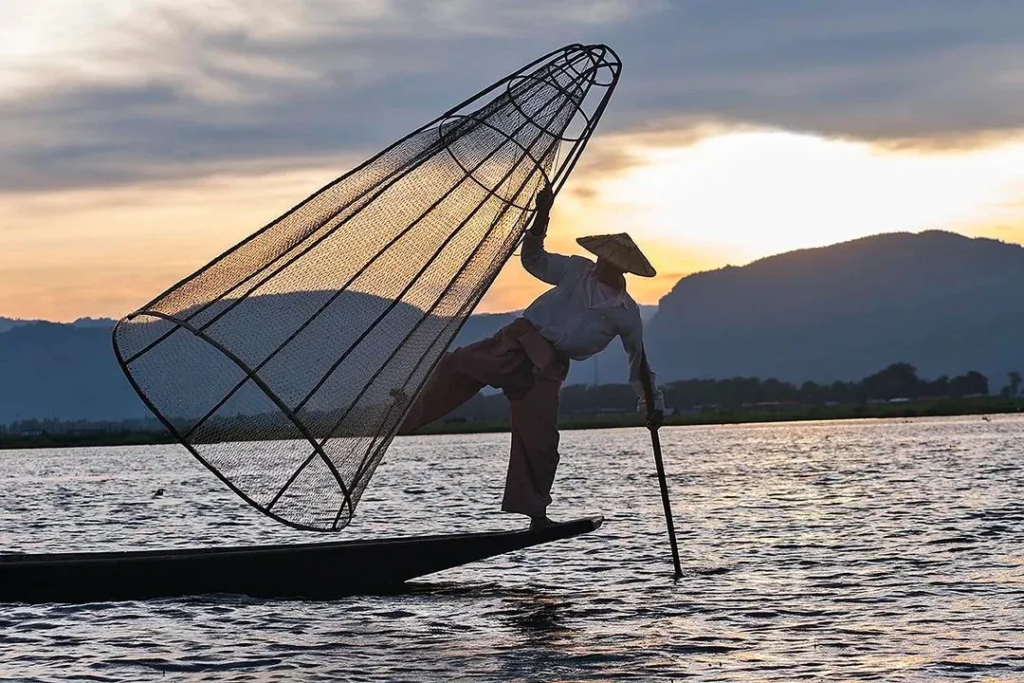
There are images that become symbols of a place. For Inle Lake, it is this one – the Intha fisherman, balancing on one leg on the prow of his narrow boat, steering with the other leg wrapped around an oar, lifting a cone-shaped net with practiced grace, mountains and a gold-and-purple sky behind him.
Amar caught this at sunset. And for a moment, the whole trip stopped.
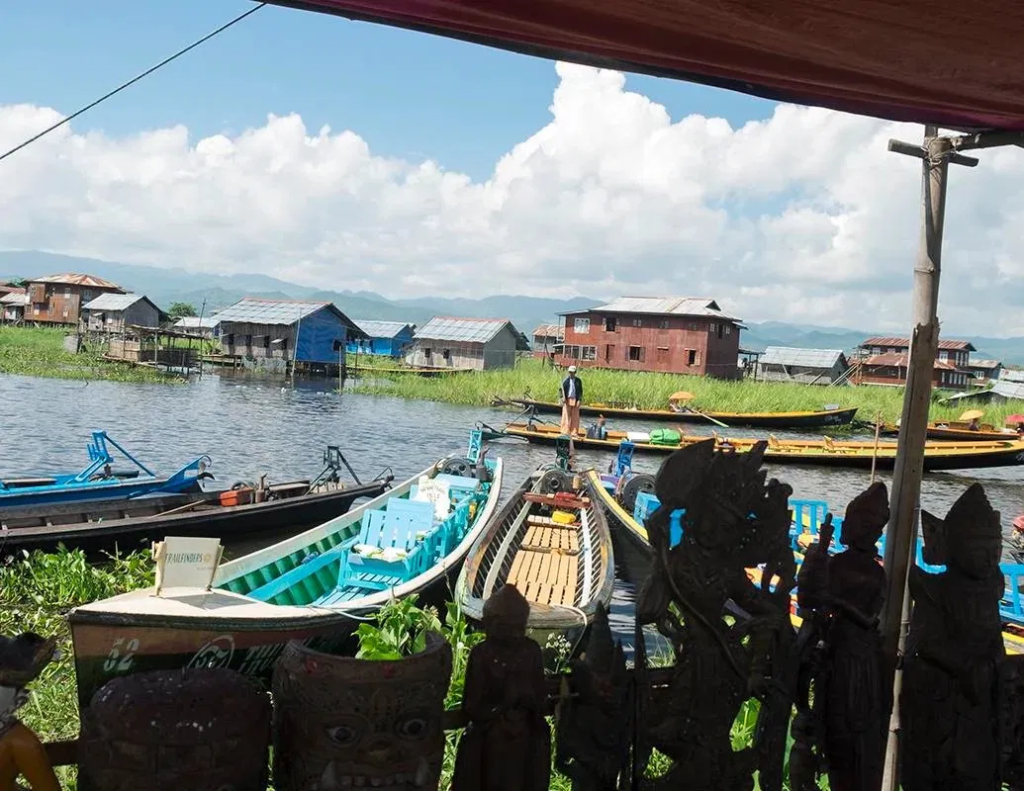
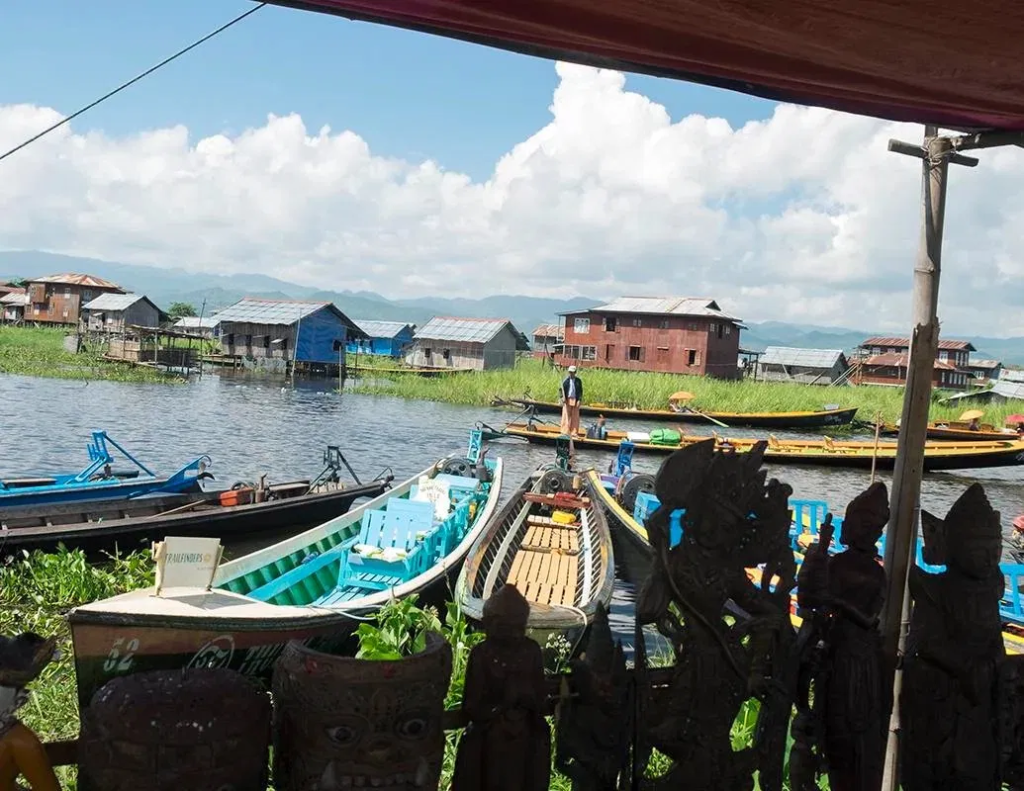
Inle Lake is not just a scenic destination – it is a functioning, living community built on water. Villages on stilts. Gardens that float. Markets that rotate between different villages on different days of the week. Workshops where silk is woven from lotus stems pulled by hand.
Take a full-day boat tour. Hire a local boatman early morning. Let yourself get lost in the canals. This is one of the most extraordinary places to visit in Myanmar and genuinely unlike anywhere else on earth.
Read about indian beaches like Goa’s Famouse Beaches
Spirituality on Every Corner
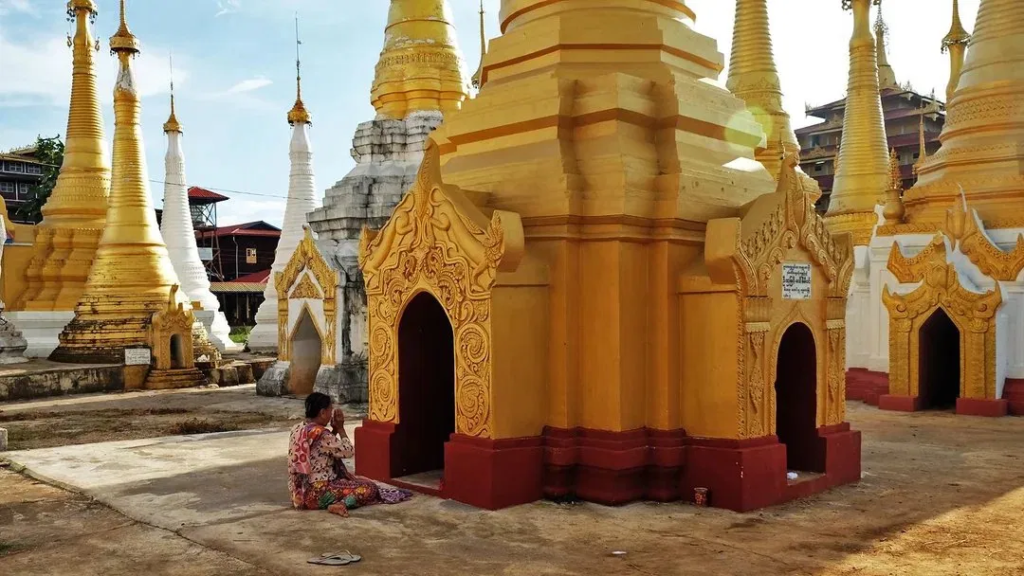
In Myanmar, Buddhism is not a religion practiced once a week. It is the texture of daily life. A woman settles cross-legged in front of a golden stupa at midday, her shoes left outside, her hands folded. Nobody photographs her. Nobody disturbs her. The city moves around this moment of stillness as if it is perfectly ordinary – because it is.
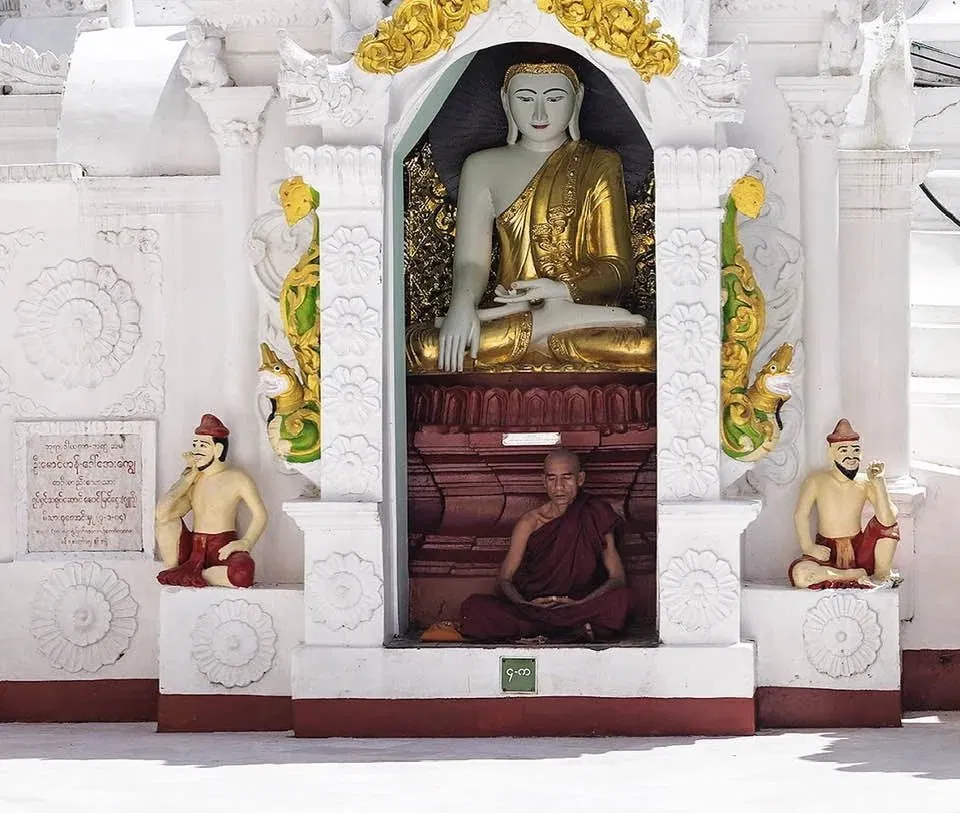
Pagodas are not tourist attractions here. They are the center of community life – places where monks meditate, children play, old men chat, and time has no particular urgency.
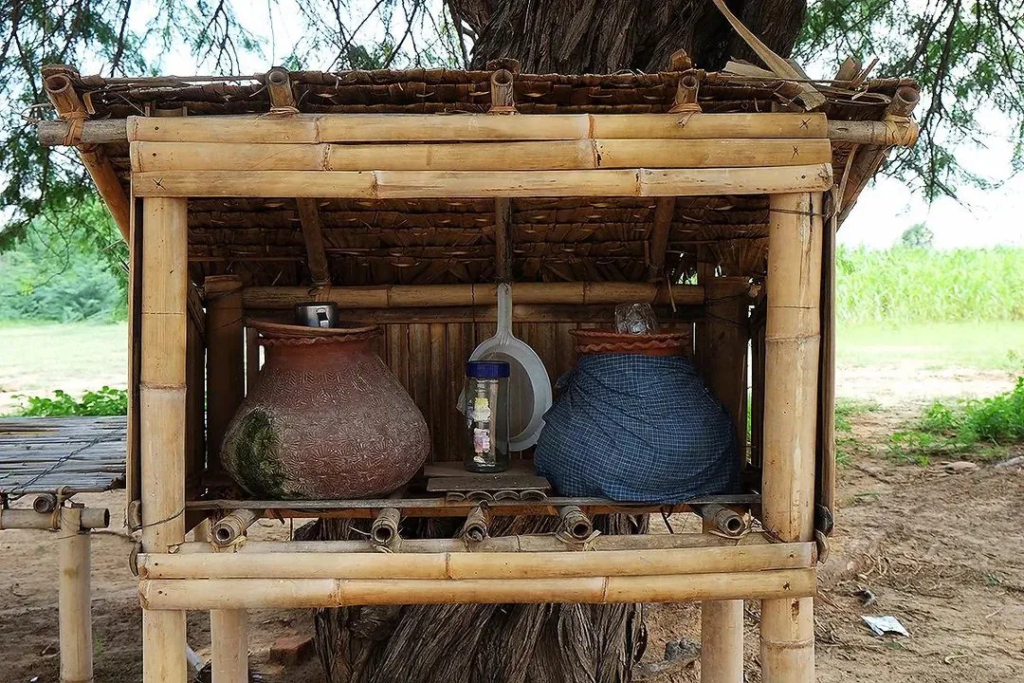
These small bamboo shelters with clay pots – filled with fresh drinking water, a ladle hanging ready – appear on roadsides across Myanmar. They are a Buddhist practice of generosity: dana. Free water for any stranger passing by. No sign needed. No transaction. Just water, and trust.
ကျေးဇူးတင်ပါတယ် – Kyay zu tin ba deh – धन्यवाद – Dhanyavaad“Thank you” – learn this one phrase; it opens every door
The Language Barrier – Surviving Without Words
The Burmese script is beautiful. It is also completely impenetrable if you haven’t studied it. Round, looping, circular characters that look more like art than language. Menus, signs, bus destinations – all in a script that gives no phonetic foothold to an Indian eye.
And then there’s the internet situation. Large parts of Myanmar have limited or no connectivity – especially outside Yangon and Mandalay. Translation apps that Indian travelers rely on in Thailand or Vietnam simply don’t work when your phone shows no data.
So how did Amar manage? “Smiles, hand signs, and expressions worked better than words most of the time.” Point at what the person next to you is eating. Hold up fingers for numbers. Mime sleeping for “do you have rooms?” It works. Slowly, warmly, with a lot of laughter on both sides.
Connectivity Tip
Download Google Translate’s Burmese language pack offline before you leave India. Also download offline maps of Myanmar on Maps.me or OsmAnd. Do not assume you’ll have internet to figure things out on arrival.
Food Diaries – A Vegetarian’s Honest Struggle
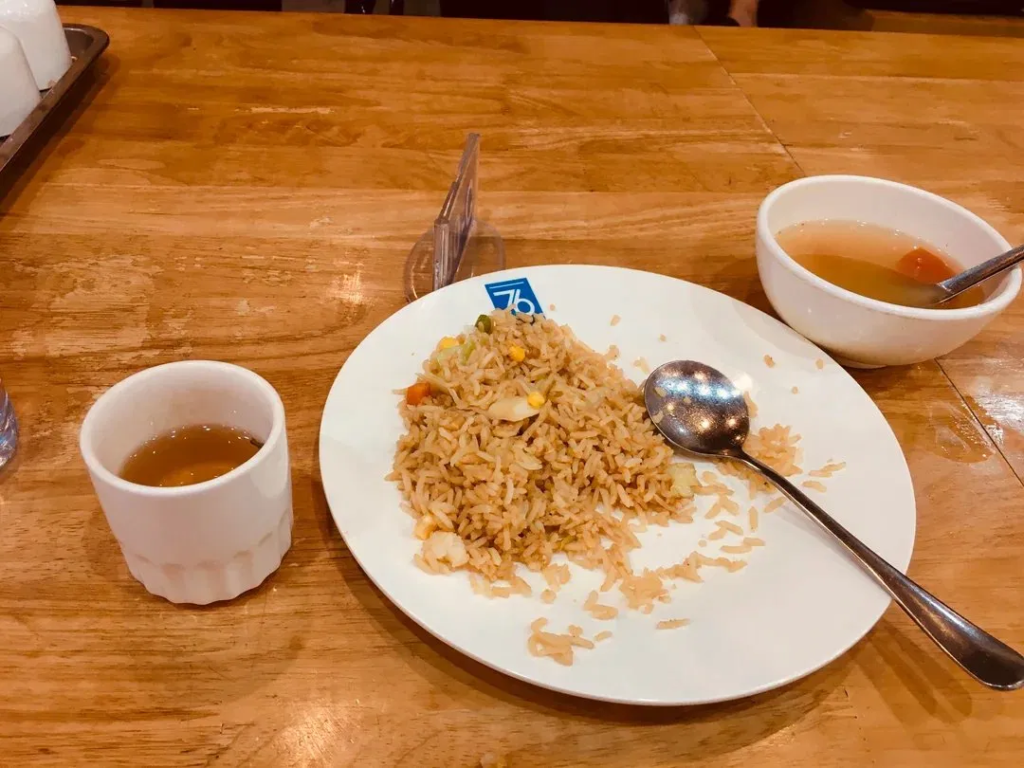
Let’s be honest. Myanmar is not a vegetarian-friendly country. Burmese cuisine is built on fish paste, shrimp, pork and chicken. Most curries that look vegetarian have fish sauce in them. Even the oil can be flavored with meat.
Amar survived on a rotating roster of: vegetable fried rice, plain noodle soups, fresh fruit, packaged biscuits, local street snacks – and thepla from home, which he now calls his best travel decision ever.
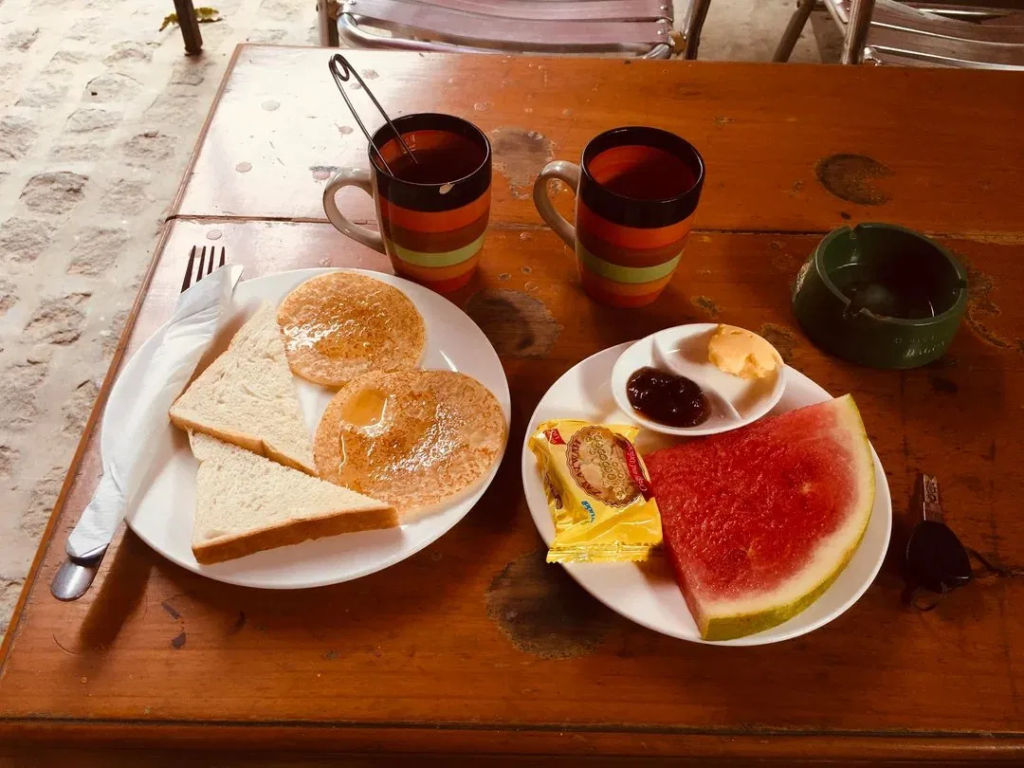
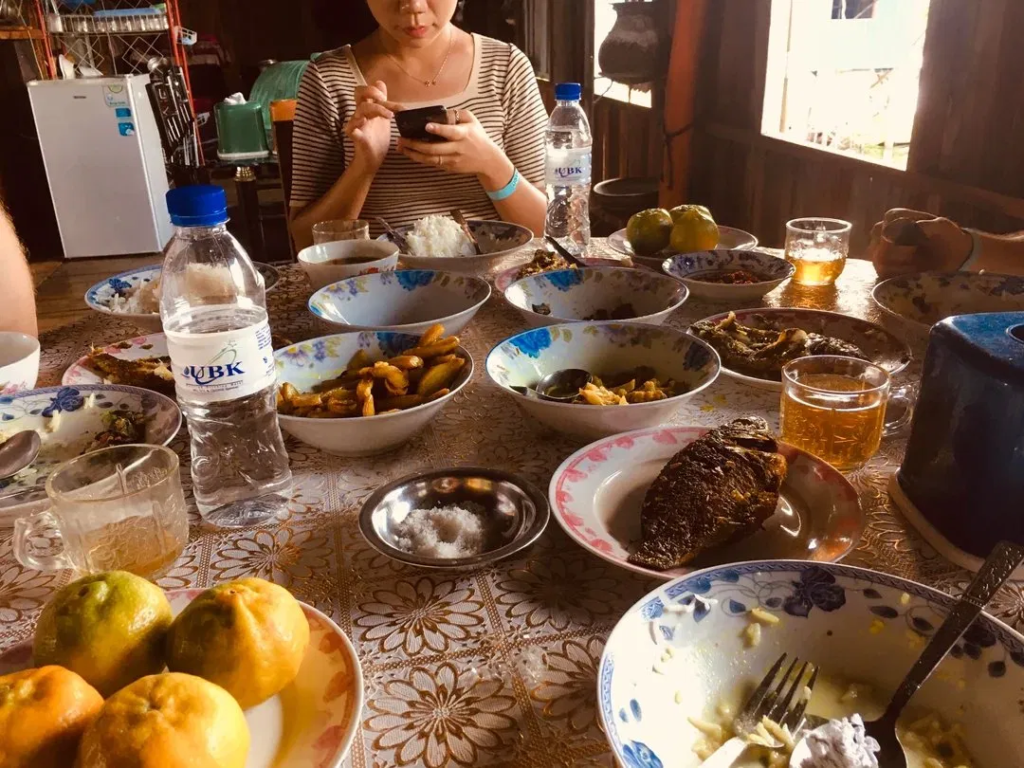
And then there were moments like this – a guesthouse table covered in small bowls of everything. Curries, stir-fries, fresh fruit, cold beer. “Including beer – roughly ₹1,000 a day for food,” he notes with a grin.
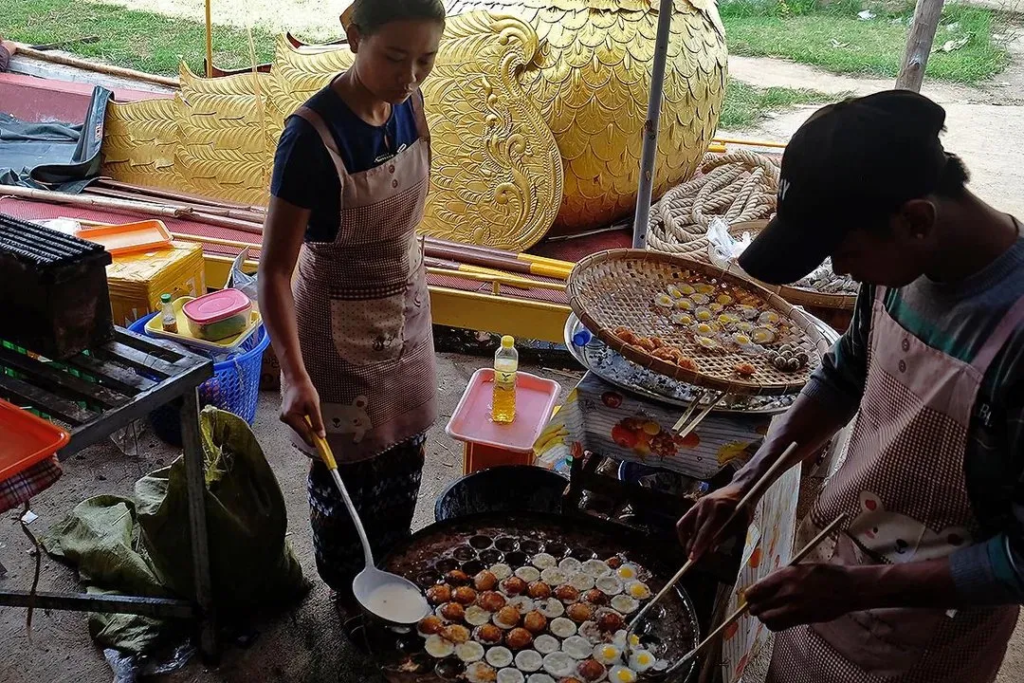
Outside almost every major pagoda, vendors fry these small quail egg and batter rounds in massive woks. They’re hot, crispy, cheap and available at all hours. Not strictly vegetarian if you’re strict – but if you can bend the rules, they’re worth every bite.
Vegetarian Travel Tip
The word for vegetarian in Burmese is “Tha-thana a-sa” (သာသနာ အစာ) – loosely meaning “religious food.” Buddhist monks eat vegetarian, so framing your request this way at tea shops and monasteries near pagodas often works better than saying “no meat.”
The People – Calm, Simple, Deeply Warm
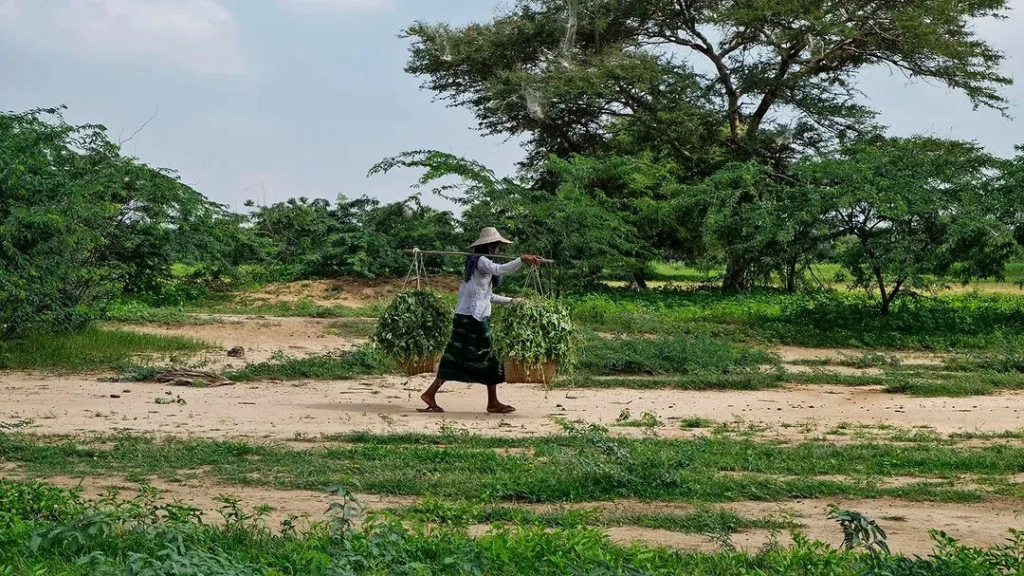
Myanmar has had a brutal history. Decades of military rule. International isolation. A government that locked its own Nobel Prize winner under house arrest for fifteen years. And yet – the people of Myanmar carry none of that heaviness on their faces.
They are some of the most gentle, genuinely curious, unhurried people Amar has encountered across 25 countries. Women with thanaka – a yellow paste made from wood – smeared on their cheeks. Men in longyis (the wrap-around sarong worn by all genders). Children who wave first before you even think to.
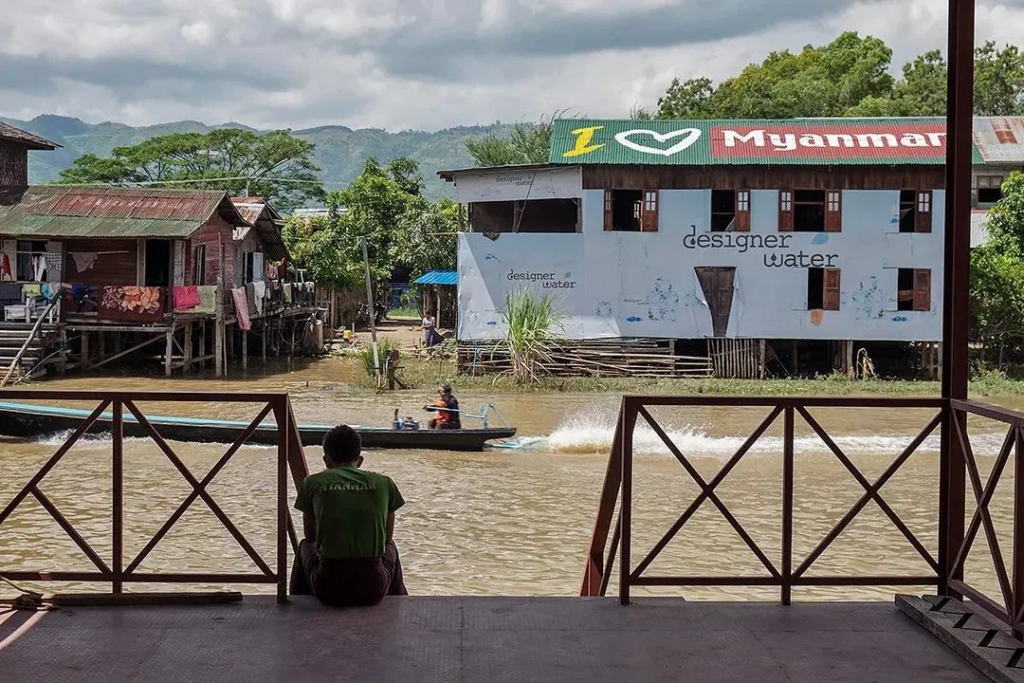
In the rougher, less-touristed regions, solo travelers find each other. Hostels become accidental families for a night. Over dinner – whatever that dinner turned out to be – people from Germany, Israel, Japan and Surat, Gujarat share real stories. Not social media stories. Real ones.
“Solo travel has its own beauty. In rougher regions you meet experienced travelers from around the world. Sitting at dinner, sharing real conversations without distractions – those moments stay with you.”- Amar Patel.
Myanmar Trip Cost from India – Full Budget Breakdown
One of the most searched questions from Indian travelers is: Myanmar trip cost from India. Here is Amar’s honest breakdown, in Indian Rupees:
| Expense | Cost (INR) | Notes |
|---|---|---|
| Flights (Mumbai return) | ~₹16,000 | Return; book early for best rates |
| Local Bus (per city hop) | ₹1,000–1,500 | Mandalay→Bagan, Bagan→Inle etc. |
| Hostel per night | ₹500–1,000 | Dorm beds; private rooms cost more |
| Food per day | ~₹1,000 | Includes local beer; veg is harder |
| Moped rental per day | ~₹500 | Essential for Bagan exploration |
| Temple entry fees | ₹500–1,500 total | Bagan zone pass, pagoda donations |
| Inle Lake boat tour | ₹800–1,500 | Full day shared or private boat |
| 12-Day Total (approx) | ₹35,000–45,000 | Including flights; slow backpack style |
For the quality of experience – the temples, the lake, the history, the people – Myanmar remains exceptional value compared to most international destinations, especially for Indian passport holders.
Mistakes, Regrets & What to Do Differently
Amar is refreshingly honest about where his trip went wrong. These are the lessons worth hearing before you book:
1. Not giving Myanmar enough days. Twelve days sounds like a lot. For Myanmar, it is not enough. Bagan alone deserves three to four days. Inle Lake deserves two. Mandalay deserves two. Yangon deserves at least one full day just to get over the jetlag and absorb the city. Build in at least 15–18 days for a first trip.
2. The motorcycle plan. He wanted to ride across Myanmar. The ground reality – unfamiliar roads, no internet for maps, no Burmese language, limited days – made it impossible to manage safely. If you plan to do this, you need dedicated extra time, a GPS device with offline maps, and ideally some Burmese language basics.
3. Underestimating the language barrier. Unlike Thailand or Bali where tourist English is everywhere, Myanmar has large areas where essentially no English is spoken at all. Offline tools, hand signals, and patience are not optional.
4. Not carrying enough vegetarian backup food from India. He had thepla. He should have had more.
Should You Travel to Myanmar in 2026?
This is the question that deserves a straight, honest answer – not a diplomatic one.
Why is Myanmar not safe to travel? Since the military coup of February 2021, Myanmar has been experiencing armed conflict between the military junta and various resistance forces. Certain regions – particularly in the north, northwest, and some parts of the southeast – have active fighting. Civilians have been affected. Foreign governments including India, the UK, USA, and Australia have issued varying levels of travel advisory for Myanmar.
Amar visited in September 2021 – shortly after the coup – and his experience was largely peaceful. The tourist zones of Yangon, Bagan, and Inle Lake remained relatively calm then. By 2026, the situation has evolved. Can I travel to Myanmar now? Possibly – but you need current, specific information, not general blog posts.
Check Before You Book
Always check your government’s official travel advisory for Myanmar before booking any trip. For Indian citizens: Ministry of External Affairs travel advisories. For broader reference, also check the UK FCDO or US State Department advisories which tend to be more detailed. Do not rely on travel blogs – including this one – for current safety information.
What Amar says, simply: “Make your travel with enough information. The political disturbance has changed the situation, but the people are still the same.”
That is perhaps the most honest thing that can be said. The temples are still there. The fishermen are still on Inle Lake. The ox carts still pass the ancient stupas in Bagan. The water donation stations are still on the roadsides. Myanmar the place has not gone anywhere. The challenge is navigating the political reality responsibly – and deciding, with full information, whether now is your time to go.
Frequently Asked Questions – Myanmar Travel for Indians
Is Myanmar safe for tourists now?
As of 2026, Myanmar has active conflict zones due to the ongoing civil conflict following the 2021 military coup. Major tourist areas like Bagan, Inle Lake, and parts of Yangon have seen visitors, but safety varies by region and changes frequently. Check your government’s current travel advisory before planning any trip.
Can Indians go to Myanmar visa free?
Myanmar has offered visa-on-arrival and e-visa options for Indian passport holders at various times. The current status depends on bilateral agreements and the political situation. Check the official Myanmar e-visa portal (mevisa.gov.mm) or the nearest Myanmar consulate for the most current requirements before booking.
Is Burma a good country to visit?
For slow, culturally curious travelers – yes, Myanmar is extraordinary. Ancient temples in Bagan, floating villages on Inle Lake, deep Buddhist culture, and some of the most genuinely warm people in Southeast Asia. The challenge is the political situation, language barrier, and limited infrastructure. It rewards patient, prepared travelers richly.
Is it safe to go to Myanmar in 2026?
Travel to Myanmar in 2026 requires careful research. Several regions have active conflict. The Indian Ministry of External Affairs and other governments have issued travel advisories. Some travelers continue to visit the main tourist zones, but it is essential to have current, specific information – not general travel blog advice – before going.
What is the Myanmar trip cost from India?
A 12-day backpacker trip from India to Myanmar costs approximately ₹35,000–45,000 including flights (Mumbai return ~₹16,000), local buses (₹1,000–1,500 per leg), hostels (₹500–1,000/night), food (₹1,000/day) and activities. Myanmar remains affordable compared to most international destinations for Indian travelers.
What are the Myanmar Burma travel requirements for Indians?
Requirements include a valid Indian passport, a Myanmar visa (e-visa or visa on arrival depending on current policy), proof of onward travel, and sufficient funds. Given the political situation, some countries also recommend registering with your embassy on arrival. Always verify current requirements before departure.
Amar Patel
Civil Engineer · Photographer · Slow Traveler · Surat, Gujarat
Amar has been travelling since 2009 – solo, or with like-minded people who share his love of photography and offbeat places. With 25+ countries across his lens, he describes himself in three words: Curious. Slow. Observing. Myanmar remains one of the places he most wants to return to.
He doesn’t run a blog or YouTube channel. He travels for himself – not for numbers. Which is exactly why this story feels like it does.@Amar.wander.lens on Instagram