


Some of the best trips are the ones that almost don’t happen. You miss a bus, traffic blocks your original route, and suddenly you’re hitchhiking through the foothills of the Kumaon Himalayas toward a temple that Apple’s Steve Jobs once visited for spiritual enlightenment. That’s precisely the kind of trip this is.
This travel guide is built on the real, on-the-ground experience of @iloiviol – an astrophotographer, classical music vocalist, and traveller from Lucknow, UP – who set off from Bareilly in the first week of April and returned two days later with stories worth telling and photographs worth sharing. No tour packages. No pre-booked cabs. Just a rented scooter, some hitchhiking, chai-pakora at altitude, and a quiet morning at one of the most spiritually charged places in Uttarakhand.
If you’re planning a trip to Kainchi Dham, Ghorakhal, or Mukteshwar, skip the polished resort brochures. Read this first.
FAQ: Quick Answers Before You Go
Which city is nearest to Kainchi Dham?
Bhowali is the closest town, just 9 km away. Nainital is about 17 km. Haldwani/Kathgodam is the nearest major transit hub.
Which god is worshipped at Kainchi Dham?
The temple is primarily dedicated to Lord Hanuman and was founded by the revered saint Neem Karoli Baba (Maharaj-ji) in 1962.
Can I stay at Kainchi Dham for free?
The ashram occasionally offers free lodging for genuine devotees, but accommodation is very limited. Tourists should book nearby hotels.
What is Ghorakhal famous for?
Ghorakhal is famous for the Golu Devta Temple – a unique shrine where devotees write letters to the deity seeking justice, and thousands of brass bells hang as tokens of fulfilled wishes.
Who is the god of justice in Uttarakhand?
Golu Devta is the beloved local deity of justice in the Kumaon region. Devotees believe he grants justice to those who petition him.
What is the entrance test for Ghorakhal?
Ghorakhal is home to Sainik School Ghorakhal. Admission is through the All India Sainik Schools Entrance Examination (AISSEE), conducted nationally.
What is Mukteshwar famous for?
Mukteshwar is famous for its 180-degree Himalayan panorama, the ancient Mukteshwer Shiva temple (350+ years old), the adventure spot Chauli Ki Jali, and its quiet, unpolluted atmosphere.
Does it snow in Mukteshwar?
Yes! At 2,285 metres, Mukteshwar receives snowfall between December and February. Spring (March–May) brings clear skies and stunning Himalayan views.
Which is better – Nainital or Mukteshwar?
Nainital is better for families and first-time hill visitors. Mukteshwar is for those seeking solitude, nature, and genuine mountain air without the crowds.
The Route: Bareilly → Kathgodam → Bhowali → Kainchi Dham → Ghorakhal → Mukteshwar
The trip began in Bareilly. A bus to Haldwani, then an auto to Kathgodam – the gateway to Kumaon. Heavy traffic congestion had made private taxis and rental scooters unavailable for the day. Most travellers would have stopped here. Our traveller hitched a ride.
From Kathgodam to Bhowali, and from Bhowali to Kainchi – each leg completed by flag-stopping a passing vehicle. A reminder that Uttarakhand’s mountain roads still carry the generous hospitality of a slower, kinder era of travel.
Once a scooter was eventually rented in Bhowali, the rest of the trip – Ghorakhal and Mukteshwar – unfolded on two wheels, with the wind, the mist, and occasionally the rain.
Kainchi Dham: The Temple That Changes You – If You Let It
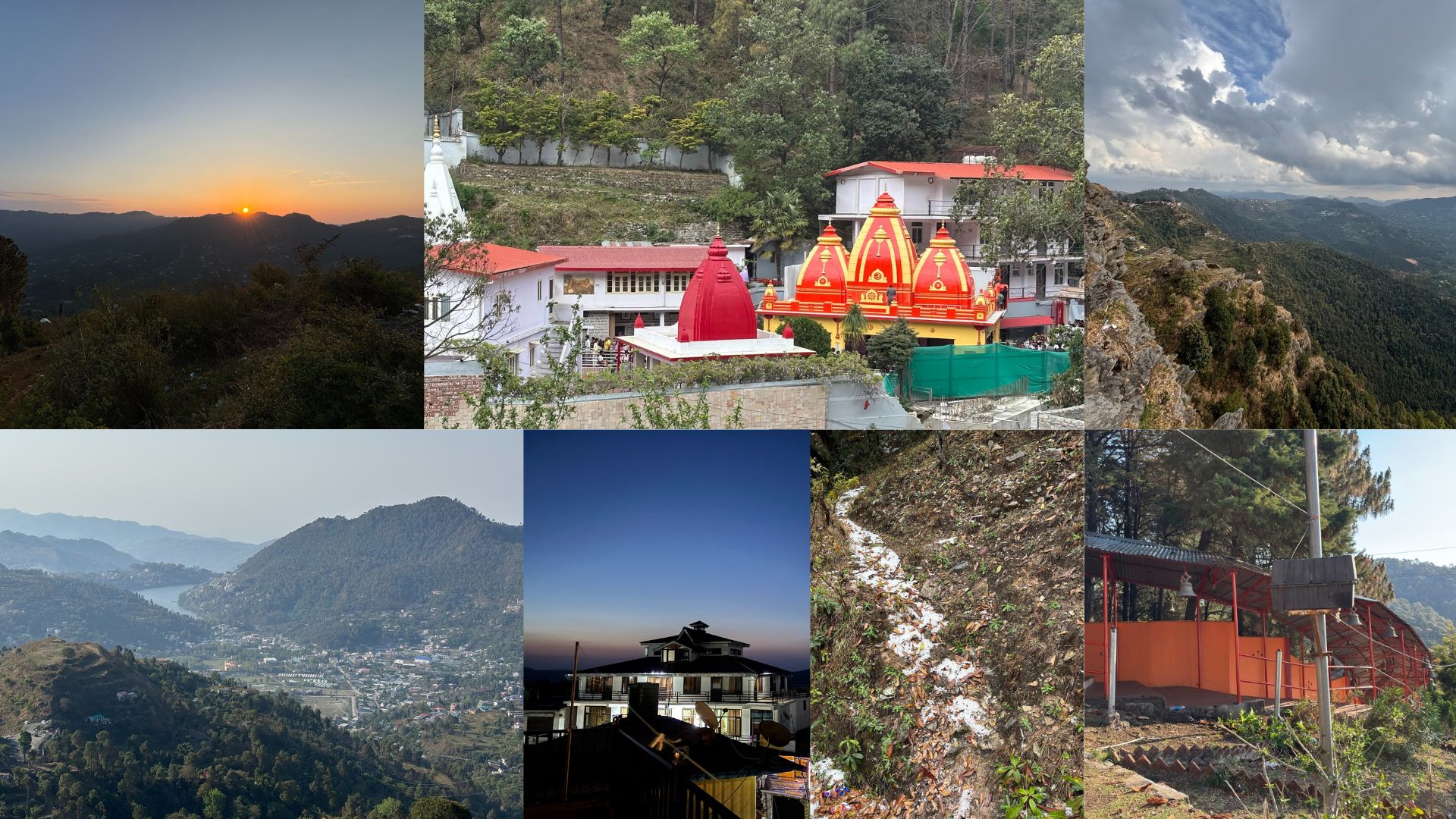
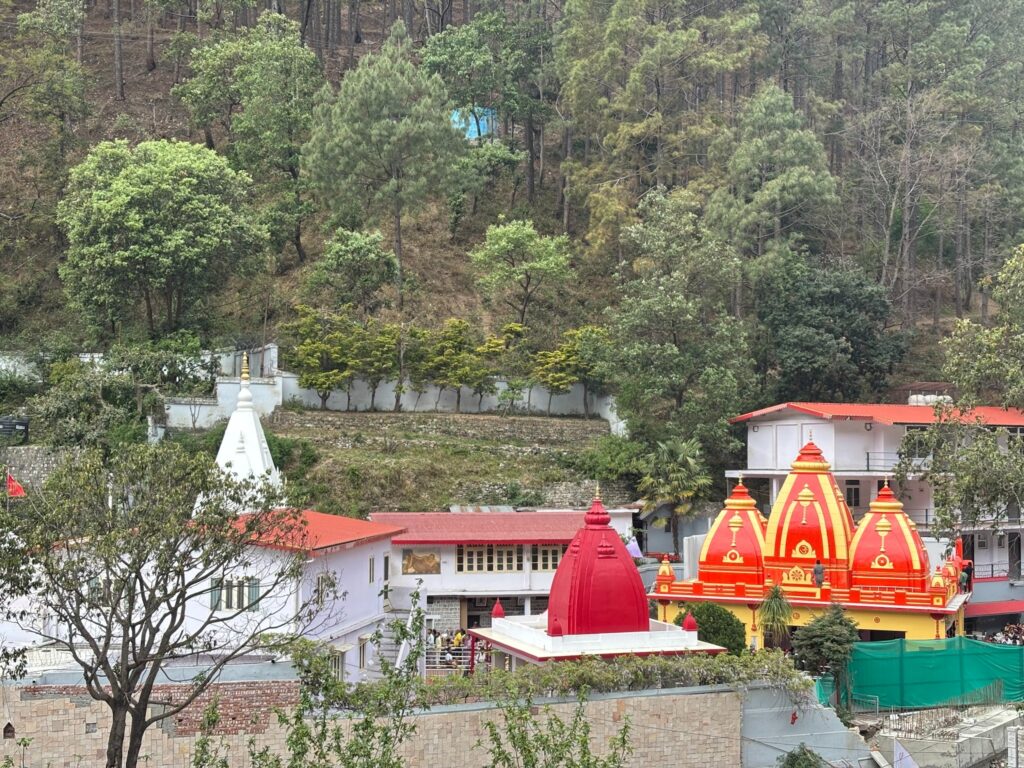
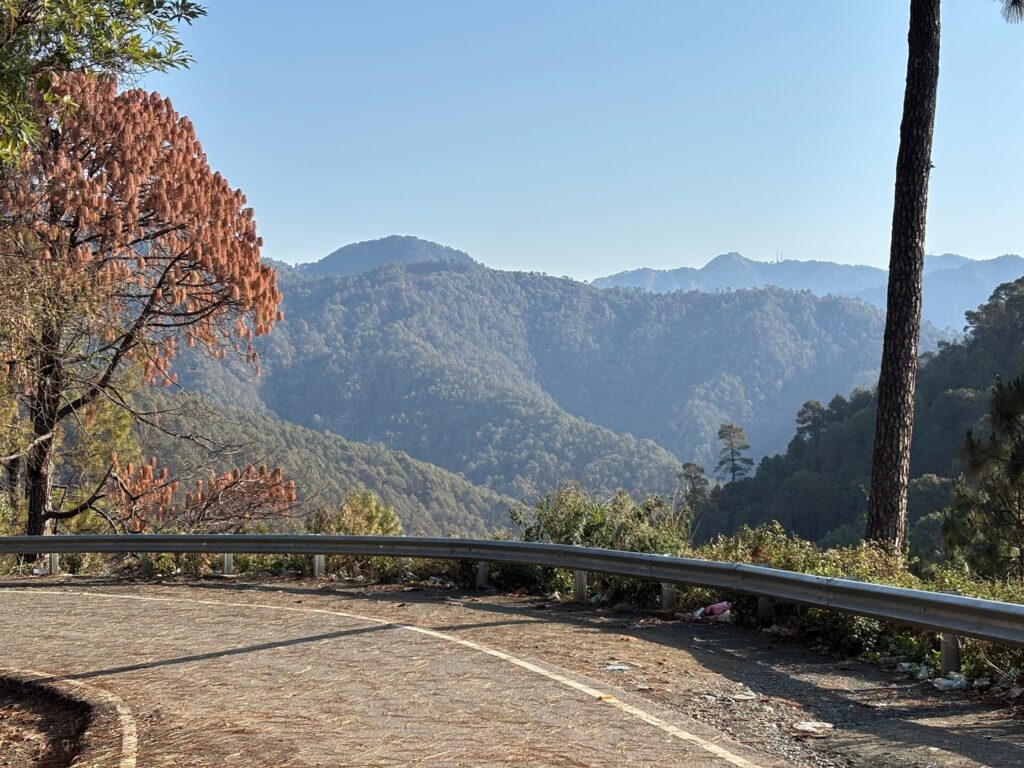
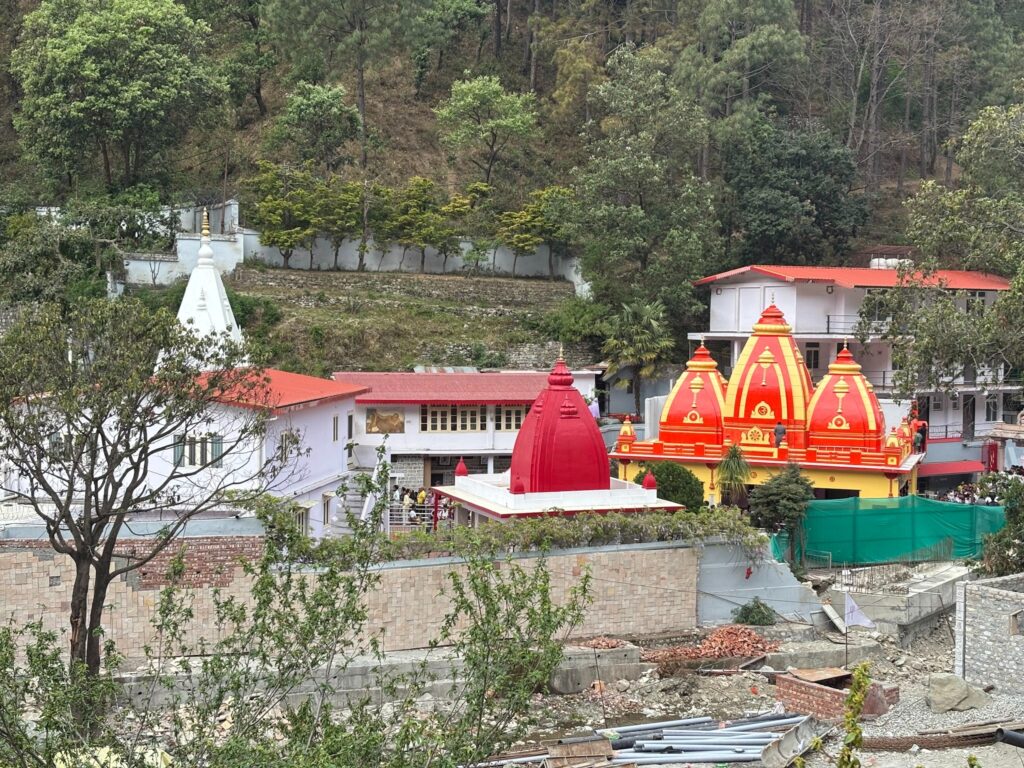
Nestled at 1,400 metres in a valley carved by the Koshi river, Kainchi Dham doesn’t announce itself loudly. You round a bend on the Nainital–Almora road and suddenly there it is – a cluster of red shikhars rising against a forested hillside, sitting between two sharp hairpin bends. (‘Kainchi’ means scissors in Hindi, named for those twin bends – not scissors the tool, as many mistakenly believe.)
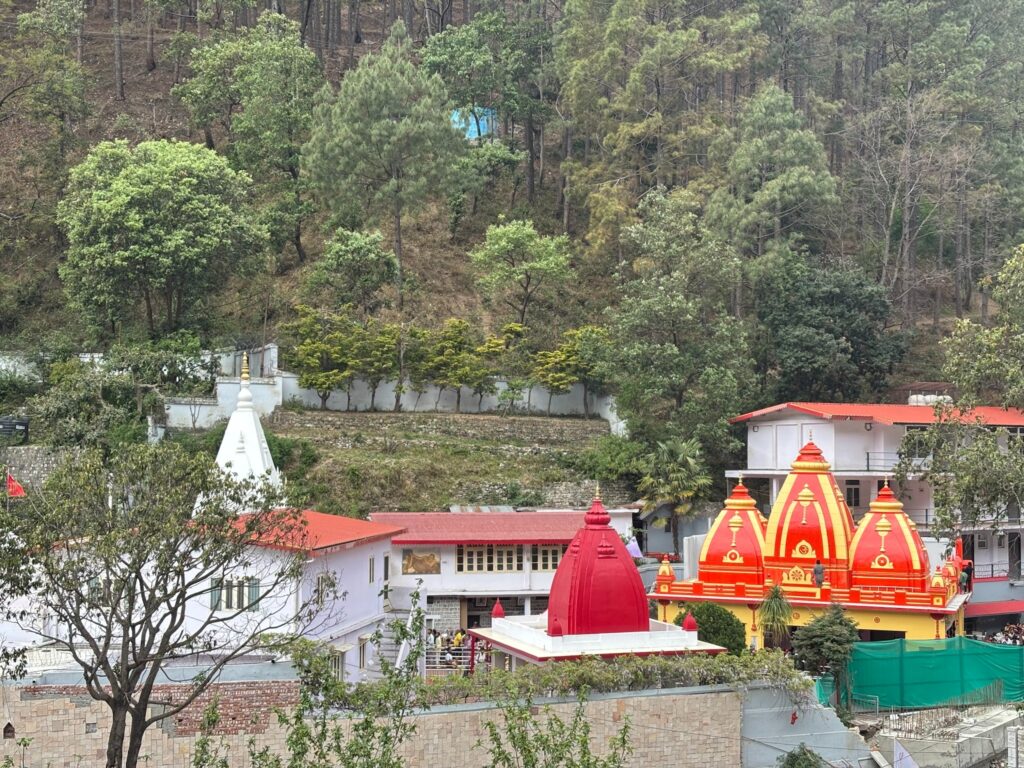
The temple was founded in 1962 by Neem Karoli Baba, one of India’s most revered saints of the 20th century. On 15th June every year – Pratishtha Divas – over one lakh devotees are fed at the Bhandara.
What makes Kainchi Dham globally known, beyond its spiritual reputation, is its connection to Steve Jobs. The Apple co-founder visited this very ashram in 1974 as a young hippie on a quest for spiritual enlightenment. That visit shaped the way he thought about intuition, simplicity, and design. Many trace Apple’s philosophy back, in part, to this quiet valley in Uttarakhand.
What to Expect When You Arrive
Our traveller reached Kainchi around 13:00, well past the morning aarti. The temple was crowded – lots of people, lots of expressions, lots of energy. But the atmosphere, despite the crowd, was described as ‘light.’ There’s ongoing renovation around the complex. The darshan was deeply fulfilling, and the prasadam – chana – was distributed freely and genuinely tasty.
The Frequency of the Place
Here’s something most travel guides won’t tell you: Kainchi Dham has a frequency. Not a metaphor – a tangible, felt-in-your-chest presence that devotees and sensitive visitors consistently describe.
“It is powerful. If one can feel the frequency there, it’s mystical. Of course the crowd dilutes the effect but even after that, you can surely feel it.”
– @iloiviol
An Honest Note for Visitors
Kainchi Dham is not a content stop. The ecosystem around the ashram is sensitive – ecologically, spiritually, and in terms of sheer crowd capacity. Visit when you genuinely feel called to. Not because it’s trending.
Avoid going during the 15th June Bhandara unless you’re specifically there for it – the crowd is immense. Early mornings on weekdays are best for a serene darshan.
Ghorakhal: The Temple of a Million Letters
From Bhowali, Ghorakhal is barely 15 minutes by scooter. It wasn’t on the original plan. It became the most unexpectedly magical stop of the trip.
Ghorakhal is a quiet hill town sitting at around 1,800 metres, home to an Air Force Station and, more famously, the Golu Devta Temple. What makes this shrine unlike any other in India is its ritual: devotees write handwritten letters to Golu Devta, petitioning him for justice. The temple walls, pillars, and trees are covered with thousands of these letters, along with brass bells – each bell representing a wish fulfilled.
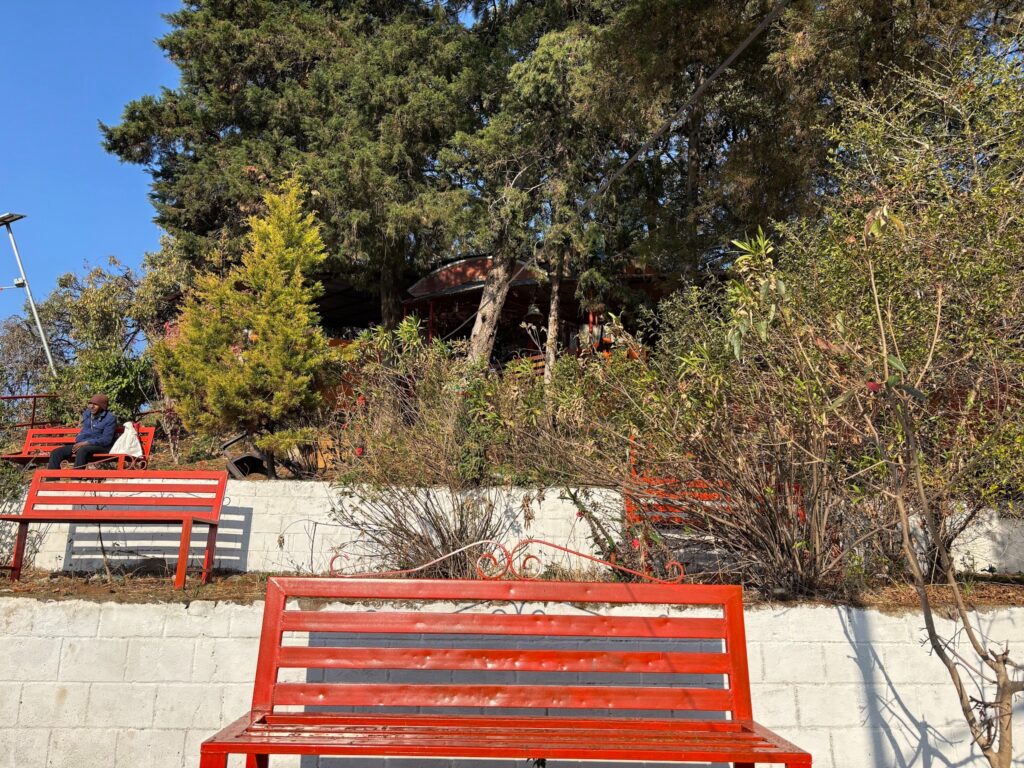
The sound reaches you before the sight does.
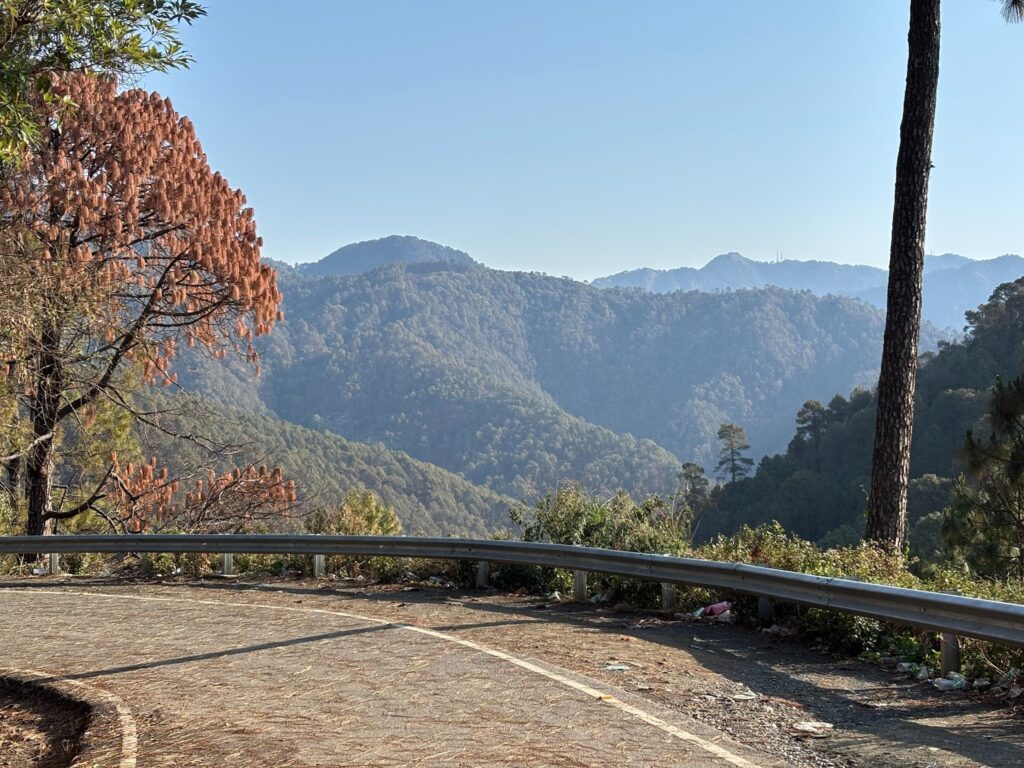
“I reached the temple at the time of Aarti, so I could hear the bells ringing before even reaching the temple. It was a very sublime experience.”
– @iloiviol
The sheer quantity of letters – some neat, some desperate, some joyful – creates an overwhelming document of human hope. People write to Golu Devta the way they might write to a judge: formally, earnestly, with evidence. Court stamps on some petitions. Legal language in others. It’s unlike anything else in Indian devotional practice.
The View of Bhimtal
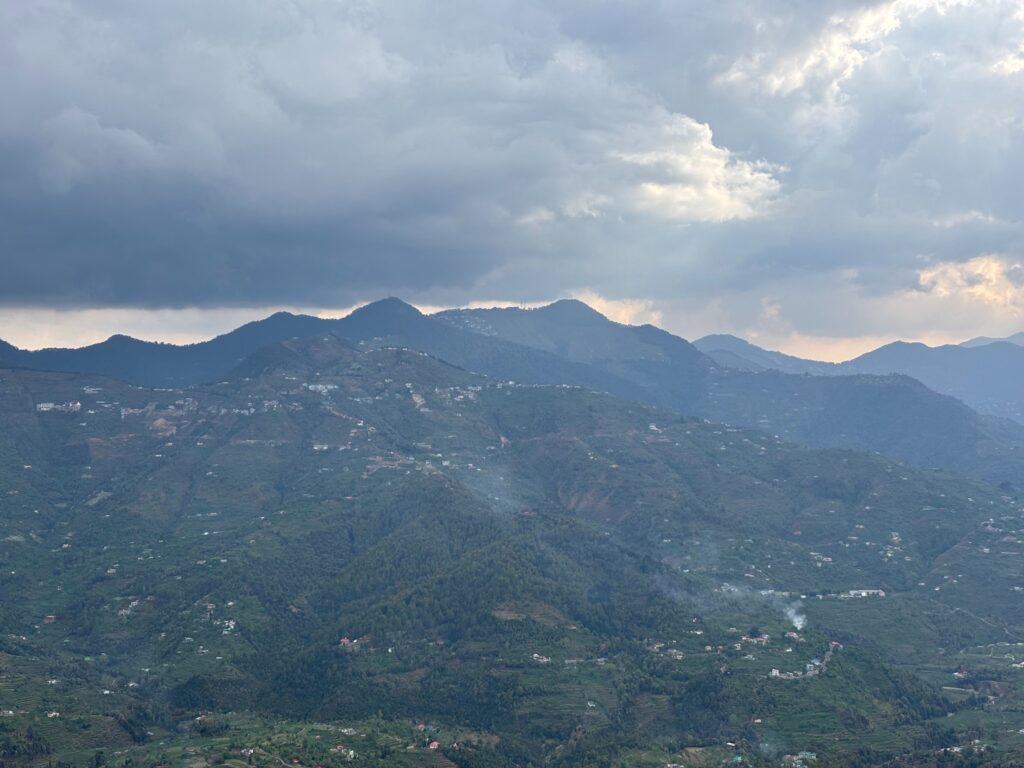
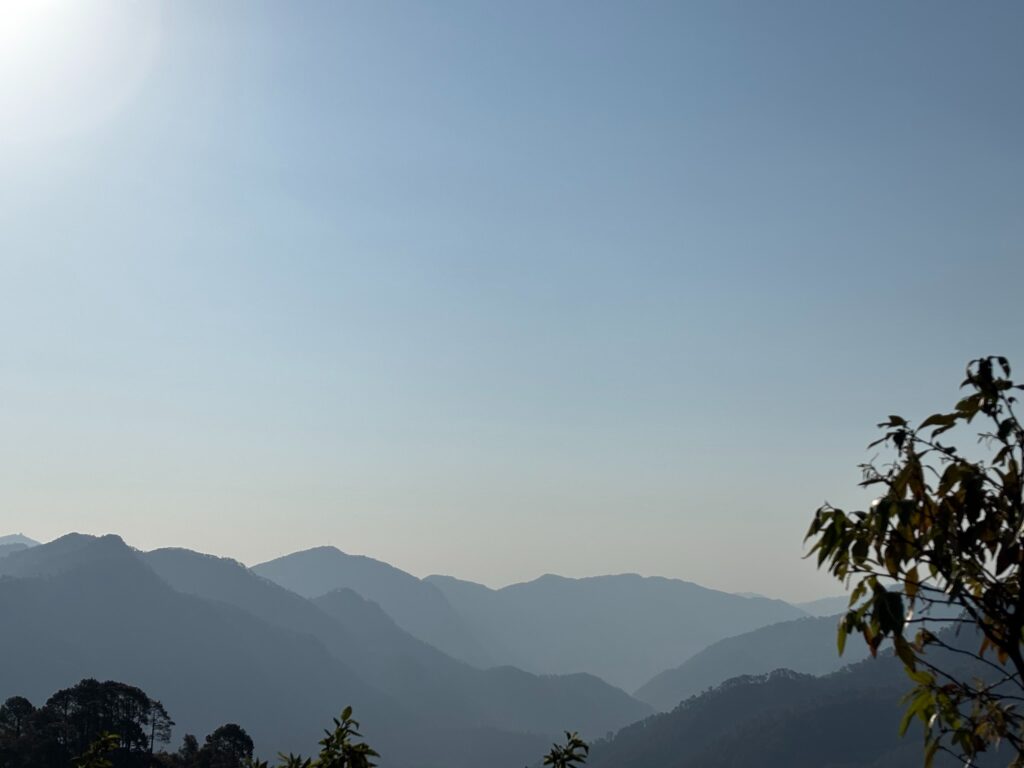
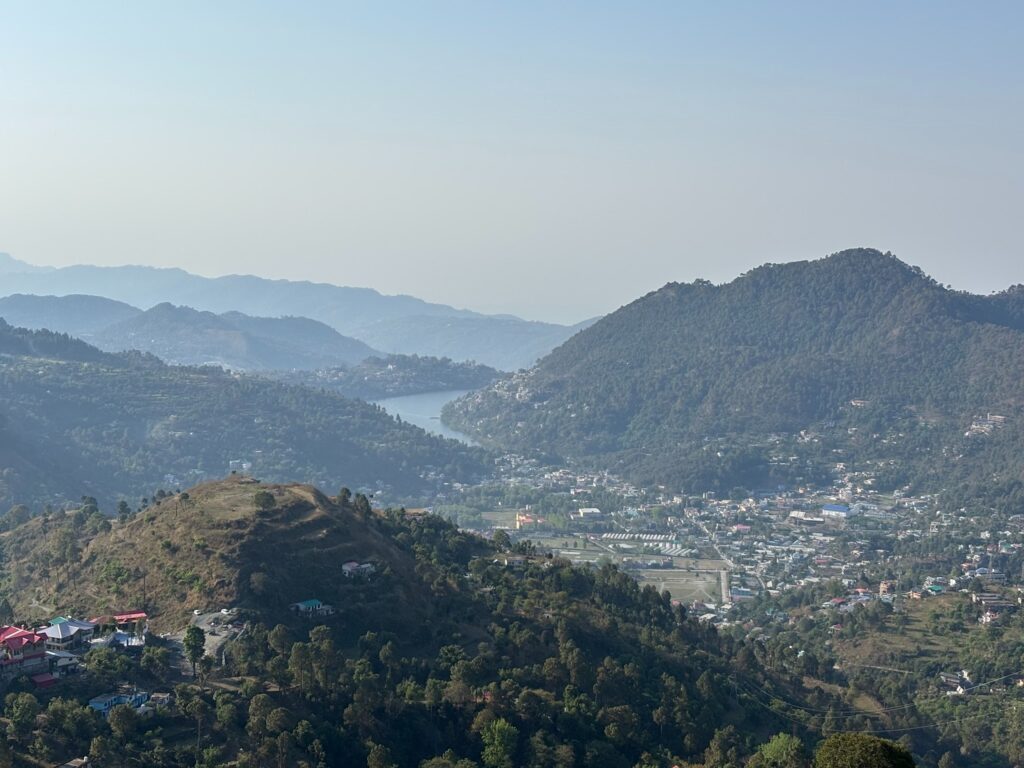
One gift Ghorakhal offers that guidebooks underplay: the view. On a clear day, the vista of Bhimtal lake nestled between the valleys is arrestingly beautiful. That view alone makes the detour worth it.
Mukteshwar: Where the Mountain Takes Your Breath Away
If Kainchi Dham is about spiritual grounding, and Ghorakhal is about quiet devotion, Mukteshwar is about scale. Pure, vast, humbling mountain scale.
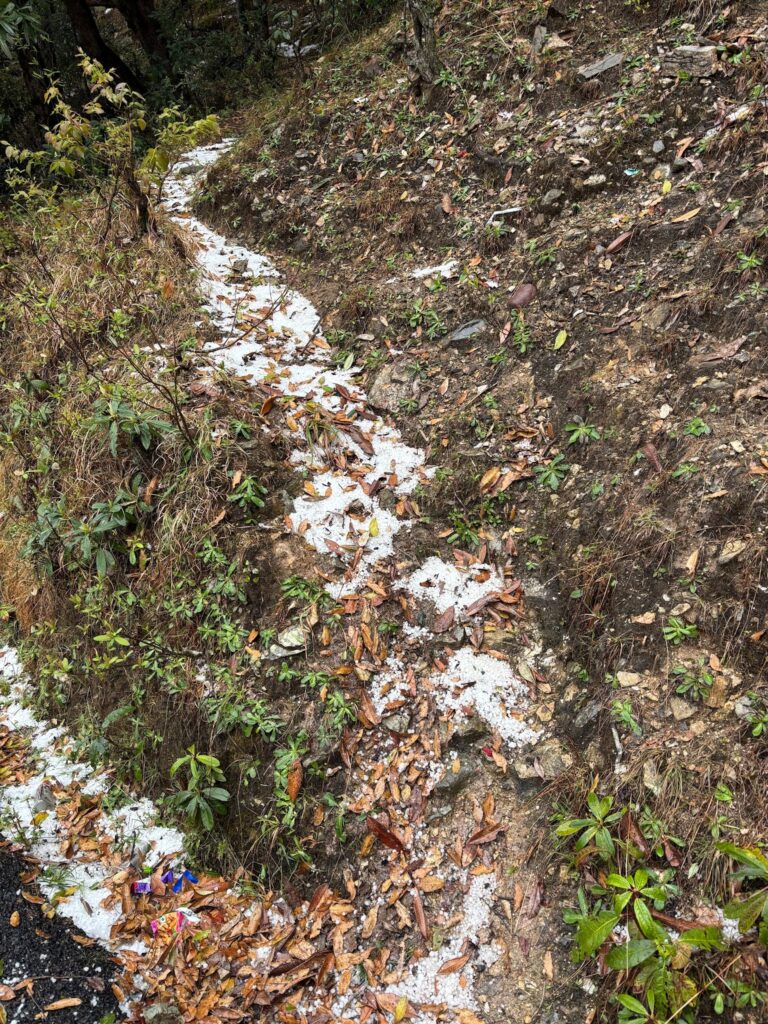
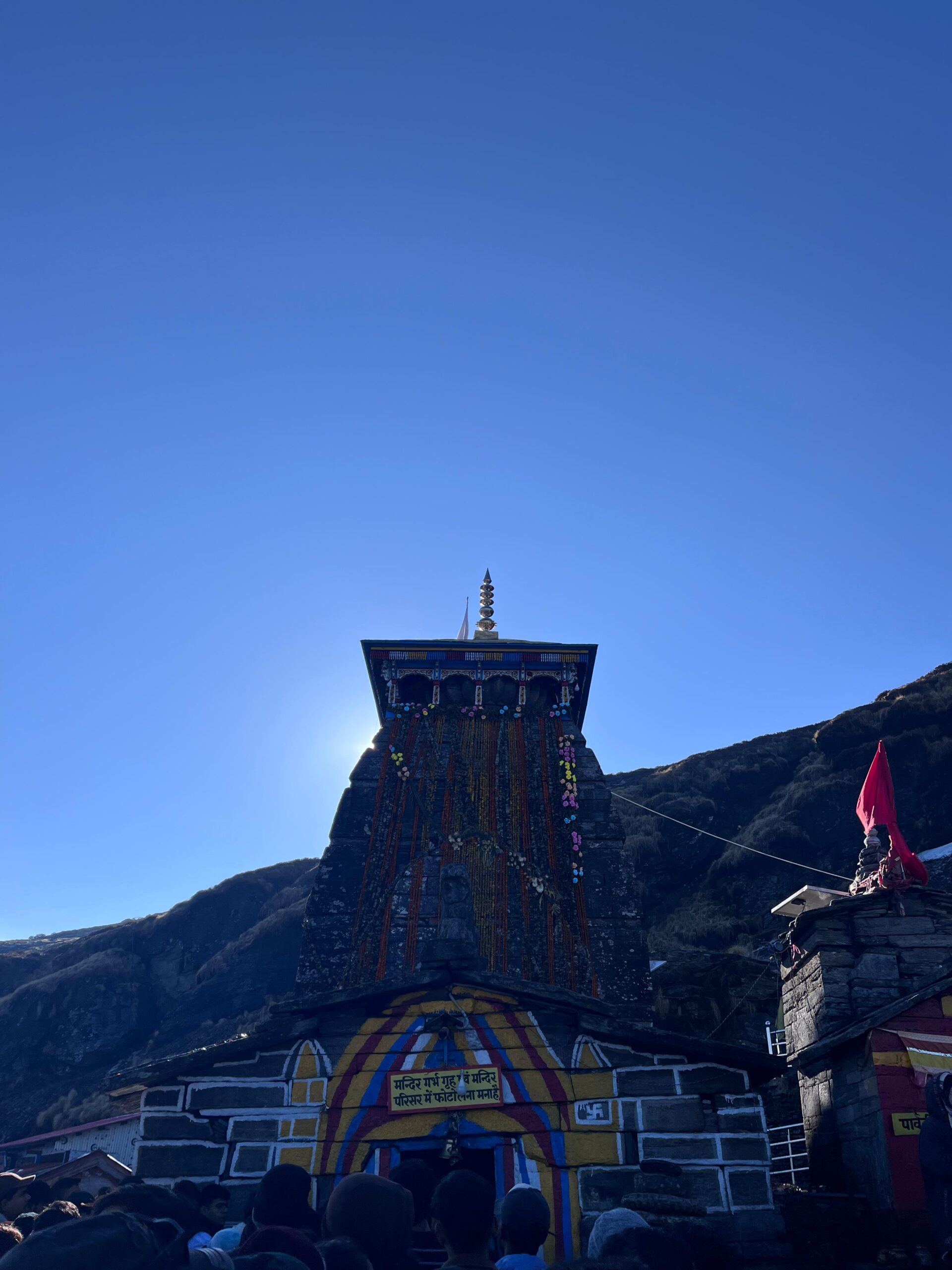
Sitting at 2,285 metres, Mukteshwar takes its name from the Mukteshwer Dham – a Shiva temple over 350 years old. Legend says Lord Shiva killed a demon here and granted him moksha. From the summit, you can see Nanda Devi, Trishul, Nanda Kot, Nandaghunti, and Panchachuli – a panorama that few places in Kumaon can match.
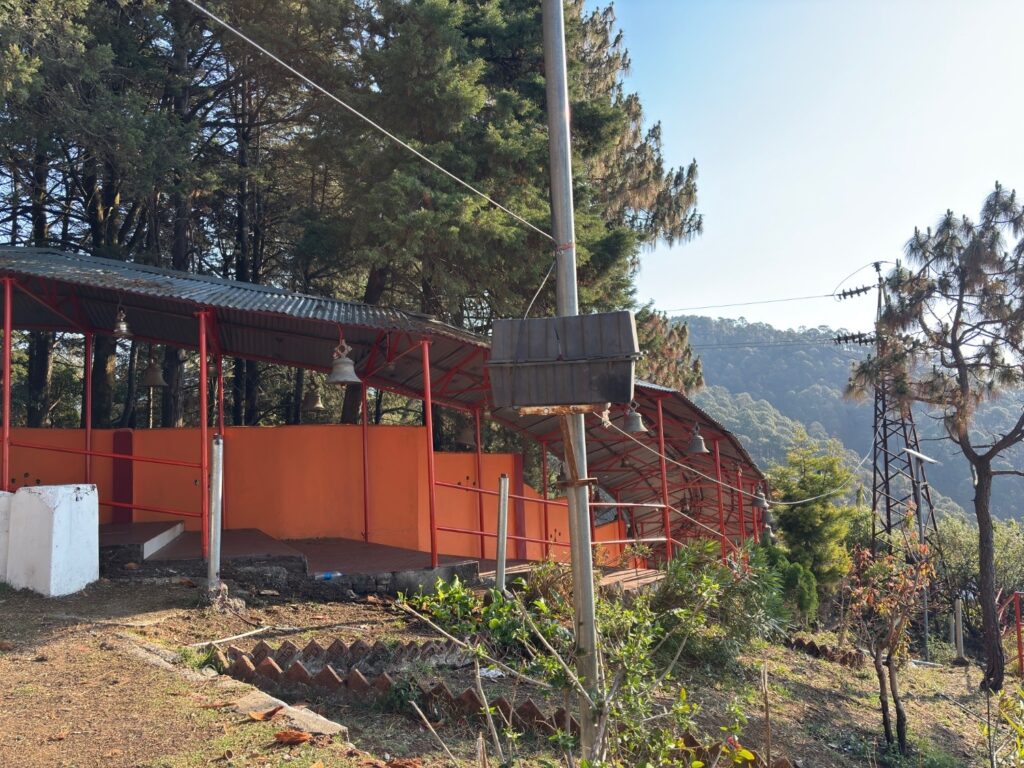
Chauli Ki Jali: The Edge of Everything
Ask anyone who’s been to Mukteshwar what the highlight was. The answer is almost always the same: Chauli Ki Jali.
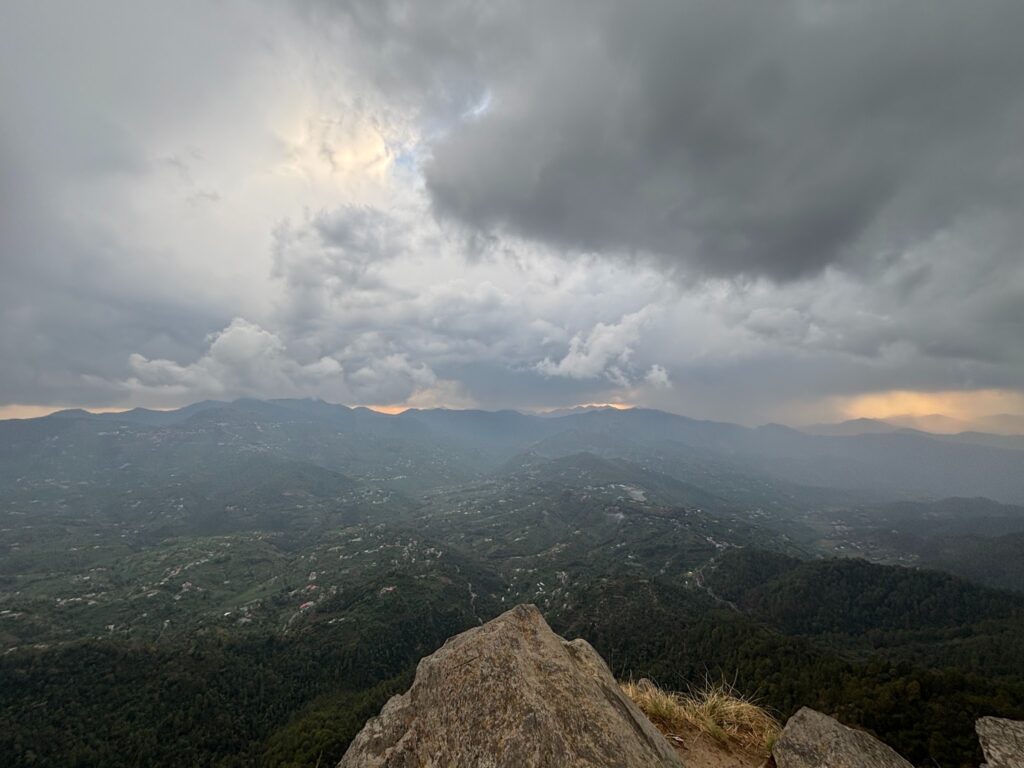
A dramatic rock formation at the edge of a cliff, Chauli Ki Jali offers a 180-degree panoramic view of the Himalayan range on one side and the lush valley below on the other. The wind is sharp. The drop is vertiginous. The horizon goes on forever.
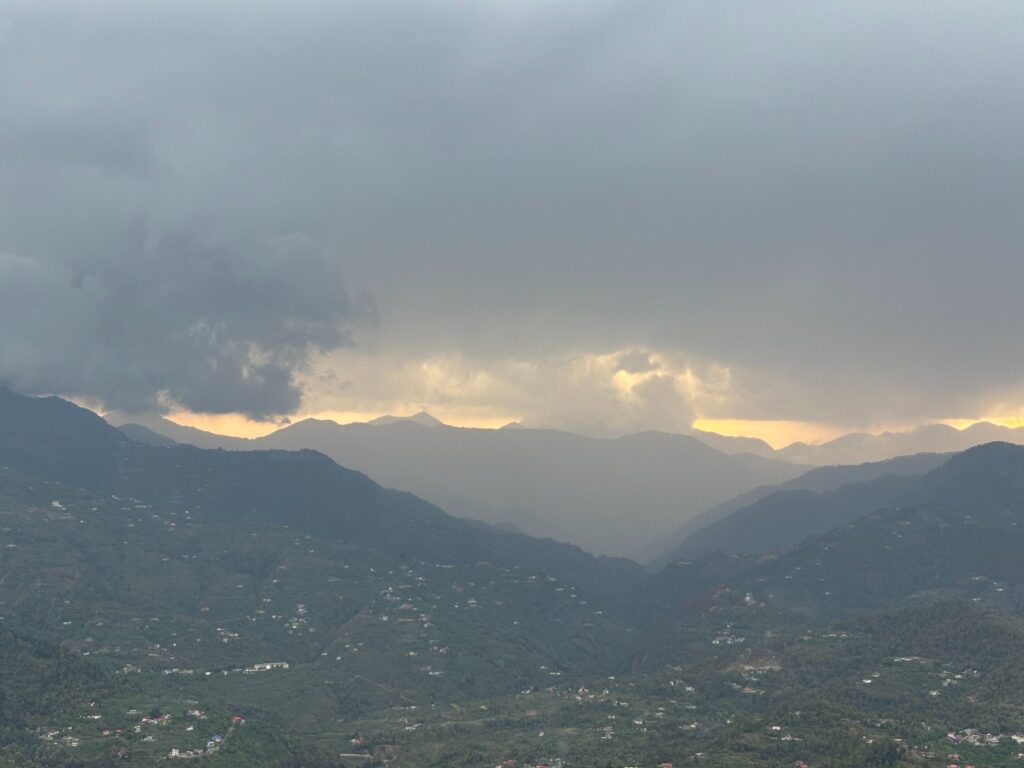
“None comes close. I could sit there for hours. The wide panoramic view. I don’t actually have any words to define.”
– @iloiviol
Chauli Ki Jali is also popular for rappelling and rock climbing. Check with local operators at the base if you want to attempt the rock face.
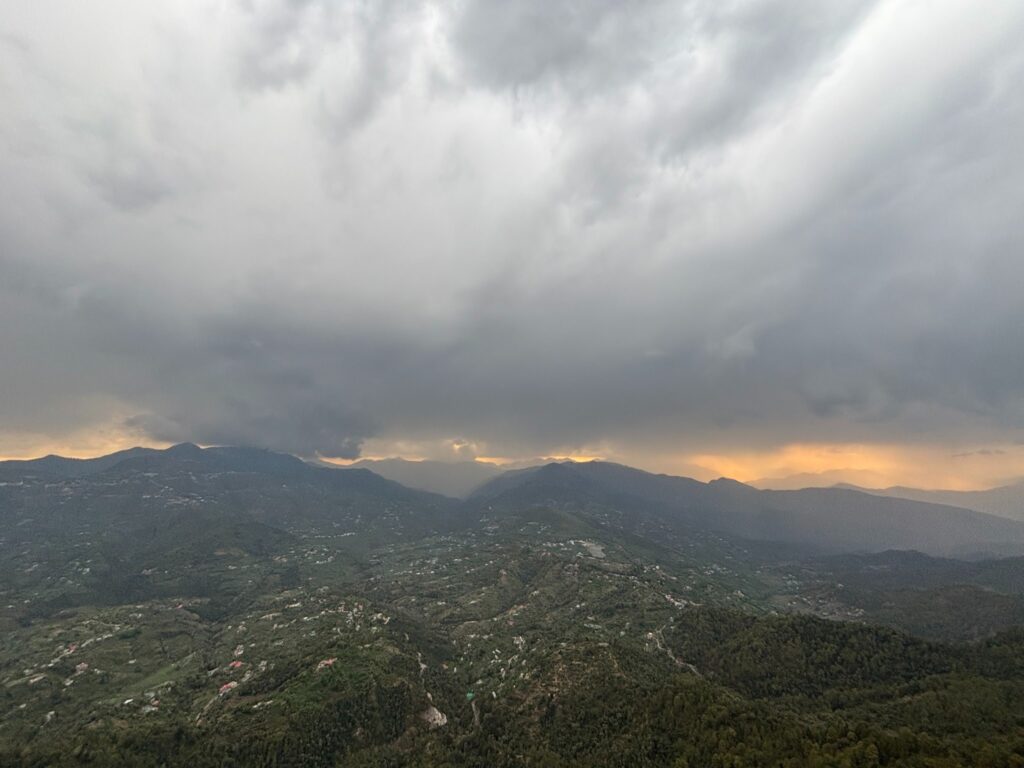
Chai, Pakora, and Maggi at the Edge of the World
There are small stalls near Chauli Ki Jali serving chai, pakora, and Maggi. Eaten with a panoramic Himalayan view and mountain air in your lungs, this is one of the best meals you’ll have on any Uttarakhand trip. Our traveller confirms: it was amazing.
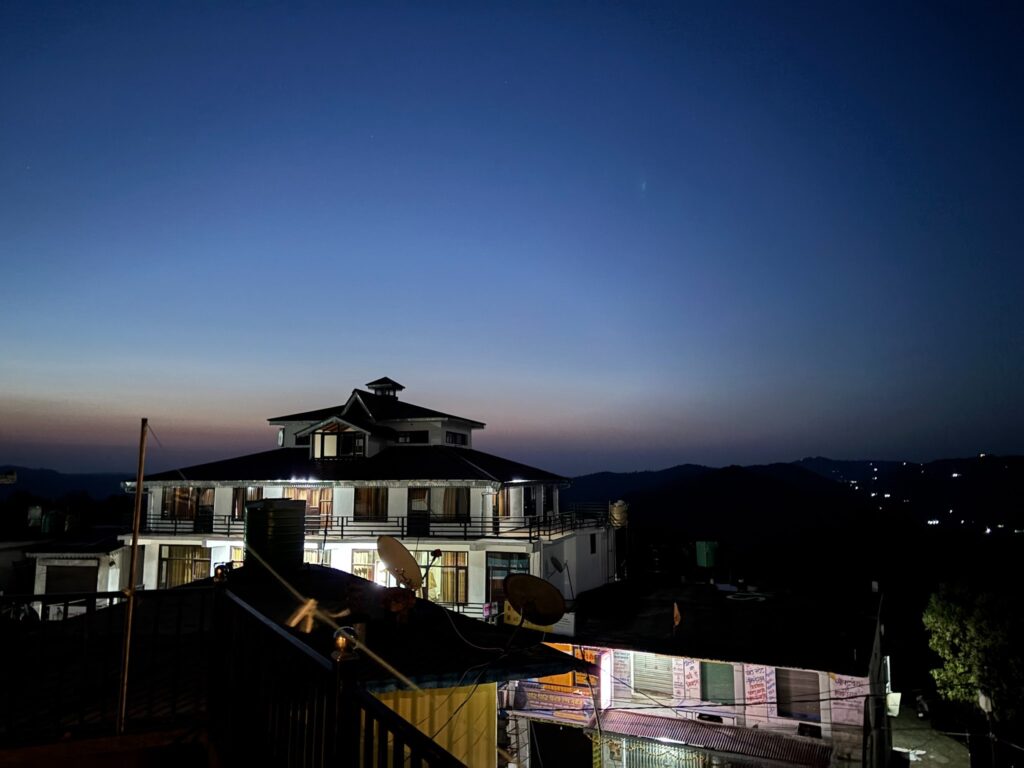
The Night Sky and the Valley of Lights
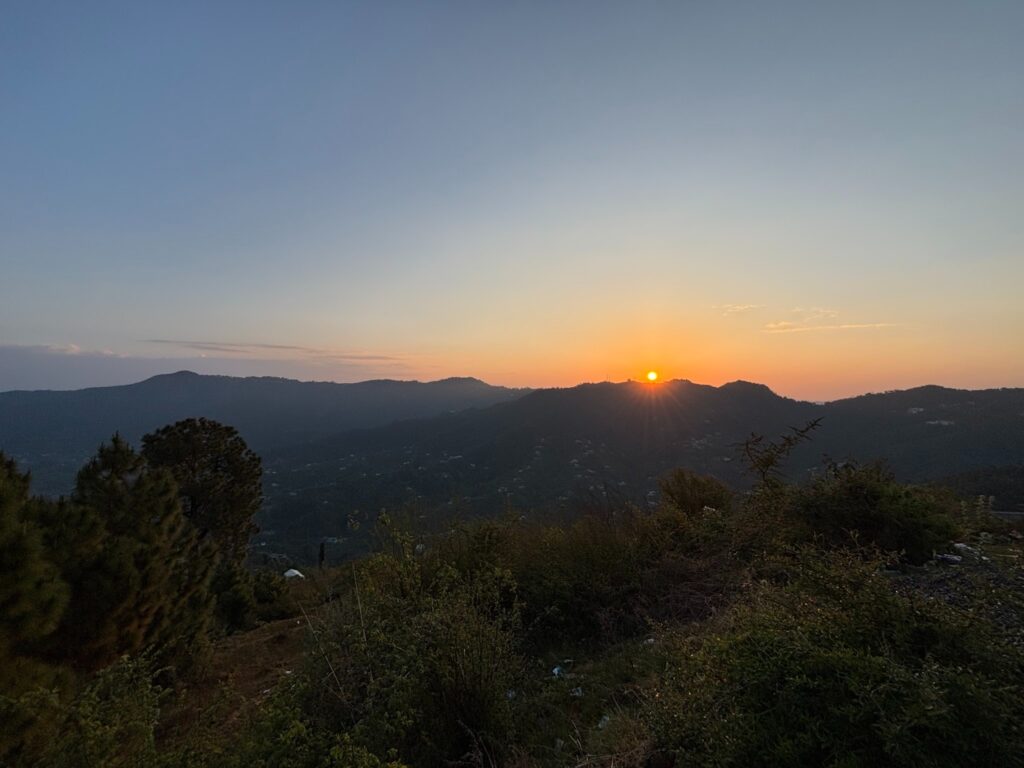
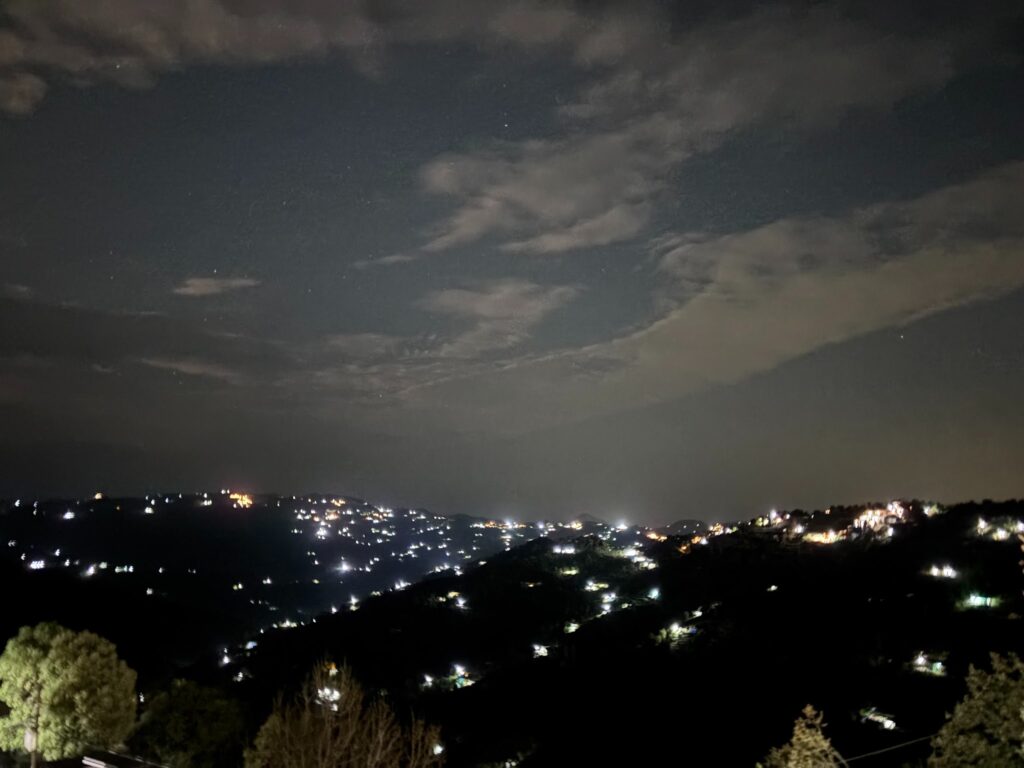
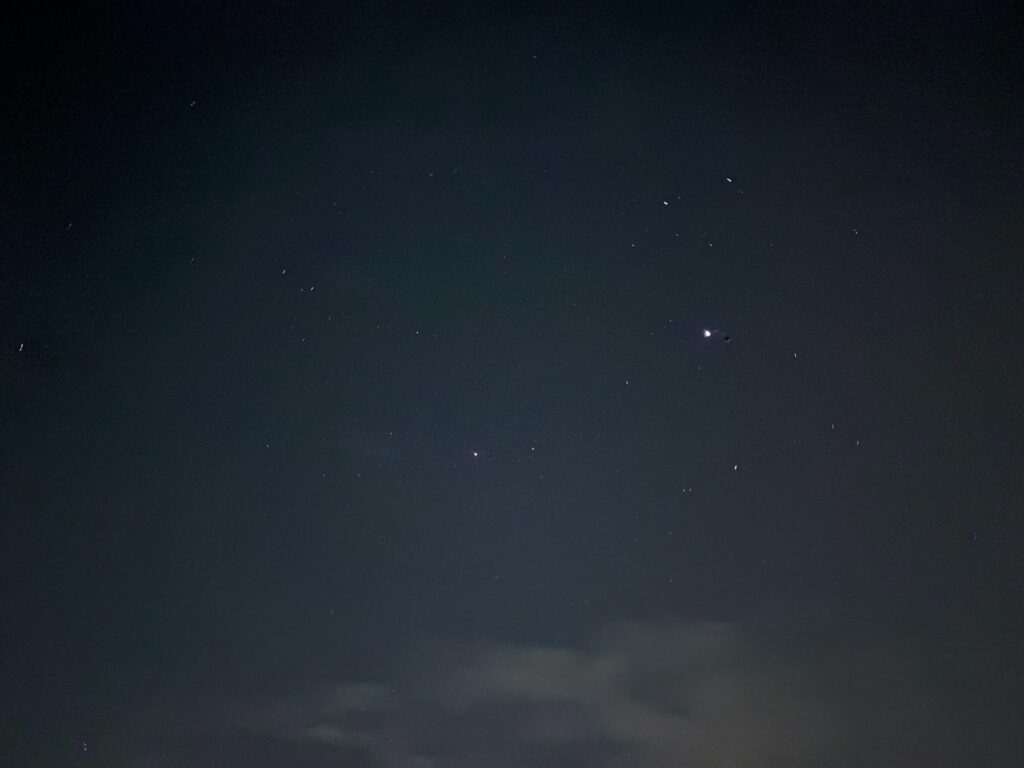
April brought overcast skies — a western disturbance rolling in from the northwest. The sunset was obscured. The stars were hidden. But the night view from the hillside still delivered: the lights of settlements scattered across ridges and slopes like a slow-motion constellation. Quiet, contemplative, and genuinely beautiful.
Budget Breakdown: The Whole Trip for ₹3,000
| Expense | Detail |
| Transport | Bus (Bareilly→Haldwani) + Auto + Hitching + Scooter rental |
| Accommodation | ₹1,200/night — Local hotel, Bhatelia Main Market |
| Food | Local dhabas, chai stalls, Maggi at Chauli Ki Jali |
| Activities | Free (no entry fees at temples) |
| Total | ~₹3,000 for 2 days, 1 night |
“The less you spend, more fun it is.”
Transport Recommendation for First-Timers
Start with local buses and shared cabs – they’re affordable and the co-passengers are often locals who’ll point you toward things no app can show you. Once comfortable with mountain roads, graduate to a rented bike or scooter. The freedom is worth it.
When to Go & What to Pack
Best seasons: March–June (clear skies, spring blooms) and September–November (post-monsoon clarity with golden light). December–February for snow at Mukteshwar.
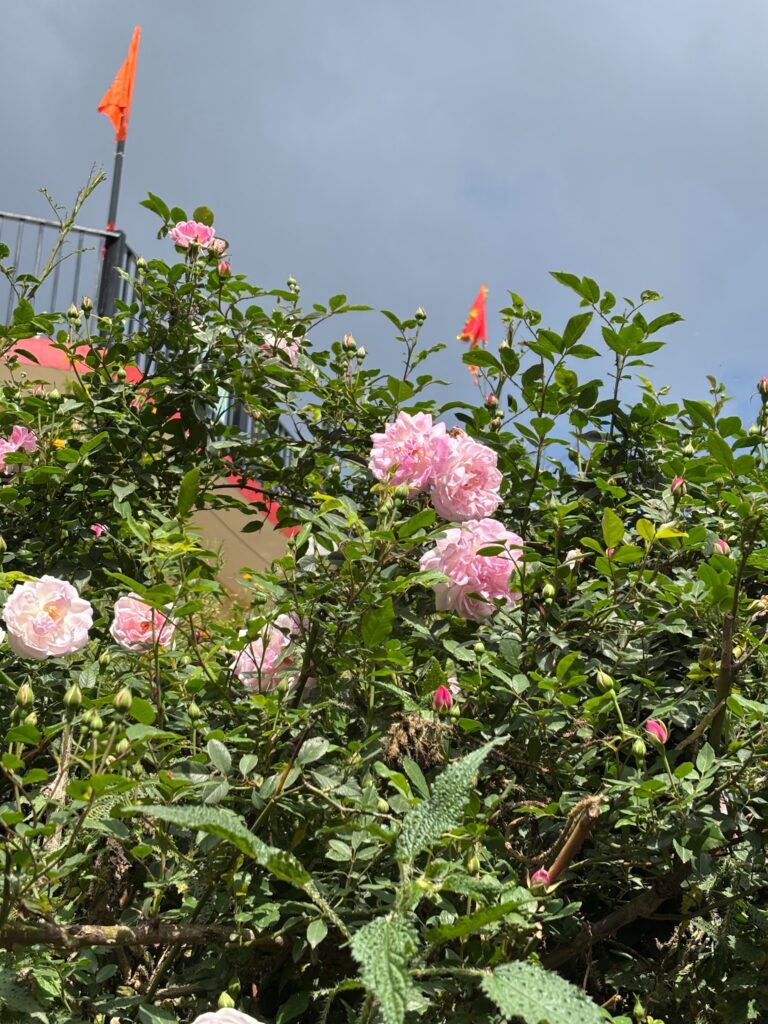
April note: The first week of April can bring western disturbances – expect some overcast days and possible rain. Pack accordingly.
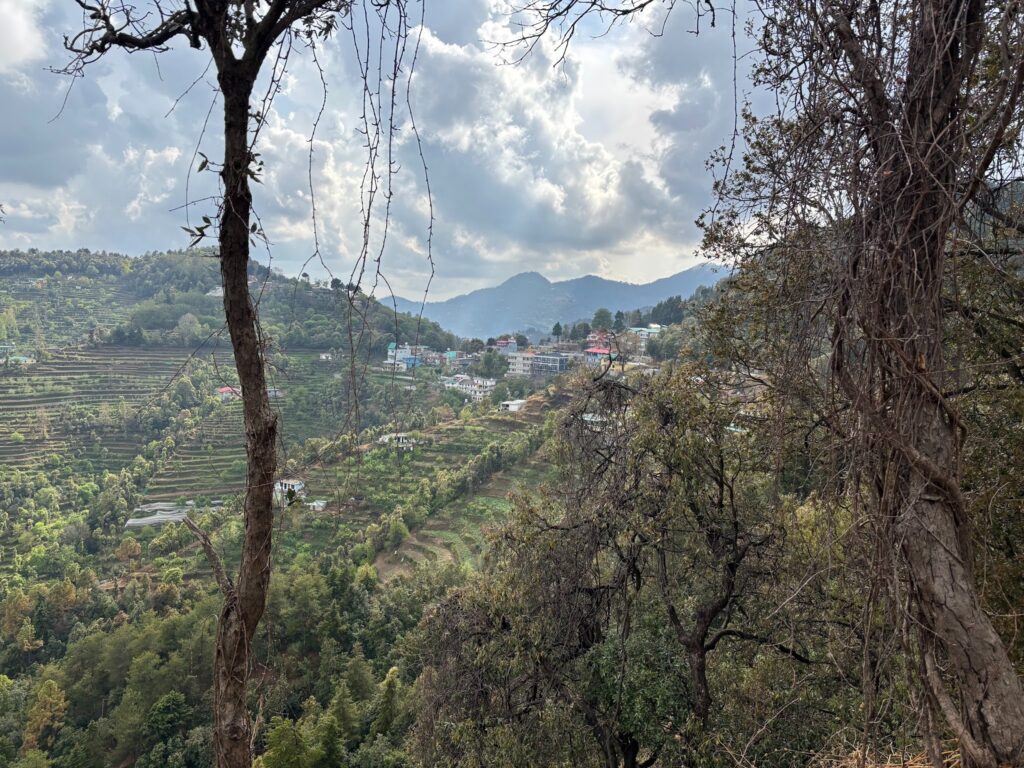
Packing Essentials (From Experience)
- Electric kettle – mountain mornings are cold and hotel hot water can be unreliable
- Very warm clothes – evenings at Mukteshwar drop sharply even in April
- Raincoat – non-negotiable in any shoulder season
- Powerbank – essential for navigation and photography in remote areas
About the Traveller
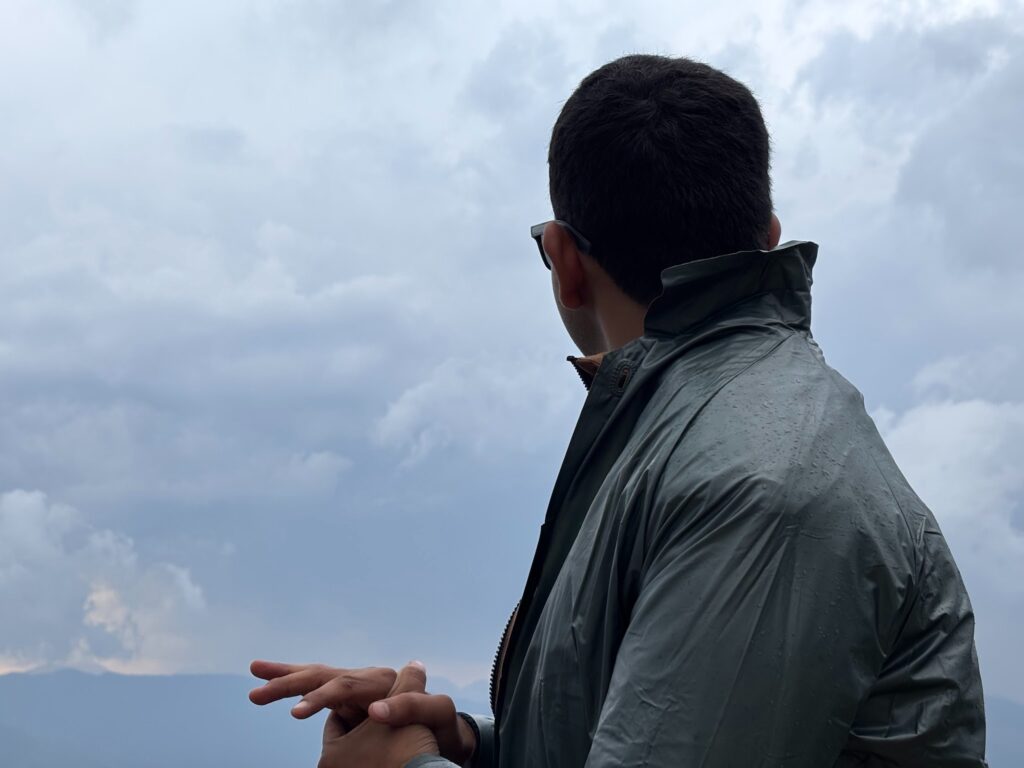
This article is based on the first-hand experience of @iloiviol (Instagram) – an astrophotographer, classical music vocalist, and avid traveller from Lucknow, Uttar Pradesh. They bring a rare combination of artistic sensitivity and adventurous spirit to their journeys. All photographs credited to them.
Follow on Instagram: @iloiviol