


When you think of spiritual destinations in North India, Naina Devi Temple naturally rises to the top, not just as a religious site but as an emotional experience woven with mythology, sacrifice, devotion, and the quiet strength of the Himalayas. Perched gracefully in the Bilaspur district of Himachal Pradesh, this temple is one of the 51 Shakti Peethas, making it a powerful center of faith for devotees of Goddess Shakti.
Unlike commercial hill temples, Naina Devi Temple holds a raw spiritual charm. The journey itself feels like a slow shedding of worldly noise. As the winding roads climb higher, the air turns cooler, prayers echo softly, and suddenly, belief feels lighter to carry. Whether you’re a pilgrim, a history enthusiast, or a traveler seeking soulful calm, this sacred shrine offers something deeply personal.
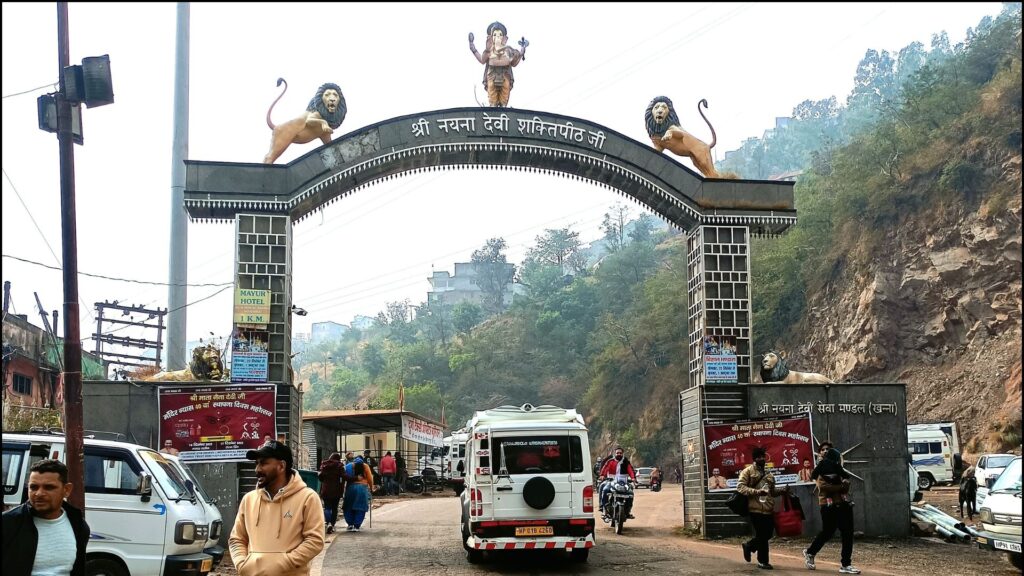
The temple is dedicated to Goddess Naina Devi, where it is believed that the eyes (naina) of Goddess Sati fell after her body was dismembered by Lord Vishnu’s Sudarshan Chakra. That belief alone gives the temple its intense spiritual gravity. Add to it the breathtaking views, ancient stories like Jeona Morh, and centuries of devotion, and you get a destination that stays with you long after you leave.
This detailed guide covers everything – from mythology and history to safety guidelines, travel tips, Jeona Morh’s story, and even a video guide – so you can plan a meaningful and safe visit to Naina Devi Temple Bilaspur, Himachal Pradesh.
Where Is Naina Devi Temple Located? (Bilaspur, Himachal Pradesh)
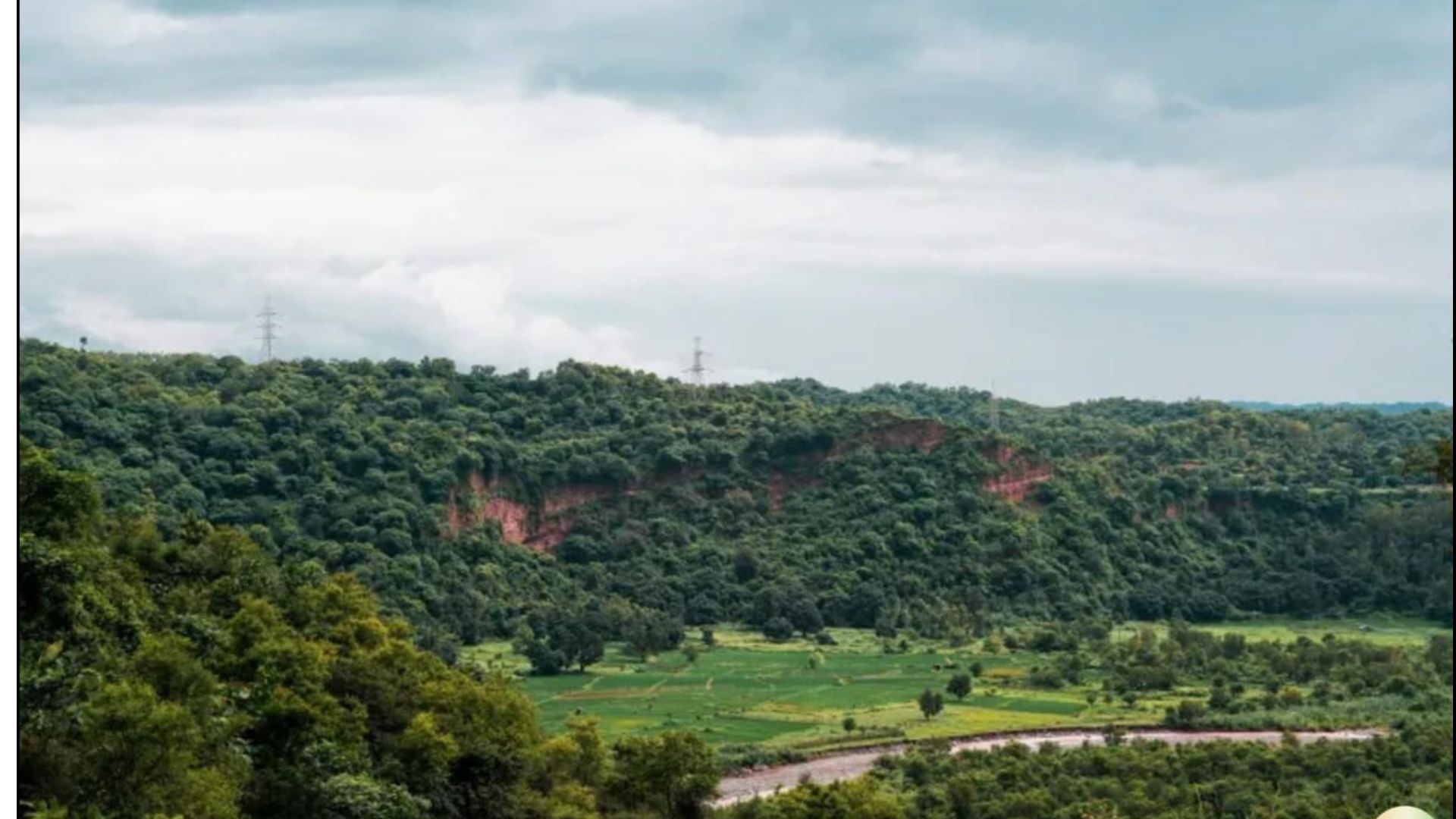
Naina Devi Temple is located in the Bilaspur district of Himachal Pradesh, near the Indo-Punjab border. It sits atop a hill at an approximate height of 1,177 meters (3,861 feet) above sea level, offering panoramic views of the surrounding Shivalik ranges. The temple overlooks the expansive Gobind Sagar Lake, formed by the Bhakra Nangal Dam, adding a tranquil backdrop to this powerful spiritual site.
Geographically, the temple lies around:
- 64 km from Bilaspur town
- 20 km from Anandpur Sahib (Punjab)
- 110 km from Chandigarh
Its location makes it easily accessible for pilgrims from Himachal Pradesh, Punjab, Haryana, and Delhi NCR. Unlike remote Himalayan shrines, Naina Devi Temple balances accessibility with elevation, making it suitable for elderly devotees as well.
- 📍 64 km from Bilaspur town
- 📍 20 km from Anandpur Sahib (Punjab)
- 📍 110 km from Chandigarh
The surrounding forests, crisp mountain air, and rhythmic temple bells create a serene environment. The government has also improved road infrastructure over the years, ensuring safer travel even during peak pilgrimage seasons like Navratri.
Spiritually, the location holds immense importance. Many devotees believe that the natural setting amplifies the Shakti energy of the temple, making prayers feel more intense and personal. Standing at the temple courtyard, with hills in front and faith behind you, it’s hard not to feel humbled.
Mythological Significance of Naina Devi Temple
The mythological roots of Naina Devi Temple are deeply tied to one of Hinduism’s most powerful stories – the legend of Goddess Sati and Lord Shiva. According to sacred texts, Goddess Sati immolated herself in the yajna of her father, King Daksha, after he insulted Lord Shiva. Overwhelmed by grief and rage, Shiva carried her charred body across the universe.
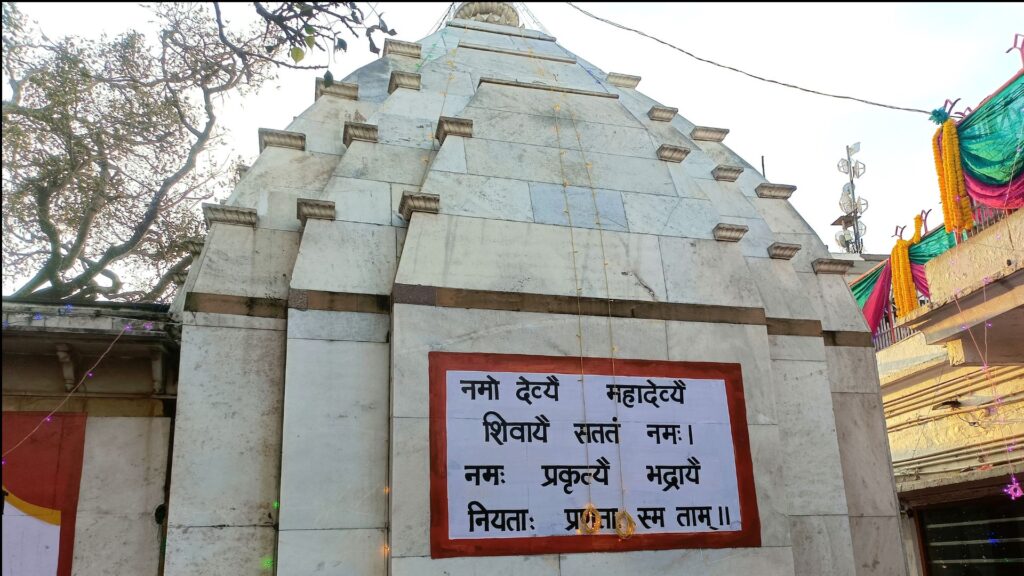
To restore cosmic balance, Lord Vishnu used his Sudarshan Chakra to dismember Sati’s body. Wherever a body part fell, a Shakti Peetha was formed. It is believed that Sati’s eyes (naina) fell at the location where Naina Devi Temple now stands, giving the temple its name and divine status.
Inside the sanctum, devotees don’t worship a conventional idol. Instead, they worship two natural stone eyes, representing the goddess’s divine vision. Alongside these, idols of Lord Ganesha and Goddess Kali are also present, symbolizing protection and transformation.
This mythological association gives the temple a unique emotional power. Devotees often say that prayers related to clarity, vision (both literal and metaphorical), and inner strength are especially potent here. The belief that the goddess “sees everything” adds a profound sense of accountability and comfort.
Historical Background of Naina Devi Temple Bilaspur
The history of Naina Devi Temple Bilaspur stretches back centuries, blending myth with recorded events. While the original temple is believed to be ancient, it faced destruction multiple times due to natural calamities, including earthquakes and landslides – common in the Himalayan belt.

Historical records suggest that the temple was significantly rebuilt during the reign of Raja Bir Chand of Bilaspur in the 16th century. Later, the royal families of the region continued to support and maintain the shrine, ensuring its survival through turbulent times.
In 1883, a devastating landslide destroyed large portions of the temple, tragically claiming many lives. However, the faith of devotees remained unshaken. The temple was reconstructed once again, stronger and more organized, reflecting the resilience of belief over adversity.
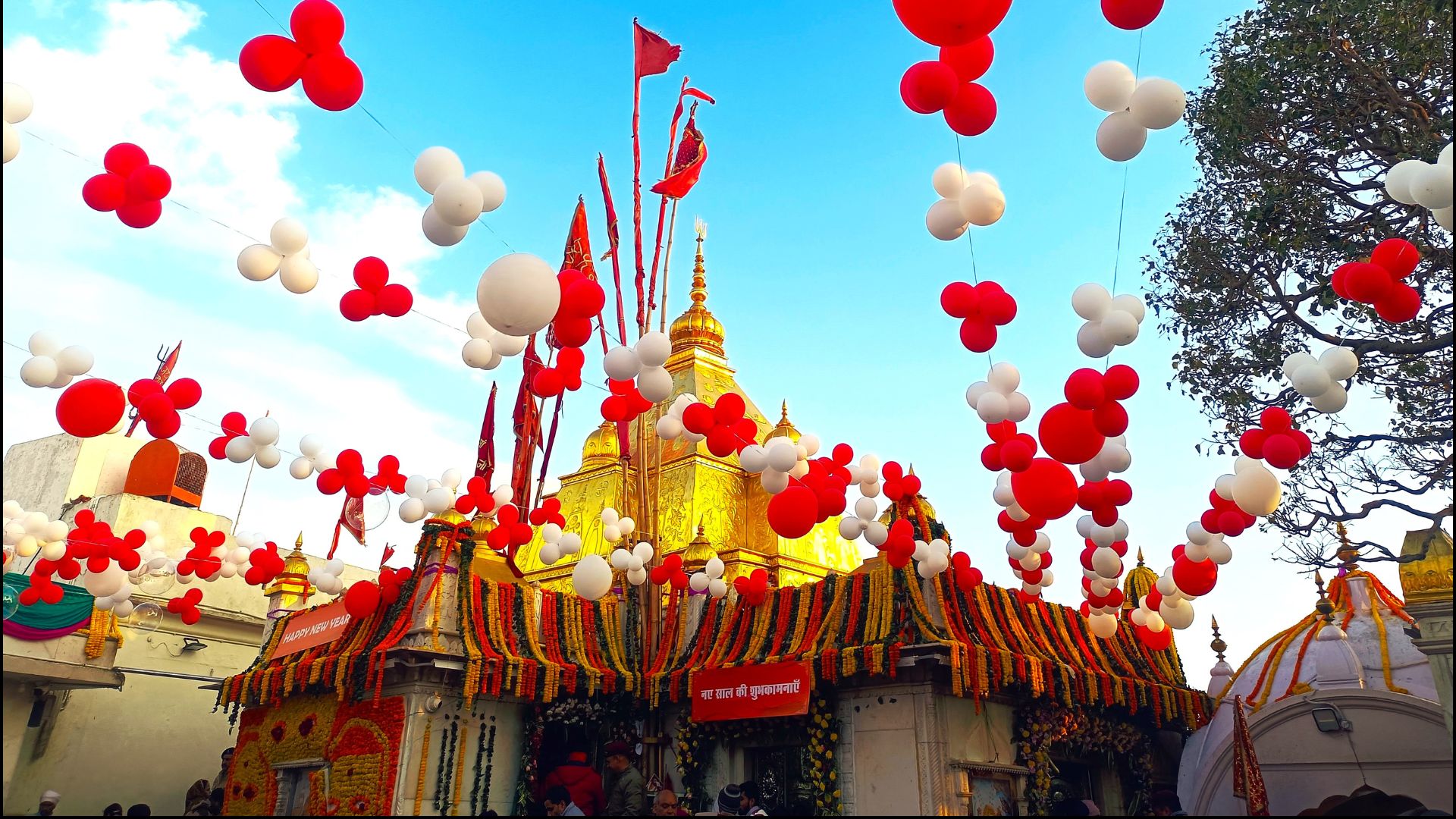
Today’s structure is a blend of traditional Himachali temple architecture and modern safety-oriented design, aligned with government regulations. Despite renovations, the spiritual essence remains untouched, making it a living testimony to centuries of devotion.
Naina Devi Temple Height and Architectural Overview
Situated at a height of approximately 1,177 meters, the Naina Devi Temple height provides both spiritual elevation and physical accessibility. Unlike high-altitude shrines that demand intense trekking, Naina Devi offers a comfortable climb via paved roads and steps.

Architecturally, the temple follows a simple yet symbolic layout:
- A main sanctum housing the sacred eye stones
- A spacious courtyard for devotees
- Surrounding shrines dedicated to other deities
The temple’s entrance opens into the hills, symbolizing openness to divine energy. Bells hang at the gates, and devotees ring them before entering, a ritual believed to awaken spiritual consciousness.
Government-approved safety railings, crowd-control barricades, and CCTV systems are now integrated into the structure, ensuring both spiritual focus and visitor safety.
Jeona Morh – The Legendary Story and Its Emotional Legacy
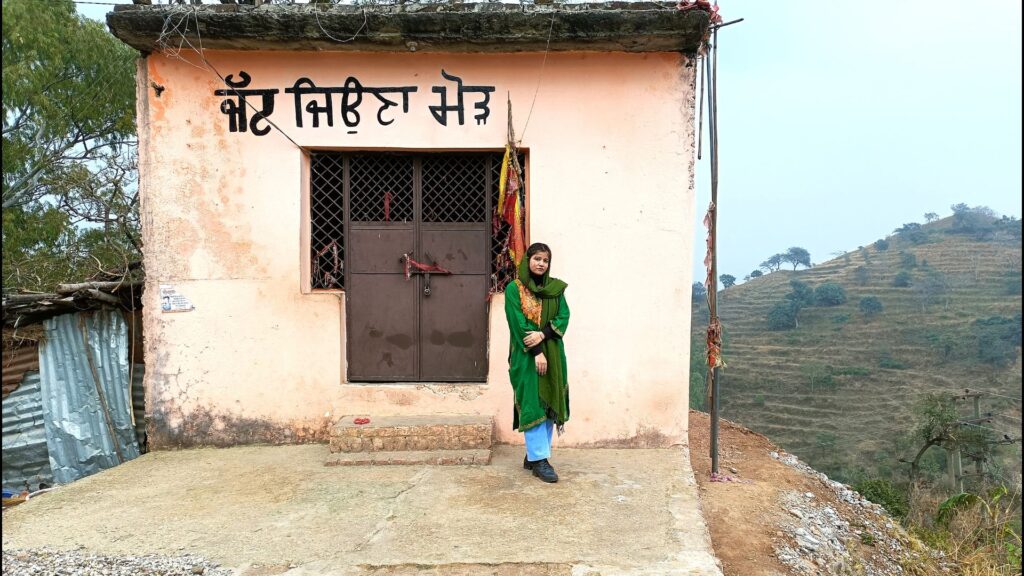
One of the most heart-touching stories associated with Naina Devi Temple is the legend of Jeona Morh, a tale of sacrifice that still echoes in local folklore. Jeona Morh was a devoted follower of Goddess Naina Devi, known for his unwavering faith and bravery.
According to legend, during a foreign invasion, Jeona Morh fought valiantly to protect the temple and its sanctity. Despite being outnumbered, he refused to retreat. Eventually, he sacrificed his life near the temple premises. Locals believe that Goddess Naina Devi blessed him for his devotion, granting him immortality in memory, if not in body.
Even today, devotees bow their heads at Jeona Morh’s memorial, feeling a deep emotional connection. His story represents courage, loyalty, and selfless devotion – values that resonate strongly with pilgrims.
The tale is often narrated by temple priests and elders, especially during Navratri, reminding visitors that this temple is not just about worship but about values worth living for.

Naina Devi Temple and Navratri Celebrations
Navratri is when Naina Devi Temple truly comes alive. During Chaitra Navratri (March–April) and Sharad Navratri (September–October), lakhs of devotees visit the temple from across India.
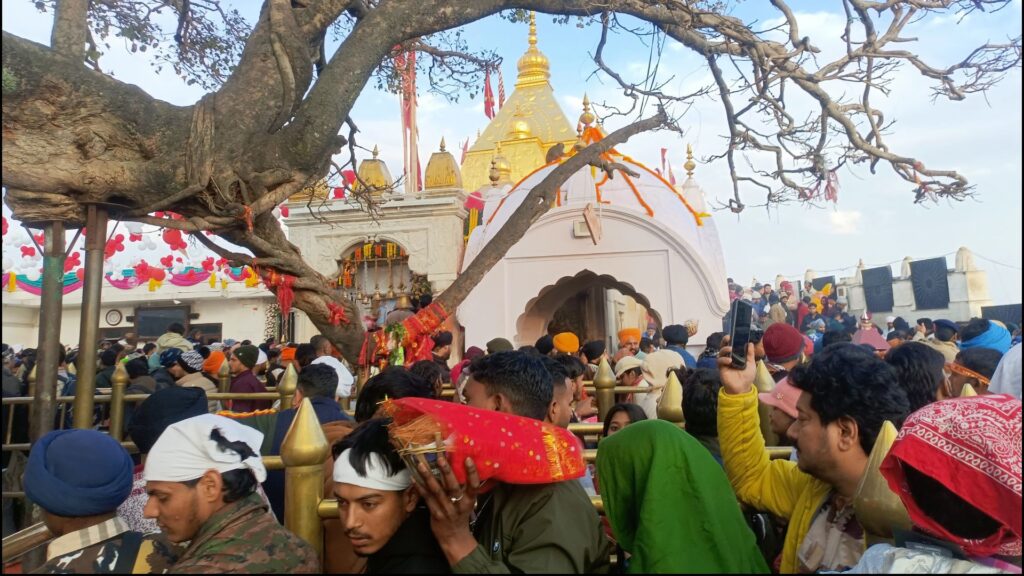
The temple follows strict government crowd management guidelines during this period:
- Designated entry and exit routes
- Medical aid counters
- Police and volunteer assistance
- CCTV surveillance
Rituals begin early in the morning with Mata ki Aarti, followed by bhajans, kirtans, and offerings. The atmosphere becomes electric with devotion, yet remarkably disciplined due to well-managed systems.
For many, visiting during Navratri is a once-in-a-lifetime spiritual milestone.
Spiritual Experience and Energy of Naina Devi Temple
People often say that Naina Devi Temple doesn’t just welcome you – it looks into you. The spiritual energy here feels grounding yet powerful. Many devotees report a deep sense of calm the moment they step inside the sanctum.
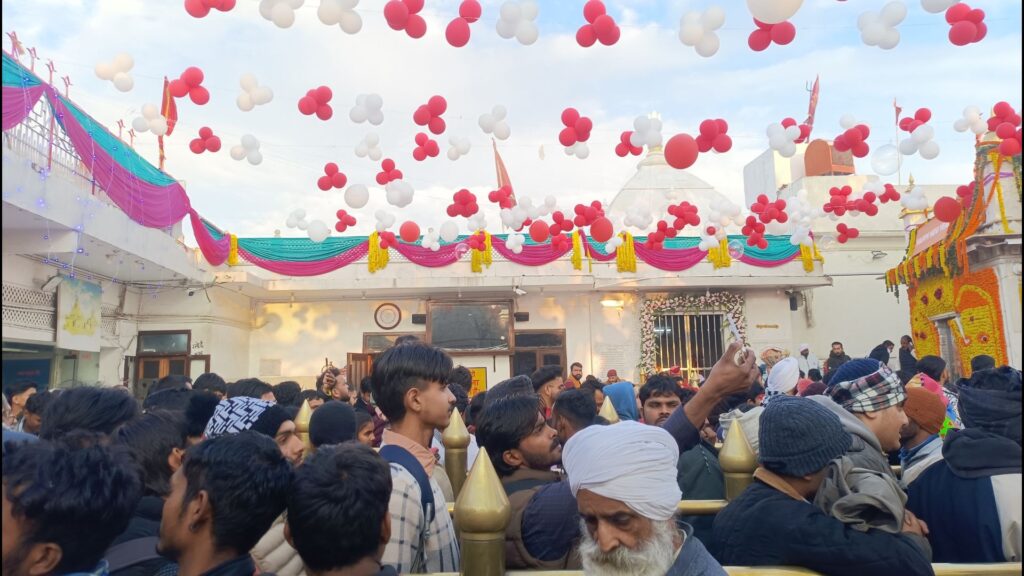
The belief that the goddess’s eyes reside here creates a strong emotional connection. People pray not just for material desires but for clarity, protection, and inner strength. It’s common to see visitors sitting silently, eyes closed, absorbing the atmosphere.
This is not a rushed temple. Even amidst crowds, there’s a sense of patience and surrender, as if time itself slows down in reverence.
How to Reach Naina Devi Temple (As per Government Guidelines)
Reaching Naina Devi Temple Bilaspur Himachal Pradesh is relatively easy and well-supported by infrastructure.
By Road
Well-connected roads from Chandigarh, Bilaspur, and Anandpur Sahib. Government buses and private taxis are readily available.
By Rail
The nearest railway station is Anandpur Sahib (20 km), well-connected to major cities.
By Air
The nearest airport is Chandigarh Airport (110 km).
All routes comply with state and central government travel safety regulations, with regular road maintenance and signage.
Safety and Government Travel Guidelines for Pilgrims
To ensure a safe pilgrimage, authorities recommend:
- Avoiding peak hours unless necessary
- Following queue systems
- Carrying valid ID
- Wearing comfortable footwear
- Avoiding plastic and littering
Medical facilities and emergency response teams are available, especially during festivals.
Best Time to Visit Naina Devi Temple
The best time to visit is March to June and September to November. Summers are pleasant, while winters can be cold but peaceful. Monsoons should be avoided due to landslide risks.
Naina Devi Temple Images and Photography Tips
Photography is allowed in designated areas only. Early mornings offer the best light for Naina Devi Temple images, especially with mist-covered hills in the background. Always follow temple and government photography guidelines.
Naina Devi Temple vs Naina Devi Temple Nainital (Common Confusion)
Many people confuse Naina Devi Temple Bilaspur with Naina Devi Temple Nainital. While both are dedicated to Goddess Naina Devi, they are geographically, historically, and spiritually distinct. Bilaspur’s temple is a Shakti Peetha, while Nainital’s is not.
Nearby Attractions Around Naina Devi Temple
- Anandpur Sahib – Sikh pilgrimage site
- Bhakra Nangal Dam – Engineering marvel
- Gobind Sagar Lake – Scenic retreat
Accommodation and Facilities for Pilgrims
Government-approved dharamshalas, budget hotels, and private lodges are available. Online bookings are recommended during peak seasons.
YouTube Video Guide to Naina Devi Temple
For a visual understanding of the journey, rituals, and surroundings, you can watch this detailed video guide:
Conclusion – Why Naina Devi Temple Is More Than a Destination
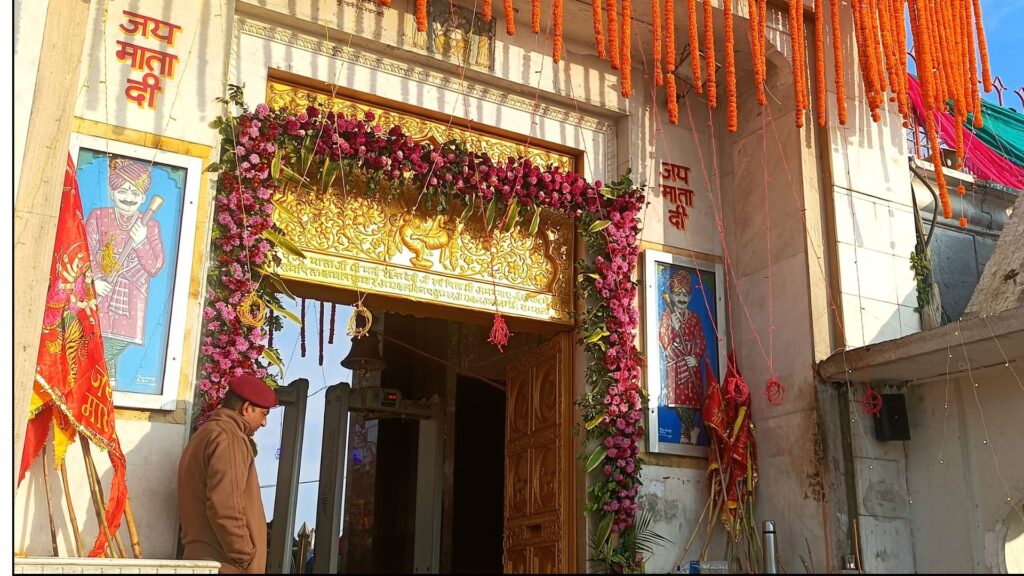
Naina Devi Temple is not just a place you visit; it’s an experience that stays with you. From mythological depth and historical resilience to stories like Jeona Morh and the goddess’s watchful eyes, everything here feels meaningful. Add modern safety measures and accessibility, and you have a pilgrimage that respects both faith and responsibility.
FAQs
1. Where is Naina Devi Temple located?
In Bilaspur district, Himachal Pradesh.
2. What is the height of Naina Devi Temple?
Approximately 1,177 meters above sea level.
3. Is Naina Devi Temple safe to visit?
Yes, with government-approved safety and crowd management systems.
4. What is the story of Jeona Morh?
He was a devoted warrior who sacrificed his life protecting the temple.
5. Is Naina Devi Temple same as Nainital’s temple?
No, both are different temples in different states.